Bringing home a puppy is one of the most exciting milestones for any dog owner. Along with choosing a comfortable bed, toys, and training supplies, one decision has a bigger impact on your puppy’s long-term health than almost anything else—choosing the right food.
If you’ve searched for the best dog food for puppies, you’ve probably noticed hundreds of recommendations, conflicting reviews, and marketing claims like premium, natural, holistic, and vet recommended. It’s easy to feel overwhelmed.
When I started researching puppy nutrition for my own blog, I discovered that many “best puppy food” lists simply repeated manufacturer marketing or ranked products based on popularity rather than nutritional quality. To create a more useful guide, I compared ingredient lists, guaranteed analyses, manufacturer transparency, nutritional standards, veterinary guidance, and real owner feedback to identify foods that consistently meet the needs of growing puppies.
This guide combines practical buying advice with evidence-based nutrition principles to help you choose a puppy food that supports healthy growth, brain development, digestion, and lifelong wellness.
Quick Answer: What Is the Best Dog Food for Puppies?
If you’re short on time, here are my top recommendations based on ingredient quality, nutritional balance, manufacturer reputation, and suitability for different puppies.
Best Puppy Food Comparison Table
| Puppy Food | Best For | Protein | Grain-Inclusive | Overall Rating |
|---|---|---|---|---|
| Purina Pro Plan Puppy Chicken & Rice | Best Overall | 28% | Yes | ⭐⭐⭐⭐⭐ |
| Royal Canin Puppy | Sensitive Digestion | 30% | Yes | ⭐⭐⭐⭐⭐ |
| Hill’s Science Diet Puppy | Vet Recommended | 27% | Yes | ⭐⭐⭐⭐☆ |
| Blue Buffalo Life Protection Puppy | Natural Ingredients | 29% | Yes | ⭐⭐⭐⭐☆ |
| Orijen Puppy | High Protein | 38% | Yes | ⭐⭐⭐⭐⭐ |
| Wellness Complete Health Puppy | Small Breeds | 28% | Yes | ⭐⭐⭐⭐☆ |
| Iams ProActive Health Smart Puppy | Best Budget | 27% | Yes | ⭐⭐⭐⭐☆ |
| Purina ONE +Plus Healthy Puppy | Value for Money | 28% | Yes | ⭐⭐⭐⭐☆ |
Our Top Recommendation: Purina Pro Plan Puppy Chicken & Rice Formula offers an excellent balance of digestible protein, DHA for brain development, probiotics for digestive health, and consistent quality control. It is suitable for most healthy puppies and is widely recommended by veterinarians.
How We Chose the Best Puppy Foods
Not every puppy food that appears on a “best of” list deserves a recommendation. Instead of relying on advertising claims, each product was evaluated using the same criteria.
Our Evaluation Criteria
| Evaluation Factor | Why It Matters |
|---|---|
| Named Animal Protein | Supports healthy muscle development |
| Complete & Balanced Nutrition | Meets growth requirements for puppies |
| DHA Content | Supports brain and eye development |
| Calcium & Phosphorus Balance | Essential for healthy bones, especially in large breeds |
| Ingredient Transparency | Helps owners understand exactly what they’re feeding |
| Manufacturer Reputation | Indicates stronger quality-control standards |
| Digestibility | Reduces the likelihood of digestive upset |
| Customer Satisfaction | Highlights real-world performance across many households |
Rather than choosing foods based only on popularity, preference was given to formulas that consistently provide balanced nutrition and clear ingredient labeling.
What Makes a Great Puppy Food?
Puppies are not simply smaller versions of adult dogs. During the first year of life, they experience rapid growth that requires higher levels of protein, energy, healthy fats, vitamins, and minerals.
A high-quality puppy food should provide:
- Real animal protein as the first ingredient
- DHA from fish oil for brain and vision development
- Balanced calcium and phosphorus to support healthy bones
- Easily digestible carbohydrates for sustained energy
- Vitamins and antioxidants for immune support
- Omega-3 and Omega-6 fatty acids for healthy skin and coat
Puppy Nutritional Requirements
| Nutrient | Why Puppies Need It | Common Sources |
|---|---|---|
| Protein | Muscle and tissue development | Chicken, turkey, salmon, beef |
| Healthy Fat | Energy and coat health | Chicken fat, fish oil |
| DHA | Brain and eye development | Salmon oil, fish oil |
| Calcium | Bone growth | Balanced puppy diets |
| Phosphorus | Supports skeletal development | Meat and poultry |
| Fiber | Healthy digestion | Pumpkin, oats |
| Vitamins & Minerals | Immune system support | Fruits, vegetables, complete formulas |
Top Puppy Food Reviews
1. Purina Pro Plan Puppy Chicken & Rice Formula ⭐⭐⭐⭐⭐
Best Overall Puppy Food
If I had to recommend one puppy food for the majority of dog owners, this would be my first choice. It consistently combines quality ingredients, excellent digestibility, strong manufacturer research, and broad veterinary acceptance.
Key Features
- Real chicken as the first ingredient
- DHA from fish oil
- Live probiotics for digestive health
- Suitable for most breeds
- Formulated for growing puppies
Guaranteed Analysis
| Nutrient | Amount |
|---|---|
| Crude Protein | 28% |
| Crude Fat | 18% |
| Crude Fiber | 3% |
| Moisture | 12% |
Pros
✔ High-quality animal protein
✔ Excellent digestibility
✔ Contains probiotics
✔ DHA supports learning and brain development
✔ Widely available
Cons
- Slightly more expensive than budget brands
- Contains grains, which may not suit puppies with medically diagnosed grain sensitivities
Best For
- First-time puppy owners
- Medium-sized breeds
- Active puppies
- Owners seeking a veterinarian-recommended option
Bottom Line
This formula offers one of the best combinations of nutrition, ingredient quality, digestibility, and value, making it an excellent all-around choice for most puppies.
2. Royal Canin Puppy
Best for Sensitive Digestion
Royal Canin is known for developing breed- and life-stage-specific nutrition. Its puppy formula focuses on digestive health, making it a strong option for puppies with sensitive stomachs or inconsistent stools.
Key Features
- Highly digestible proteins
- Prebiotics to support gut health
- Tailored kibble size
- Antioxidant blend for immune support
Guaranteed Analysis
| Nutrient | Amount |
|---|---|
| Crude Protein | 30% |
| Crude Fat | 18% |
| Crude Fiber | 2.8% |
| Moisture | 10% |
Pros
✔ Excellent digestibility
✔ Consistent stool quality
✔ Easy-to-chew kibble
✔ Strong quality-control standards
Cons
- Higher price than many competitors
- Some owners prefer simpler ingredient lists
Best For
- Puppies with sensitive stomachs
- Small and medium breeds
- Owners looking for a premium veterinary-focused formula
Bottom Line
Royal Canin Puppy is an outstanding choice if digestive comfort is your top priority. Its carefully balanced formula is designed to support healthy growth while being gentle on developing digestive systems.
Which Puppy Food Should You Choose?
If you’re still undecided, here’s a quick guide:
| Your Priority | Recommended Food |
|---|---|
| Best Overall | Purina Pro Plan Puppy |
| Best Sensitive Stomach | Royal Canin Puppy |
| Best Budget | Iams ProActive Health Smart Puppy |
| Best High Protein | Orijen Puppy |
| Best Natural Ingredients | Blue Buffalo Life Protection Puppy |
| Best Small Breed | Wellness Complete Health Puppy |
3. Hill’s Science Diet Puppy
⭐ Best Vet-Recommended Puppy Food
Best for: Puppies with sensitive digestion, first-time dog owners, and those looking for a science-backed formula.
Hill’s Science Diet is one of the most frequently recommended puppy foods by veterinarians because of its research-driven formulations and strict quality-control standards. The company employs veterinary nutritionists and conducts extensive feeding trials to formulate diets that support healthy puppy development.
Key Features
- Real chicken as the first ingredient
- DHA from fish oil
- Clinically tested antioxidants
- Balanced minerals for healthy bones
- Made in company-owned manufacturing facilities
Guaranteed Analysis
| Nutrient | Approximate Amount |
|---|---|
| Crude Protein | 27% |
| Crude Fat | 17% |
| Crude Fiber | 3% |
| Moisture | 10% |
Pros
✔ High-quality protein
✔ Supports immune development
✔ Excellent digestibility
✔ Balanced calcium and phosphorus
✔ Trusted veterinary reputation
Cons
- Premium pricing
- Limited protein flavor options
Main Ingredients
- Chicken
- Brown Rice
- Barley
- Chicken Meal
- Chicken Fat
- Fish Oil
Price Range
$$$ (Premium)
Bottom Line
Hill’s Science Diet Puppy is an excellent choice for owners who prioritize research-backed nutrition and digestive health over trendy marketing claims.
4. Blue Buffalo Life Protection Puppy
⭐ Best Natural Ingredient Formula
Best for: Owners who prefer recipes made with real meat and recognizable ingredients.
Blue Buffalo focuses on using real meat as the primary protein source while including antioxidant-rich fruits and vegetables.
Key Features
- Deboned chicken first
- DHA from fish oil
- Whole grains
- Fruits and vegetables
- LifeSource Bits antioxidant blend
Guaranteed Analysis
| Nutrient | Approximate Amount |
|---|---|
| Protein | 29% |
| Fat | 17% |
| Fiber | 5% |
| Moisture | 10% |
Pros
✔ Real meat first
✔ Includes fruits and vegetables
✔ No artificial colors
✔ Good omega fatty acid balance
Cons
- Slightly higher fiber than some competitors
- Premium price
Main Ingredients
- Deboned Chicken
- Chicken Meal
- Brown Rice
- Oatmeal
- Barley
- Fish Oil
Bottom Line
Blue Buffalo is an excellent option for owners looking for a more natural ingredient profile while still providing complete puppy nutrition.
5. Orijen Puppy
⭐ Best High-Protein Puppy Food
Best for: Highly active puppies and owners wanting a meat-rich diet.
Orijen stands out because of its exceptionally high meat content and inclusion of multiple animal protein sources.
Key Features
- Multiple fresh animal proteins
- Whole-prey ingredients
- DHA and EPA
- High protein content
- Rich in animal-derived nutrients
Guaranteed Analysis
| Nutrient | Approximate Amount |
|---|---|
| Protein | 38% |
| Fat | 20% |
| Fiber | 5% |
| Moisture | 12% |
Pros
✔ Extremely protein rich
✔ Excellent ingredient quality
✔ Multiple protein sources
✔ Great for active breeds
Cons
- Expensive
- Rich formula may not suit every puppy
Main Ingredients
- Fresh Chicken
- Turkey
- Salmon
- Whole Herring
- Eggs
Bottom Line
If budget isn’t your primary concern and your puppy thrives on a higher-protein diet, Orijen is among the strongest premium options available.
6. Wellness Complete Health Puppy
⭐ Best Puppy Food for Small Breeds
Small-breed puppies burn calories quickly and need nutrient-dense food with appropriately sized kibble.
Key Features
- Small kibble
- DHA
- Probiotics
- Whole grains
- Omega fatty acids
Guaranteed Analysis
| Nutrient | Approximate Amount |
|---|---|
| Protein | 28% |
| Fat | 18% |
| Fiber | 4% |
Pros
✔ Small kibble size
✔ Easily digestible
✔ Good ingredient quality
✔ Supports healthy skin and coat
Cons
- Less widely available
- Slightly expensive
Bottom Line
A great everyday food for toy and small breeds.
7. Iams ProActive Health Smart Puppy
⭐ Best Budget Puppy Food
Not every owner can spend premium prices on dog food, and fortunately, they don’t always have to.
Iams provides balanced nutrition at an affordable price while meeting established nutritional standards for growth.
Guaranteed Analysis
| Nutrient | Approximate Amount |
|---|---|
| Protein | 27% |
| Fat | 16% |
| Fiber | 4% |
Pros
✔ Affordable
✔ Easily available
✔ Complete nutrition
✔ Good value
Cons
- Simpler ingredient profile
- Fewer premium extras
Bottom Line
One of the best value-for-money puppy foods available.
8. Purina ONE +Plus Healthy Puppy Formula
⭐ Best Value for Money
Purina ONE bridges the gap between premium and budget foods by providing excellent nutrition without premium pricing.
Key Features
- Chicken first
- DHA
- Antioxidants
- Omega fatty acids
Guaranteed Analysis
| Nutrient | Approximate Amount |
|---|---|
| Protein | 28% |
| Fat | 17% |
| Fiber | 3% |
Pros
✔ Excellent value
✔ Balanced nutrition
✔ Good digestibility
✔ Widely available
Cons
- Fewer specialty formulas
Bottom Line
An excellent option for most healthy puppies when you want quality without paying top-tier prices.
Which Puppy Food Is Best for Your Dog?
| If You Want… | Choose… |
|---|---|
| Overall Best | Purina Pro Plan Puppy |
| Vet Favorite | Hill’s Science Diet Puppy |
| Sensitive Stomach | Royal Canin Puppy |
| Natural Ingredients | Blue Buffalo |
| High Protein | Orijen |
| Budget Option | Iams Puppy |
| Best Value | Purina ONE Puppy |
| Small Breed | Wellness Complete Health Puppy |
Dry Food vs. Wet Food
Many new puppy owners wonder whether dry kibble or canned food is better.
| Feature | Dry Food | Wet Food |
|---|---|---|
| Cost | Lower | Higher |
| Moisture | Low | High |
| Shelf Life | Longer | Shorter after opening |
| Dental Benefits | Better | Limited |
| Taste | Good | Usually more appealing |
| Storage | Easy | Refrigerate after opening |
Our Recommendation
For most healthy puppies, high-quality dry food provides complete nutrition. Wet food can be mixed in occasionally to increase palatability or moisture intake.
What Makes These Foods Better Than Others?
When comparing puppy foods, focus on these quality indicators:
| Look For | Why It Matters |
|---|---|
| Real meat first | Provides high-quality protein |
| DHA from fish oil | Supports brain and vision development |
| Complete & balanced for growth | Meets puppy nutritional needs |
| Named fat sources | Better transparency |
| Appropriate calcium & phosphorus | Supports healthy bone development |
| Transparent ingredient list | Easier to evaluate quality |
Avoid choosing a food based solely on attractive packaging or marketing claims like “premium” or “natural.” Instead, evaluate the ingredient list, nutritional profile, and manufacturer reputation.
Complete Puppy Feeding Guide
Choosing the best puppy food is only half the equation. Feeding the right amount at the right time is equally important for healthy growth. Even the highest-quality puppy food can contribute to weight problems if portions aren’t adjusted to your puppy’s age, breed, activity level, and body condition.
Instead of focusing only on the feeding chart printed on the bag, use it as a starting point and monitor your puppy’s body condition regularly. Puppies should have a visible waist when viewed from above, and you should be able to feel—but not clearly see—their ribs.
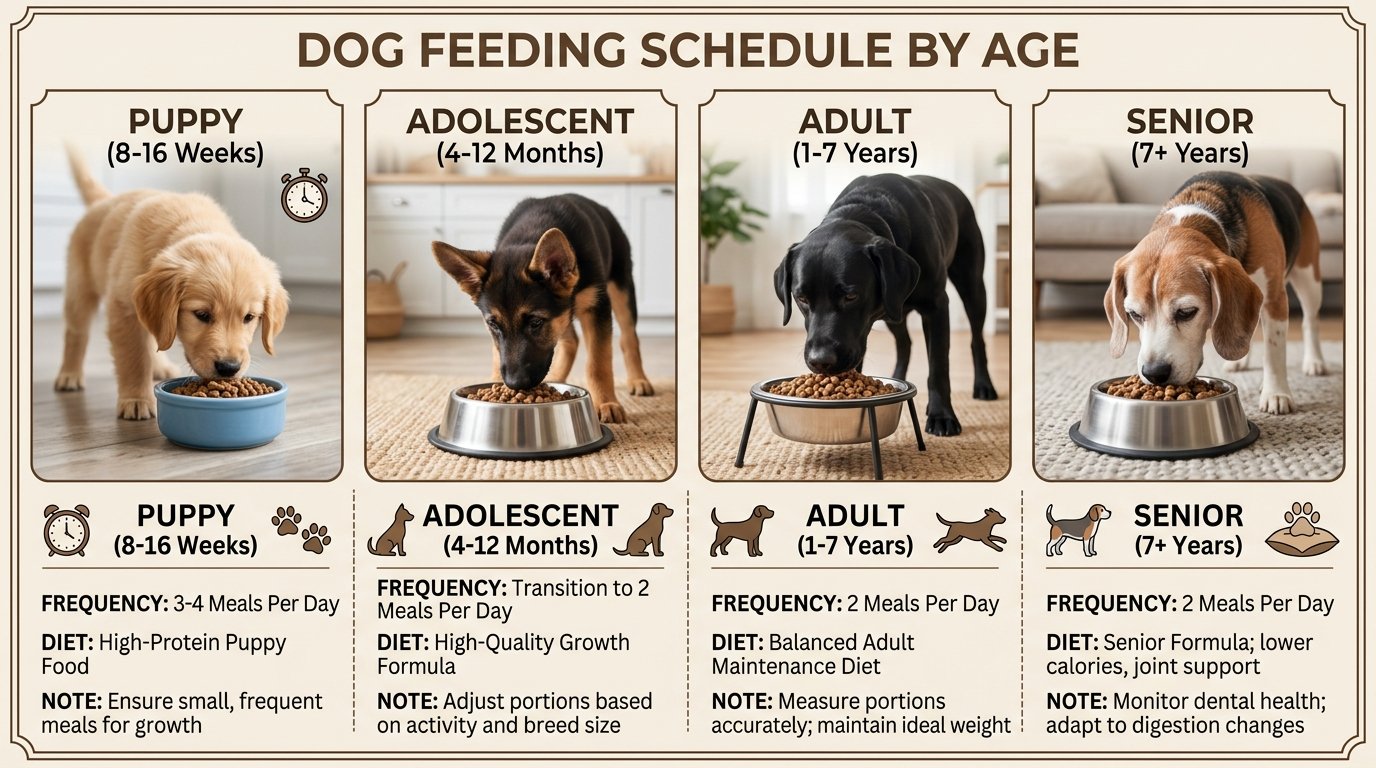
Puppy Feeding Schedule by Age
Puppies grow rapidly during their first year, which means their nutritional needs change frequently.
| Puppy Age | Meals Per Day | Feeding Tips |
|---|---|---|
| 8–12 Weeks | 4 | Small meals help maintain stable blood sugar and support rapid growth. |
| 3–6 Months | 3 | Reduce meal frequency while gradually increasing portion size. |
| 6–12 Months | 2 | Most puppies transition to two meals daily. |
| Large & Giant Breeds (up to 18–24 months) | 2 | Continue feeding a large-breed puppy formula until your veterinarian recommends transitioning to adult food. |
Pro Tip
Feed your puppy at the same times every day. Consistent meal schedules make house training easier, improve digestion, and help you notice changes in appetite that may indicate illness.
How Much Should You Feed Your Puppy?
There isn’t a single feeding amount that works for every puppy. Portion sizes depend on:
- Current weight
- Age
- Breed
- Expected adult size
- Activity level
- Calorie density of the food
General Feeding Guide
| Adult Weight | Daily Calories (Approx.) |
|---|---|
| Up to 10 lbs (4.5 kg) | 250–500 kcal |
| 10–25 lbs (4.5–11 kg) | 500–900 kcal |
| 25–50 lbs (11–23 kg) | 900–1,500 kcal |
| 50–75 lbs (23–34 kg) | 1,500–2,200 kcal |
| 75+ lbs (34+ kg) | 2,200+ kcal |
Note: These values are estimates. Always adjust feeding based on your puppy’s growth, body condition, and your veterinarian’s guidance.
Puppy Nutrition by Breed Size
Different breeds mature at different rates, so choosing a food designed for your puppy’s size is important.
| Breed Size | Examples | Recommended Formula |
|---|---|---|
| Small | Chihuahua, Yorkshire Terrier, Maltese | Small-breed puppy food |
| Medium | Beagle, Border Collie, Cocker Spaniel | Standard puppy formula |
| Large | Labrador Retriever, Golden Retriever, German Shepherd | Large-breed puppy formula |
| Giant | Great Dane, Mastiff, Saint Bernard | Giant-breed puppy formula with controlled calcium |
Large and giant breeds should not grow too quickly. Controlled energy intake and balanced calcium and phosphorus help reduce the risk of developmental orthopedic problems.
Ingredients to Look For
When reading a puppy food label, prioritize ingredients that contribute meaningful nutrition.
| Ingredient | Benefits |
|---|---|
| Chicken | Lean, highly digestible protein |
| Turkey | High-quality protein with essential amino acids |
| Salmon | Rich in DHA and omega-3 fatty acids |
| Lamb | Alternative protein for puppies with sensitivities |
| Brown Rice | Easily digestible carbohydrate source |
| Oats | Gentle on the digestive system |
| Sweet Potatoes | Fiber and slow-release energy |
| Pumpkin | Supports digestive health |
| Fish Oil | Brain, eye, and skin health |
| Blueberries | Natural antioxidants |
Ingredients to Avoid
Not every ingredient is harmful, but some provide little nutritional value or unnecessary additives.
| Ingredient | Why Limit or Avoid It |
|---|---|
| Artificial Colors | Cosmetic only; no nutritional benefit |
| Excess Added Sugar | Unnecessary calories and potential dental issues |
| Artificial Preservatives | Some owners prefer naturally preserved foods |
| Unspecified Meat Sources | Less transparency about ingredient quality |
| Excessive Fillers | May dilute nutrient density in lower-quality foods |
Choose foods with clear ingredient lists and transparent sourcing whenever possible.
How to Transition to a New Puppy Food
Changing foods suddenly can upset your puppy’s digestive system. A gradual transition helps reduce the risk of vomiting or diarrhea.
| Day | Old Food | New Food |
|---|---|---|
| 1–2 | 75% | 25% |
| 3–4 | 50% | 50% |
| 5–6 | 25% | 75% |
| 7 | 0% | 100% |
If digestive upset occurs, slow the transition and consult your veterinarian if symptoms persist.
Common Puppy Feeding Mistakes
Even experienced dog owners can make feeding mistakes. Fortunately, they’re easy to avoid.
| Mistake | Why It’s a Problem | Better Approach |
|---|---|---|
| Overfeeding | Can contribute to excess weight and joint stress | Measure portions accurately |
| Feeding Adult Dog Food Too Early | Doesn’t meet growth requirements | Feed puppy food until maturity |
| Offering Too Many Treats | Adds unnecessary calories | Keep treats to less than 10% of daily calories |
| Sudden Food Changes | Can cause digestive upset | Transition gradually |
| Sharing Unsafe Human Foods | Some foods are toxic to dogs | Offer only dog-safe treats |
Human Foods Puppies Should Never Eat
Some everyday foods are dangerous for puppies.
Avoid:
- Chocolate
- Grapes
- Raisins
- Onions
- Garlic
- Macadamia nuts
- Xylitol (found in many sugar-free products)
- Alcohol
- Cooked bones
- Excessively salty snacks
If your puppy eats any of these foods, contact your veterinarian immediately.
Signs You’re Feeding the Right Puppy Food
Your puppy’s overall condition is one of the best indicators of whether their diet is working.
| Healthy Signs | Warning Signs |
|---|---|
| Bright eyes | Dull eyes |
| Shiny coat | Dry or flaky coat |
| Healthy weight gain | Weight loss or excessive gain |
| Firm stools | Chronic diarrhea |
| Good appetite | Poor appetite |
| Active and playful | Lethargy |
| Healthy skin | Persistent itching or ear infections |
If warning signs persist, seek veterinary advice rather than switching foods repeatedly on your own.
Frequently Asked Questions
What is the best puppy food overall?
For many healthy puppies, Purina Pro Plan Puppy Chicken & Rice stands out for its balance of high-quality protein, DHA, probiotics, and strong manufacturing standards. However, the best choice depends on your puppy’s breed, size, activity level, and any medical conditions.
Is grain-free puppy food better?
Not necessarily. Unless your veterinarian recommends a grain-free diet for a specific medical reason, most puppies thrive on high-quality grain-inclusive foods that provide digestible carbohydrates and fiber.
When should I switch to adult dog food?
- Small breeds: 9–12 months
- Medium breeds: Around 12 months
- Large breeds: 12–18 months
- Giant breeds: 18–24 months
Should puppies eat wet or dry food?
Both can provide complete nutrition. Dry food is generally more economical and convenient, while wet food can help increase moisture intake and may appeal to picky eaters.
Puppy Food Buying Checklist
Before purchasing a puppy food, use this checklist:
| ✔ Checklist | Why It Matters |
|---|---|
| Real meat is the first ingredient | Indicates a quality protein source |
| Complete and balanced for growth | Meets nutritional requirements for puppies |
| Contains DHA | Supports brain and eye development |
| Includes omega-3 fatty acids | Promotes healthy skin and coat |
| Appropriate for your puppy’s breed size | Supports proper growth |
| Transparent ingredient list | Makes quality easier to evaluate |
| Manufactured by a reputable company | Indicates stronger quality-control practices |
You should also go through our guide Vet-Approved Homemade Dog Food Recipes
Final Verdict
Selecting the best dog food for puppies is about more than choosing the most expensive bag or the brand with the most attractive packaging. A great puppy food provides balanced nutrition, high-quality ingredients, and appropriate levels of protein, fat, vitamins, and minerals to support healthy growth.
Our top recommendations cater to different needs:
- Best Overall: Purina Pro Plan Puppy Chicken & Rice
- Best for Sensitive Stomachs: Royal Canin Puppy
- Best Vet-Recommended: Hill’s Science Diet Puppy
- Best Natural Formula: Blue Buffalo Life Protection Puppy
- Best High-Protein Option: Orijen Puppy
- Best Budget Choice: Iams ProActive Health Smart Puppy
Whichever formula you choose, introduce it gradually, monitor your puppy’s body condition, and schedule regular veterinary checkups to ensure healthy development.
References For additional reading and to support evidence-based feeding decisions, consult:
- Association of American Feed Control Officials (AAFCO) – Dog Food Nutrient Profiles
- World Small Animal Veterinary Association (WSAVA) – Global Nutrition Guidelines
- Merck Veterinary Manual – Canine Nutrition
- Tufts University Cummings School of Veterinary Medicine – Pet Food Nutrition Resources
About This Guide
This guide was created by reviewing veterinary nutrition recommendations, manufacturer product information, established canine nutrition standards, and practical feeding guidance to help dog owners make informed decisions. While every effort has been made to ensure accuracy, individual puppies have unique nutritional needs. Consult your veterinarian before making significant dietary changes, especially if your puppy has a medical condition or special dietary requirements.