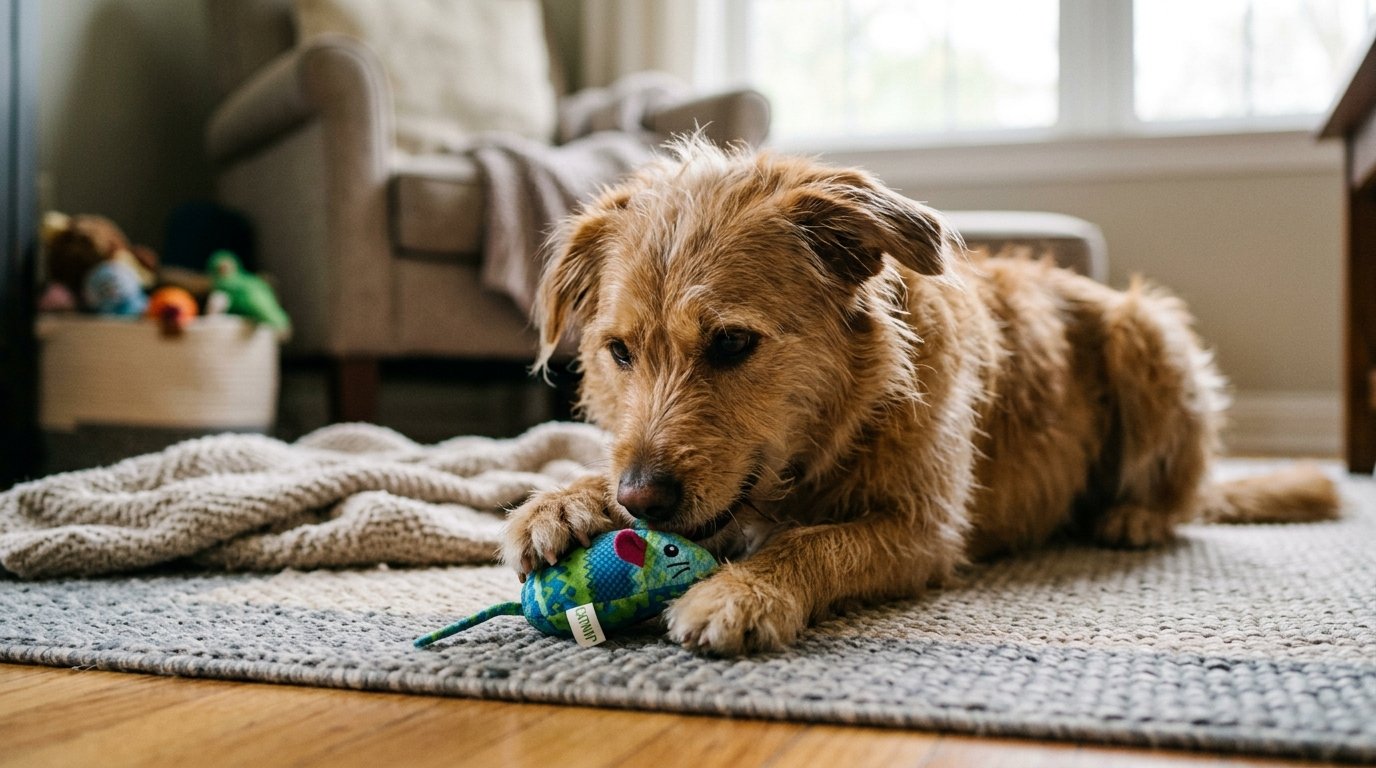
If you have both a cat and a dog, you may have wondered, can dogs play with catnip toys? The short answer is yes, dogs can generally play with catnip toys, provided the toy itself is safe, intact, appropriately sized, and your dog is supervised.
The catnip itself is not usually the main concern. The American Kennel Club lists catnip as a nontoxic plant for dogs. However, a cat toy may contain small parts, loose strings, stuffing, plastic pieces, or a squeaker that could become dangerous if a dog tears the toy apart.
So if your dog occasionally steals your cat’s catnip mouse, there is usually no reason to panic simply because it contains catnip. What matters more is how your dog plays with the toy.
Quick Answer: Can Dogs Play With Catnip Toys?
Yes, dogs can usually play with catnip toys, but catnip toys are not necessarily the best choice for every dog.
Catnip itself is considered nontoxic to dogs, but many cat toys are designed for a cat’s smaller size and gentler style of play. If your dog is a strong chewer or tends to destroy plush toys, a durable dog-specific toy may be a better alternative.
The key distinction is simple:
The catnip is generally not the problem. The construction of the toy may be.
What Is Catnip?
Catnip, scientifically known as Nepeta cataria, is a herb in the mint family. It is particularly famous because many cats respond to its active compound, nepetalactone.
Cats may respond to catnip by rolling, rubbing against objects, becoming playful, or sometimes becoming more relaxed. Dogs do not typically have the same characteristic reaction.
That means your dog may enjoy a catnip toy, but you should not expect the same response you see when your cat plays with it.
Your dog may simply enjoy the toy because of its:
- texture
- scent
- shape
- squeaker
- crinkle sound
- movement
- size
- novelty
Is Catnip Toxic to Dogs?
Catnip is considered nontoxic to dogs. The American Kennel Club lists catnip among plants considered nontoxic to dogs. It also points out that nontoxic does not necessarily mean every individual pet will react identically, so owners should still monitor their pets around unfamiliar plants or substances.
This is why it is important not to confuse these two statements:
“Catnip is nontoxic to dogs.”
and
“Every catnip toy is safe for dogs.”
They are not the same thing.
A catnip toy could still contain materials that your dog should not chew or swallow.
Do Dogs Get the Same Effect From Catnip as Cats?
Usually, no.
The familiar catnip response is mainly associated with cats. Dogs don’t generally become “high” from catnip in the same way cats can react to it.
If your dog becomes excited about a catnip mouse, the toy itself may be responsible for the attraction.
For example, a dog might love a little plush toy because it is easy to carry around. Another dog may focus on the squeaker. A third dog may simply enjoy chewing the fabric.
So don’t assume the catnip is what your dog finds interesting.
Why Does My Dog Like My Cat’s Catnip Toy?
Dogs naturally investigate objects with their noses and mouths. A catnip toy can therefore be interesting even when the dog has no particular response to catnip.
Your dog may enjoy:
The smell
Dogs have a powerful sense of smell, so an unfamiliar scent can make a small toy especially interesting.
The texture
Soft plush fabric may appeal to dogs that enjoy carrying or gently chewing toys.
The squeaker
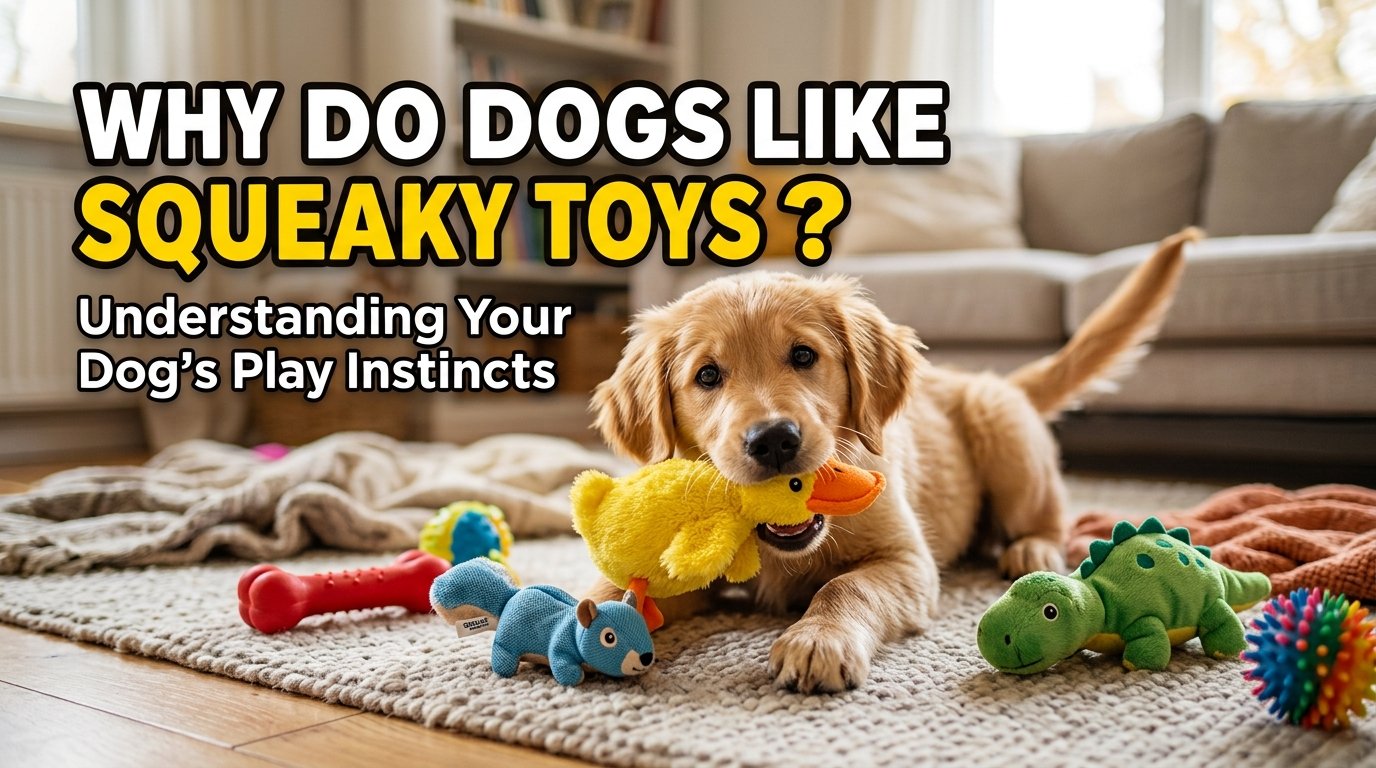
Some dogs become very interested in squeaky toys because of the sound and movement.
The crinkle sound
Crinkle paper can add another sensory element that makes a toy more interesting during play.
The size
Small toys can be easy for a dog to carry around.
Unfortunately, this same feature can make them inappropriate for larger dogs because a toy that is too small may become a choking hazard.
Are Catnip Toys Safe for Dogs?
They can be, but you need to evaluate the whole toy, not just the ingredient.
Before letting your dog play with a catnip toy, look at the toy carefully.
Check the seams
Are they coming apart?
Look for loose pieces
Check for:
- plastic parts
- strings
- ribbons
- feathers
- bells
- broken pieces
- loose stuffing
Consider your dog’s chewing style
A gentle dog that carries a toy around is very different from a dog that destroys every plush toy within minutes.
If your dog is a powerful chewer, a fragile cat toy probably isn’t a good match.
Check the size
The toy should be appropriately sized for your dog.
A tiny cat toy may be fine for a cat but unsuitable for a large dog.
Supervise play
When your dog tries a new toy, watch how they interact with it.
You may quickly discover whether your dog wants to carry it, toss it, chew it, or destroy it.
What Are the Risks of Catnip Toys for Dogs?
The main risks usually come from the physical toy rather than the catnip.
Choking
Small components can become choking hazards.
Swallowed stuffing
Dogs that rip plush toys apart may swallow fabric or stuffing.
Squeaker ingestion
A dog that removes a squeaker may swallow it.
Strings and ribbons
Loose strings can be dangerous if swallowed.
Broken plastic
Small plastic pieces can cause injury or become a choking or gastrointestinal hazard.
The important thing is to inspect the toy regularly and remove it when it becomes damaged.
Can Puppies Play With Catnip Toys?
I would be more cautious with puppies.
Puppies naturally explore their surroundings with their mouths, and many are enthusiastic chewers. A small catnip toy may therefore be a poor choice if your puppy can easily tear it apart.
Instead, choose a puppy-appropriate toy that matches the puppy’s size and chewing behavior.
You should also inspect puppy toys regularly because even an appropriately selected toy can become unsafe once it starts breaking apart.
Can Large Dogs Play With Catnip Toys?
A large dog may be able to play with a catnip toy, but size matters.
Many cat toys are relatively small, so they may not be appropriate for larger dogs.
If your large dog enjoys soft toys, look for a toy that is large enough and appropriately constructed for the dog’s play style.
What If My Dog Steals My Cat’s Catnip Toy?
This is probably the most common real-life situation for households with both cats and dogs.
Your cat has a catnip mouse.
Your dog sees it.
Suddenly, it becomes the most fascinating toy in the house.
If your dog briefly picks it up, the presence of catnip alone is not usually a reason to panic because catnip is considered nontoxic to dogs.
Instead, check the condition of the toy.
If your dog gently carries it and leaves it intact, the immediate concern is different from a dog that starts ripping the toy apart.
If your dog begins destroying it, calmly redirect them to an appropriate toy.
A Catnip Toy Designed for Both Cats and Dogs
If your dog is specifically attracted to catnip toys, you can choose a product that is designed for both cats and dogs rather than simply giving your dog a fragile cat toy.
One option is the waithem Cat & Dog Chew Toys with Catnip, 2-Pack. The set includes catnip, crinkle paper, and a squeaky ball, giving pets several sensory elements to explore. Its two-toy format can also be convenient for a household with both a cat and a dog.
For a dog that enjoys soft, squeaky, or crinkly toys, this type of product can be a natural alternative to constantly stealing the cat’s toys.
However, supervise your dog when introducing the toys. No plush or squeaky toy should be considered indestructible. If your dog tears the toy, exposes the stuffing, damages the squeaky ball, or pulls off pieces, remove it immediately.
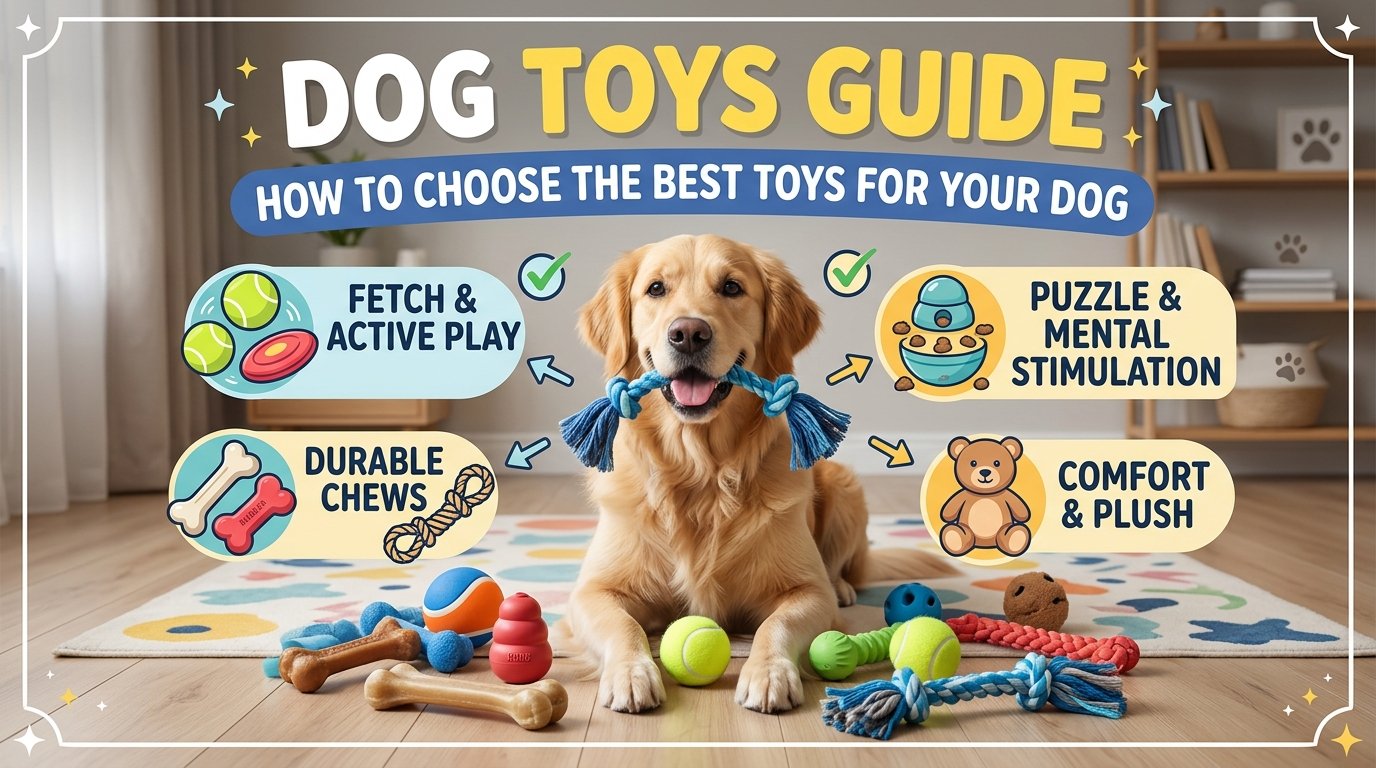
How to Choose a Better Dog Toy
Your dog’s reaction to the catnip toy can help you choose the right replacement.
If your dog loves carrying it
Try a suitably sized dog plush toy or durable carry toy.
If your dog loves chewing it
Look for a durable dog-specific chew or rubber enrichment toy.
If your dog loves the squeaker
Choose an appropriately sized dog squeaky toy, but supervise play if your dog tends to destroy squeakers.
If your dog loves the crinkle sound
Look for an appropriately sized crinkle toy designed for dogs.
If your dog loves chasing it
A ball or interactive chase toy may be more appropriate.
The goal is not necessarily to find another catnip toy. It is to identify what your dog actually enjoys about the toy and find a safer option that matches that play style.
Can Dogs Eat Catnip?
This is different from asking whether dogs can play with catnip toys.
Catnip is considered nontoxic to dogs, but that does not mean you should intentionally give your dog large quantities of catnip.
If your dog eats an unfamiliar substance or part of a toy and then develops concerning symptoms, contact your veterinarian for advice.
Also remember that eating part of a toy is a separate safety issue from consuming catnip.
If a dog swallows stuffing, string, plastic, a squeaker, or another toy component, the concern is the foreign material rather than simply the catnip.
Can Catnip Calm Dogs?
I wouldn’t use a catnip toy as a dog calming treatment.
Catnip’s familiar behavioral effects are primarily associated with cats. If your dog has significant anxiety, fear, destructive behavior, or persistent restlessness, it’s better to identify the underlying cause rather than relying on a catnip toy.
A veterinarian can help if the behavior is persistent, sudden, severe, or accompanied by other concerning signs.
Should Dogs and Cats Share Toys?
They can live in the same household, but sharing every toy isn’t necessarily a good idea.
Cats and dogs have different body sizes, chewing habits, and play styles.
A small cat toy may be perfectly suitable for the cat but inappropriate for the dog.
It’s often easier to give each pet toys that match their own needs.
For homes with a particularly enthusiastic dog, keep small cat toys somewhere the dog cannot access them.
How to Keep Cat Toys Away From Dogs
If your dog constantly steals the cat’s toys, a few simple changes can help.
Keep small cat toys in a storage container when they’re not being used.
Give your cat a dog-free area for play.
Use elevated spaces where appropriate for your cat.
Teach your dog a reliable “leave it” cue.
Redirect your dog toward an appropriate toy rather than turning the cat’s toy into a game of chase.
If your pets have any tendency to guard toys, avoid forcing them to share.
Catnip Toy vs. Dog Toy
| Feature | Catnip Toy | Dog-Specific Toy |
|---|---|---|
| Designed primarily for | Cats | Dogs |
| Catnip | Often included | Usually not necessary |
| Chewing strength | Varies | Available in different durability levels |
| Size range | Often smaller | Usually available for different dog sizes |
| Enrichment | Depends on design | Many options available |
| Best choice for strong chewers | Usually not | Choose a durable option |
The important point isn’t that catnip toys are automatically dangerous.
It’s that a cat toy isn’t automatically a good dog toy.
How Often Should You Replace a Dog or Cat Toy?
Don’t replace a toy simply because you’ve owned it for a certain number of months.
Instead, inspect it regularly.
Replace it when you notice:
- torn fabric
- loose seams
- exposed stuffing
- broken plastic
- missing pieces
- damaged squeakers
- pieces that can be swallowed
Regular inspection is especially important for dogs that are strong chewers or like to destroy plush toys.
What If My Dog Swallowed Part of a Catnip Toy?
If your dog has swallowed part of the toy, don’t assume that everything is fine just because the toy contained catnip.
The swallowed material could be the bigger concern.
Contact your veterinarian if you know your dog swallowed a toy component, particularly if the dog develops vomiting, abdominal discomfort, weakness, difficulty passing stool, or other unusual symptoms.
If your dog is showing severe or rapidly worsening symptoms, seek veterinary care promptly.
Frequently Asked Questions
Can dogs play with catnip toys?
Yes. Dogs can generally play with catnip toys because catnip itself is considered nontoxic to dogs. However, the toy still needs to be appropriately sized, intact, and suitable for the dog’s chewing behavior.
Will catnip make a dog high?
Dogs do not generally experience the characteristic catnip reaction that many cats have. If your dog likes a catnip toy, the attraction may be its texture, scent, squeaker, shape, or movement.
Is catnip poisonous to dogs?
Catnip is considered nontoxic to dogs. However, individual animals can react differently, and other materials in a catnip toy may still present hazards.
Can puppies play with catnip toys?
They can interact with them, but puppies need extra supervision because they commonly explore objects by chewing and may destroy small toys. A properly sized puppy toy is usually a better choice.
Why does my dog like my cat’s catnip toy?
Your dog may simply enjoy the toy’s smell, texture, squeaker, shape, crinkle sound, or movement. The catnip itself may not be what attracts your dog.
Should I let my dog share toys with my cat?
It is generally better to choose toys appropriate for each pet. Small cat toys may present a choking risk for some dogs, particularly larger dogs.
What should I do if my dog destroys a catnip toy?
Take the damaged toy away and replace it with an appropriately sized toy. Don’t allow your dog to continue chewing a toy once pieces, stuffing, strings, or squeakers become accessible.
Final Verdict: Can Dogs Play With Catnip Toys?
Yes, dogs can generally play with catnip toys, but the catnip isn’t the main factor to consider.
Catnip itself is considered nontoxic to dogs, so briefly playing with an intact catnip toy isn’t automatically dangerous.
The more important questions are:
Is the toy large enough? Is it intact? Can your dog destroy it? Does it contain small parts? Does your dog try to swallow pieces?
For a gentle dog that simply carries an intact catnip toy around, occasional supervised play may be reasonable.
For a strong chewer or toy destroyer, choose a properly sized toy designed with your dog’s play style in mind.
And if your dog keeps stealing the cat’s catnip toys, don’t just look at the catnip. Look at what your dog actually enjoys about the toy. That information can help you choose a safer option that provides the same type of fun.