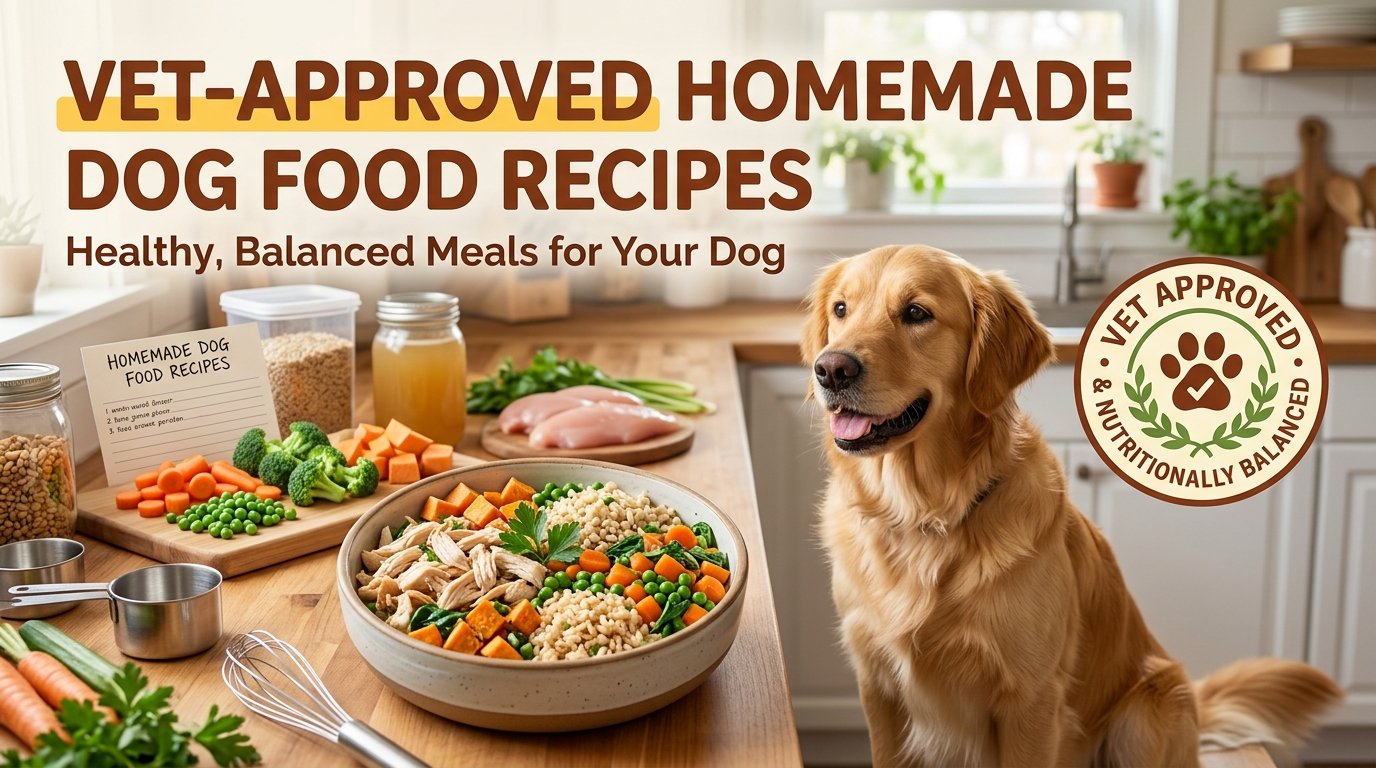
Many dog owners are interested in homemade dog food because they want greater control over the ingredients their pets eat. When prepared correctly, homemade meals can be nutritious, fresh, and tailored to your dog’s needs. However, it’s important to understand that not all homemade dog food recipes provide complete and balanced nutrition.
This guide covers vet-approved homemade dog food recipes, essential nutrients dogs need, ingredients to avoid, and expert tips for creating healthy meals at home.
Is Homemade Dog Food Good for Dogs?
Homemade dog food can be a healthy option when it is properly balanced. Dogs require specific amounts of protein, fats, vitamins, minerals, and carbohydrates to maintain their health.
Benefits of homemade dog food may include:
- Control over ingredient quality
- Fewer artificial additives and preservatives
- Ability to accommodate food sensitivities
- Freshly prepared meals
- Customization for individual needs
However, homemade diets that are not balanced can lead to nutritional deficiencies over time. Many veterinarians recommend consulting a veterinary nutritionist before feeding a homemade diet exclusively.
Essential Nutrients Dogs Need
A balanced homemade dog food recipe should include:
High-Quality Protein
Protein supports muscles, organs, skin, and immune function.
Good sources include:
- Chicken
- Turkey
- Lean beef
- Fish
- Eggs
Healthy Fats
Fats provide energy and support skin and coat health.
Healthy options include:
- Fish oil
- Flaxseed oil
- Small amounts of olive oil
Carbohydrates
Carbohydrates provide energy and fiber.
Examples include:
- Brown rice
- Oatmeal
- Sweet potatoes
- Quinoa
Vegetables
Vegetables supply vitamins, minerals, and antioxidants.
Dog-friendly vegetables include:
- Carrots
- Green beans
- Peas
- Spinach
- Pumpkin
Calcium
Homemade diets often lack sufficient calcium.
Consult your veterinarian regarding appropriate calcium supplementation.
Vet-Approved Homemade Dog Food Recipes
1. Chicken and Rice Dog Food Recipe
Ingredients
- 2 cups cooked chicken breast, shredded
- 1 cup cooked brown rice
- 1/2 cup carrots, chopped
- 1/2 cup green beans, chopped
Instructions
- Cook chicken thoroughly.
- Steam vegetables until soft.
- Mix chicken, rice, and vegetables together.
- Allow to cool before serving.
Benefits
- Easy to digest
- Suitable for many adult dogs
- Good source of lean protein
2. Turkey and Sweet Potato Recipe
Ingredients
- 2 cups lean ground turkey
- 1 cup cooked sweet potato
- 1/2 cup peas
- 1/2 cup carrots
Instructions
- Cook turkey completely.
- Steam vegetables.
- Mash sweet potatoes.
- Combine all ingredients.
Benefits
- Rich in protein
- Provides fiber and vitamins
- Supports healthy digestion
3. Beef and Vegetable Recipe
Ingredients
- 2 cups lean ground beef
- 1 cup cooked brown rice
- 1/2 cup spinach
- 1/2 cup carrots
Instructions
- Brown beef thoroughly and drain excess fat.
- Cook rice.
- Steam vegetables.
- Mix all ingredients.
Benefits
- Protein-rich meal
- Contains iron and essential nutrients
4. Salmon and Sweet Potato Recipe
Ingredients
- 2 cups cooked salmon
- 1 cup sweet potato
- 1/2 cup green beans
Instructions
- Cook salmon thoroughly and remove bones.
- Cook sweet potatoes until soft.
- Steam green beans.
- Mix ingredients together.
Benefits
- Rich in omega-3 fatty acids
- Supports skin and coat health
Foods Dogs Should Never Eat
Avoid these ingredients in homemade dog food:
- Chocolate
- Grapes
- Raisins
- Onions
- Garlic in large amounts
- Xylitol
- Alcohol
- Macadamia nuts
- Cooked bones
- Excess salt
These foods can be toxic or dangerous for dogs. You can also check What to Feed Dogs With an Upset Stomach
Homemade Dog Food Feeding Tips
Transition Slowly
Introduce homemade food gradually over 7–10 days to reduce digestive upset.
Monitor Weight
Watch for changes in:
- Body condition
- Energy levels
- Stool quality
Use Proper Portions
Calorie needs vary based on:
- Age
- Breed
- Activity level
- Health status
Consult your veterinarian for personalized feeding recommendations.
Store Food Safely
- Refrigerate for up to 3–4 days
- Freeze extra portions for later use
Common Mistakes When Making Homemade Dog Food
Not Balancing Nutrients
Protein alone is not enough. Dogs require vitamins, minerals, healthy fats, and calcium.
Feeding the Same Recipe Forever
Variety may help provide a broader nutrient profile.
Skipping Veterinary Guidance
A veterinarian can help ensure the diet meets your dog’s nutritional requirements.
Frequently Asked Questions
What is the best homemade food to feed a dog?
There is no single “best” homemade dog food recipe for every dog. Generally, a balanced meal containing lean protein, healthy carbohydrates, vegetables, and appropriate vitamin and mineral supplementation is considered ideal. Recipes made with chicken, turkey, rice, sweet potatoes, and vegetables are commonly recommended.
What should be the main ingredient in homemade dog food?
High-quality animal protein should usually be the primary ingredient. Chicken, turkey, beef, fish, and eggs provide essential amino acids that support muscle maintenance, growth, and overall health.
What should the top 3 ingredients be in dog food?
For most healthy dogs, the top three components should include:
- Animal protein (chicken, turkey, beef, fish)
- Nutritious carbohydrates (brown rice, sweet potatoes, oats)
- Vegetables rich in vitamins and minerals (carrots, green beans, spinach)
A balanced recipe should also include healthy fats and adequate calcium.
What do vets recommend for homemade dog food?
Veterinarians generally recommend homemade dog food only when it is nutritionally balanced. Most vets advise including a quality protein source, healthy carbohydrates, vegetables, and appropriate vitamin-mineral supplementation. Working with a veterinary nutritionist is often recommended for long-term homemade feeding.
Final Thoughts
Vet-approved homemade dog food recipes can be a nutritious way to feed your dog when prepared carefully. The key is balance. Dogs need more than just meat; they require a combination of protein, carbohydrates, healthy fats, vitamins, and minerals to thrive.
Before switching to a fully homemade diet, consult your veterinarian or a board-certified veterinary nutritionist. With proper planning, homemade meals can become a healthy part of your dog’s nutrition plan while giving you confidence in the ingredients you serve.