Sharing your home with a cat brings plenty of joy, but finding the right place for a litter box can be challenging. A traditional litter tray sitting in the corner of a living room, bathroom, or bedroom may interrupt your decor, scatter litter across the floor, and make a small space feel cluttered.
Fortunately, there are several ways to create a more attractive litter area without giving up your cat’s comfort.
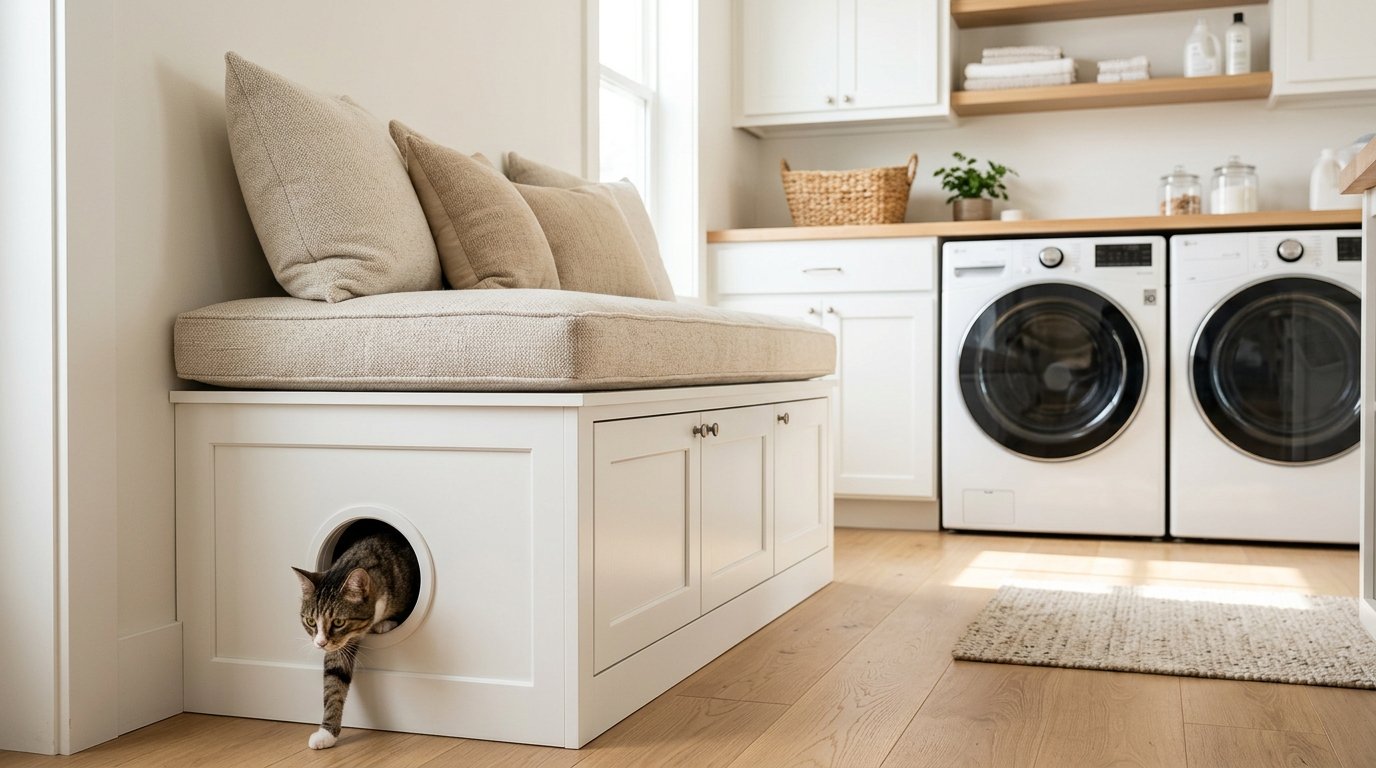
Hidden cat litter box ideas combine practical litter-box placement with furniture, decorative enclosures, and creative storage solutions. Depending on your home’s layout, you can use a purpose-built litter box cabinet, a plant-inspired enclosure, a decorative rattan design, or a piece of furniture that blends into your existing interior.
The important thing is to remember that hiding a litter box should make life easier for both you and your cat. A beautiful cabinet is not a good solution if your cat cannot turn around comfortably, ventilation is poor, or cleaning becomes difficult.
In this guide, you’ll discover practical ways to conceal a litter box, we compare six product options, learn how to choose the right enclosure, and understand the essential safety and hygiene considerations before buying.
Quick Answer: What Is the Best Way to Hide a Cat Litter Box?
The best way to hide a cat litter box is to place a properly sized litter tray inside a purpose-built enclosure that provides easy access, sufficient interior space, ventilation, and convenient cleaning.
Popular options include:
- Litter box furniture: A cabinet-style enclosure that blends with living-room or bedroom furniture.
- Decorative plant enclosures: Designs that resemble planters and suit nature-inspired interiors.
- Rattan-style furniture: A woven or woven-look exterior for a relaxed, natural aesthetic.
- Modern metal-frame enclosures: Decorative furniture with a contemporary or glam appearance.
- Side-entry cabinets: Enclosures with an entrance positioned along one side.
- DIY concealment: A carefully adapted furniture piece with a suitably sized opening and easy access for cleaning.
For most homes, the right choice depends on your available floor space, the size of your cat, the dimensions of the litter tray, and whether your cat prefers an open or enclosed toilet area.
Why Consider a Hidden Cat Litter Box?
A litter box enclosure can help integrate your cat’s essential supplies into your home design.
1. A More Organized Living Space
A purpose-built enclosure can make the litter area look more like a piece of furniture than a pet-care station. This is especially useful when your litter box must be placed in a visible room.
2. A Defined Litter Area
An enclosure can help keep the litter tray in one designated location and may catch some scattered litter, depending on its entrance and construction.
However, it will not eliminate tracking completely. A suitable litter mat and regular sweeping can help manage stray litter.
3. A Better Match for Your Interior
Hidden litter furniture is available in a variety of styles, including white farmhouse cabinets, contemporary designs, natural-looking rattan, and decorative plant-inspired enclosures.
You can select a design that complements your existing furniture rather than treating the litter box as a separate visual feature.
4. A More Discreet Pet-Care Setup
An enclosure can partially conceal the litter tray from guests and reduce its visual prominence.
Important: Concealment is not the same as odor control. Regular scooping, proper ventilation, and a clean litter tray remain essential.
9 Hidden Cat Litter Box Ideas Worth Considering
1. Use a Dedicated Litter Box Furniture Cabinet
Best for: Living rooms, bedrooms, and homes where appearance matters.
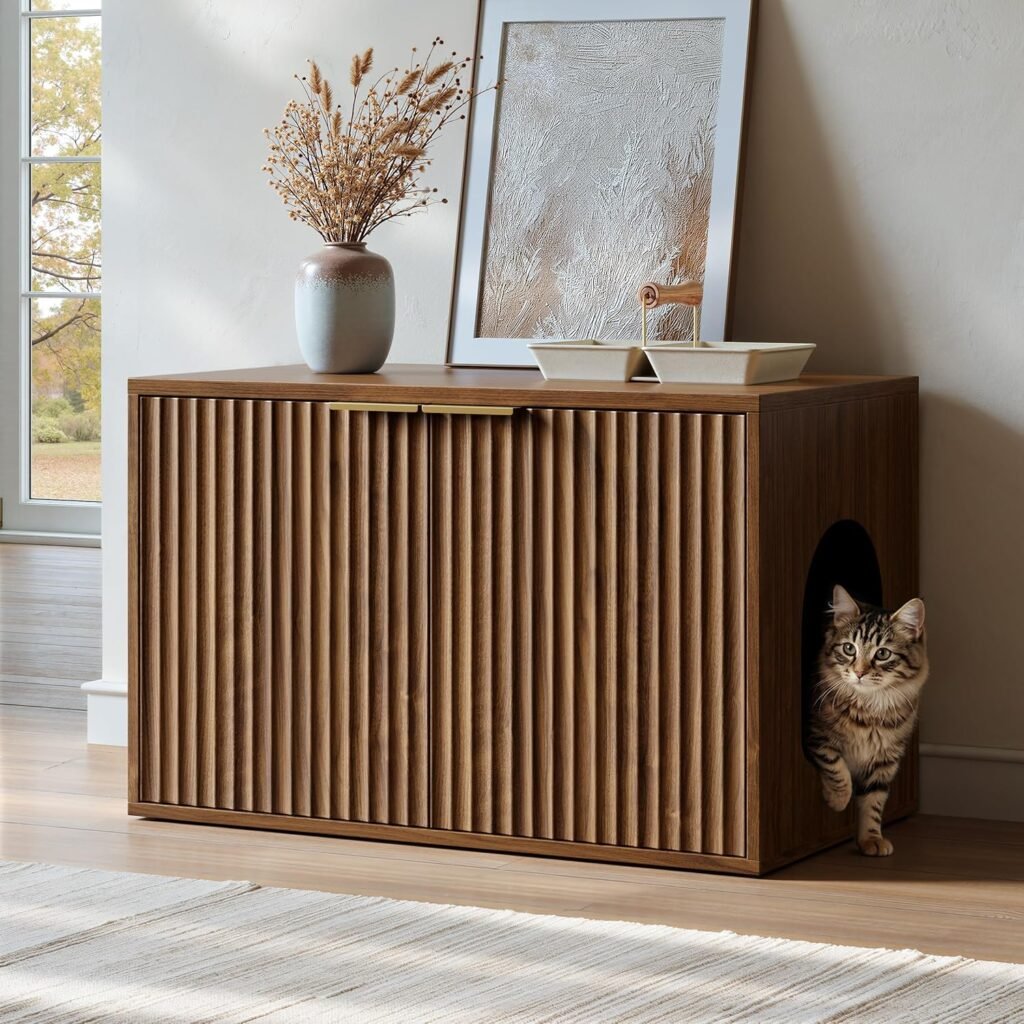
A litter box furniture cabinet is one of the most straightforward ways to hide a traditional litter tray.
These enclosures usually have a furniture-style exterior, an entrance for the cat, and a compartment that accommodates the litter box. Some designs also provide a surface for decorative objects or everyday storage.
Before buying, check the usable interior dimensions rather than relying on the furniture’s overall width. The tray must fit inside with enough room for your cat to enter, turn, dig, and position itself naturally.
A cabinet with a wide opening and accessible doors can also make daily scooping easier.
The Evermagin 31.5″ Cat Litter Box Enclosure Furniture is an option to investigate if you want a dedicated furniture-style solution. Its listed 31.5-inch length gives you a starting point for comparing the footprint with your available space.
Before ordering, verify the internal measurements, entrance dimensions, construction, and whether your existing litter tray will fit comfortably.
2. Choose a Green and Gold Metal-Frame Enclosure
Best for: Glam interiors, modern bedrooms, and decorative living spaces.
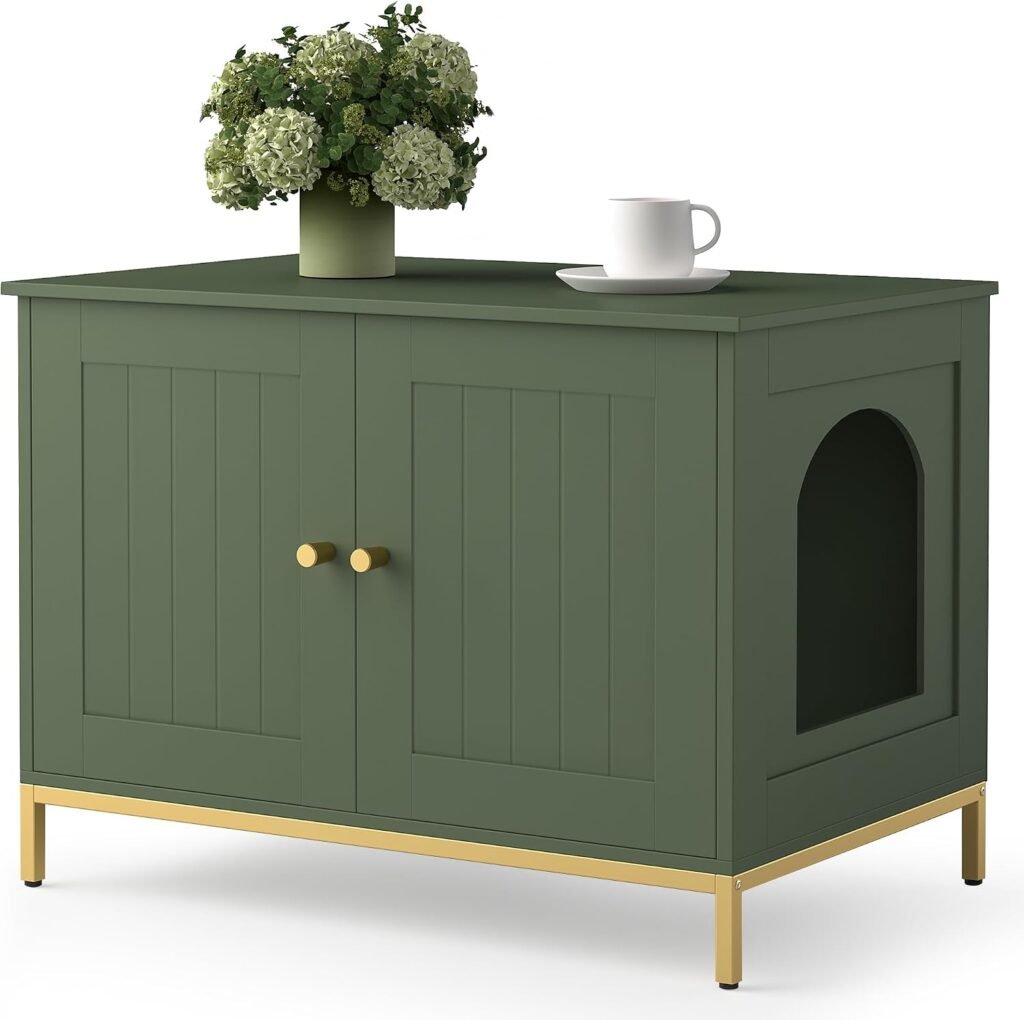
Not every litter box enclosure needs to resemble a conventional wooden cabinet. A decorative metal-frame design can introduce a different look while keeping the litter tray out of immediate view.
28.3″ L Cat Litter Box Enclosure with Metal Frame, Green and Gold finishes may suit rooms with botanical accents, warm metallic details, or modern decorative furniture
Its listed 28.3-inch length makes it worth comparing with smaller furniture options if floor space is limited.
What to check: A compact exterior does not guarantee a spacious interior. Measure the litter tray and confirm the entrance is large enough for your cat. Consider whether the frame and enclosure materials will be easy to wipe clean.
3. Try a Hidden Plant-Style Litter Box
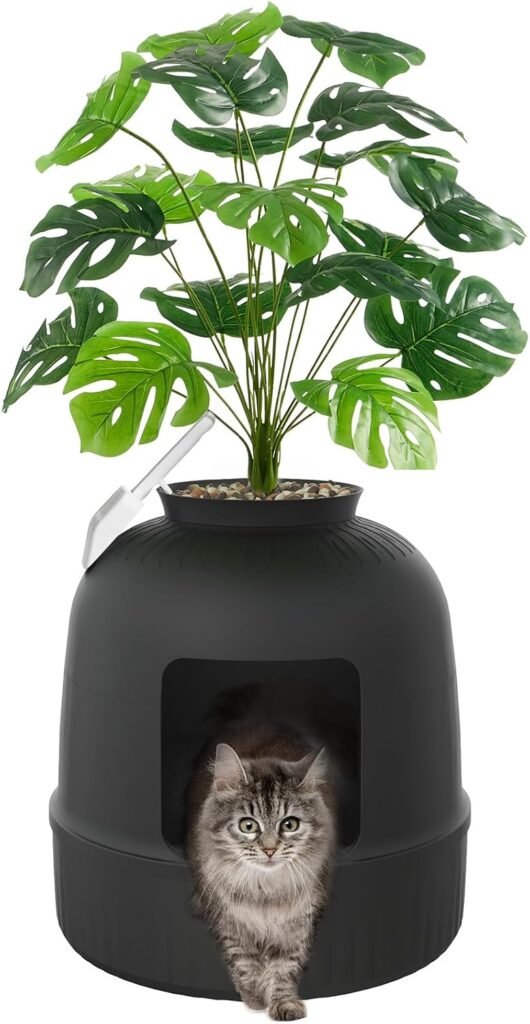
Best for: Plant-inspired decor and people who want a decorative alternative to a traditional litter cabinet.
A plant-style litter enclosure can help a litter area blend into a room with greenery, neutral colors, and natural textures.
These products are designed to resemble decorative planters rather than conventional litter furniture. The litter tray sits inside the enclosure, while the cat enters through a designated opening.
Hidden Plant Cat Litter Box with Plastic Scoop, Black is a plant-inspired design and includes a plastic scoop. This may be worth considering if you want a more decorative litter solution.
Before purchasing, confirm the usable space, cleaning access, and ventilation. Don’t assume that a plant-style exterior automatically provides adequate airflow or that every cat will accept an enclosed toilet.
4. Use an Extra-Large Natural Rattan-Style Enclosure
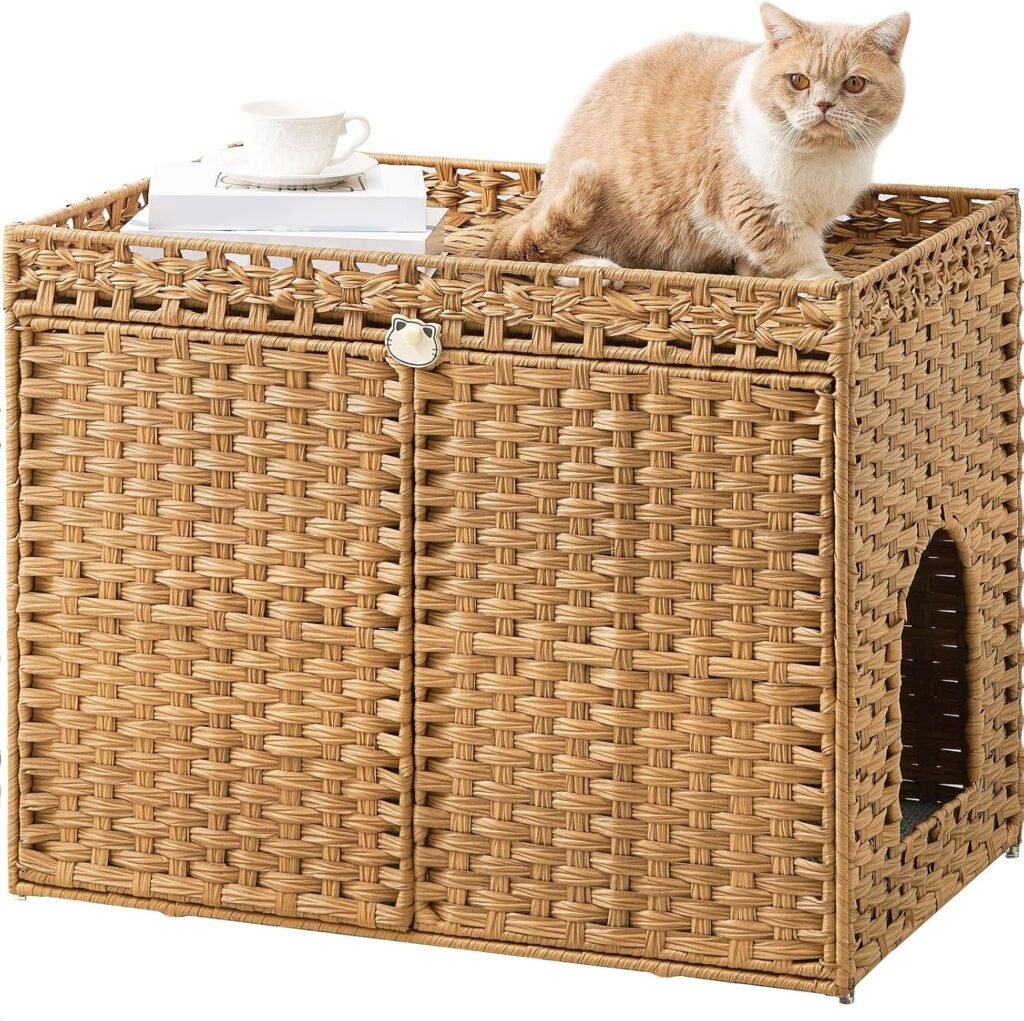
Best for: Natural, bohemian, coastal, and relaxed contemporary interiors.
Rattan-style furniture can work particularly well in rooms with wood accents, woven baskets, natural fabrics, or neutral decor.
An extra-large enclosure may also be worth exploring if your current litter tray feels cramped inside smaller furniture. Nevertheless, the words “extra large” in a product title are not enough to establish that it will fit your cat.
Cat Litter Box Enclosure, Extra Large Hidden PE Rattan Natural is a natural PE-rattan-style enclosure. If your cat is large or likes to dig vigorously, prioritize a spacious interior and an easy-to-clean litter tray over the appearance of the woven exterior.
5. Consider a Side-Entry Litter Box Cabinet
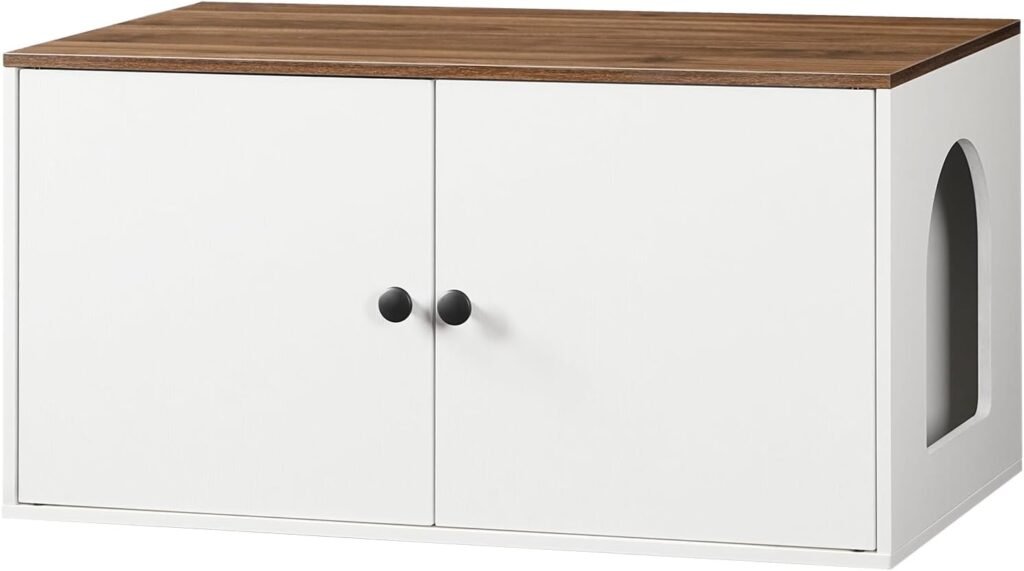
Best for: Homes where you want the entrance positioned away from the front of the furniture.
A side-entry enclosure can create a cleaner front-facing appearance and may fit better against a wall or alongside other furniture.
However, a side opening is not automatically better for cats. The entrance must be easy to locate and use, and your cat should be able to leave without feeling trapped.
HOOBRO Cat Litter Box Enclosure, Hidden Litter Box Furniture with Side Entry is a side-entry design. This is an option to investigate if the orientation of the opening matters for your room layout.
Before ordering, check the entrance location in the product images and dimensions, as well as whether the internal compartment allows the cat to turn comfortably.
6. Choose a White Barn-Door Litter Box Enclosure
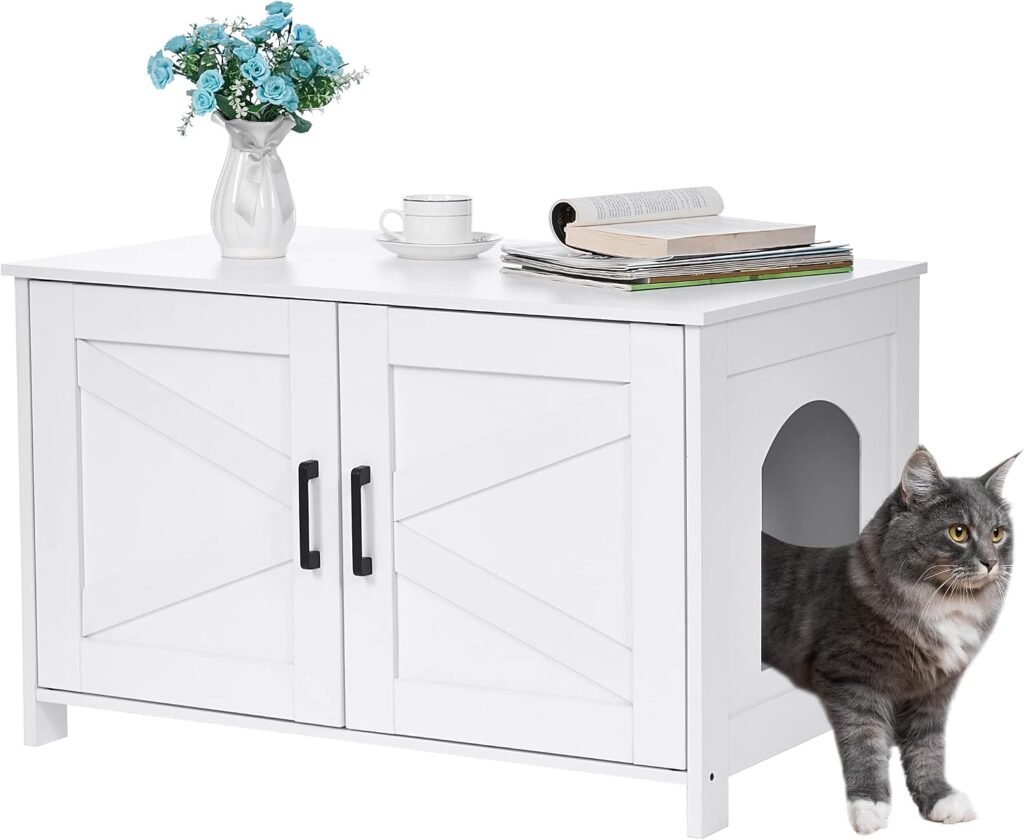
Best for: Farmhouse, cottage, and light-colored interiors.
White furniture can blend easily into many bedrooms, bathrooms, and living spaces. A barn-door-style enclosure can also complement farmhouse decor and provide access to the litter tray for cleaning.
31.5″ L Cat Litter Box Enclosure with Barn Door, White provides a useful external measurement for initial comparisons. Verify the interior dimensions and door clearance before deciding whether it will accommodate your litter tray.
A white finish may require more frequent wiping around the entrance, particularly if litter dust collects on the surface.
7. Adapt a Suitable Storage Cabinet
If purpose-built litter furniture doesn’t fit your budget or room, a suitable cabinet may offer another option.
Before adapting furniture, confirm that it can be modified without compromising structural stability. The opening must have smooth, safe edges, and the interior should be easy to inspect and clean.
Important considerations include:
- Enough room for the cat and litter tray
- An entrance that does not require an awkward jump
- Adequate ventilation
- Easy access for scooping
- No exposed wires, sharp hardware, or toxic finishes
- Stable construction that cannot tip over
Do not seal a cat inside an airtight cabinet or use a design that traps moisture and odors.
8. Create a Discreet Bathroom Litter Station
A bathroom may offer a convenient location because its surfaces are often easy to clean. If space permits, a litter enclosure can sit in an accessible corner or beside a suitable storage unit.
Make sure the cat can reach the box at all times. Keep it away from noisy appliances, avoid placing it beside food and water, and do not choose a location that becomes inaccessible when a door closes.
For cats with mobility limitations, an enclosure with a low, easy-to-reach entrance may be preferable to a high-sided design.
9. Use a Living-Room Corner Without Making It Look Cluttered
Sometimes the simplest solution is the best.
Place a well-designed litter enclosure in a quiet corner, coordinate its finish with nearby furniture, and use a litter mat to catch loose particles.
Keep the surrounding area simple rather than crowding it with decorative items that make cleaning harder.
Avoid placing the enclosure somewhere your cat can be startled by frequent foot traffic or blocked by another pet.
Which Hidden Litter Box Idea Fits Your Home?
| Product | Style or listed feature | Consider it if… |
|---|---|---|
| Evermagin 31.5-inch enclosure | Furniture-style, 31.5-inch listed length | You want a dedicated litter cabinet |
| Homhedy green and gold | Metal-frame look, 28.3-inch listed length | You prefer a decorative, compact-looking design |
| Lifewit plant-style enclosure | Plant-inspired style; scoop listed in title | You want a decorative alternative to a cabinet |
| SETVSON PE-rattan enclosure | Natural PE-rattan style; described as extra large | You like woven-look furniture |
| HOOBRO side-entry enclosure | Side-entry design | The opening orientation suits your layout |
| Homhedy white barn-door enclosure | White finish, barn-door style, 31.5-inch listed length | You prefer farmhouse-inspired furniture |
How to Choose the Right Hidden Litter Box Furniture
Appearance matters, but your cat’s comfort should come first.
1. Measure Your Cat and Litter Tray
Veterinary feline guidelines recommend a litter box approximately 1.5 times the cat’s length, measured from the nose to the base of the tail. Larger boxes generally give cats more room to turn, dig, and eliminate comfortably. AAHA litter box guidance.
Measure the tray you actually intend to use, then compare its length, width, and height with the enclosure’s internal dimensions.
Allow room for the cat to enter, turn around, and use the tray without squeezing between walls.
2. Check the Entrance
The opening should be easy for your cat to find and use.
Kittens, senior cats, and cats with arthritis or mobility problems may need a low entrance. Avoid forcing an older or less mobile cat to jump into a tall cabinet.
3. Look for Ventilation
A hidden litter box should not be treated as a sealed storage container.
Good airflow helps prevent the enclosure from becoming an unpleasant, humid space. A cat may reject an enclosed area if odors accumulate or the space feels uncomfortable.
4. Make Cleaning Easy
Look for doors, removable panels, or openings that let you scoop and clean without moving heavy furniture every day.
If cleaning is difficult, waste may remain in the tray longer than it should.
5. Consider Material and Stability
The enclosure should remain stable when your cat enters, exits, or jumps onto an approved top surface. Choose materials that can be wiped clean and tolerate the environment where the enclosure will be used.
Secure furniture against tipping when necessary, especially in homes with active cats or children.
6. Match the Design to Your Cat’s Preferences
Some cats readily use covered litter boxes; others prefer an open tray.
A hidden enclosure may not suit a cat that feels trapped, dislikes confined spaces, or needs a clear view of its surroundings. If your cat already avoids covered boxes, don’t assume attractive furniture will solve the problem.
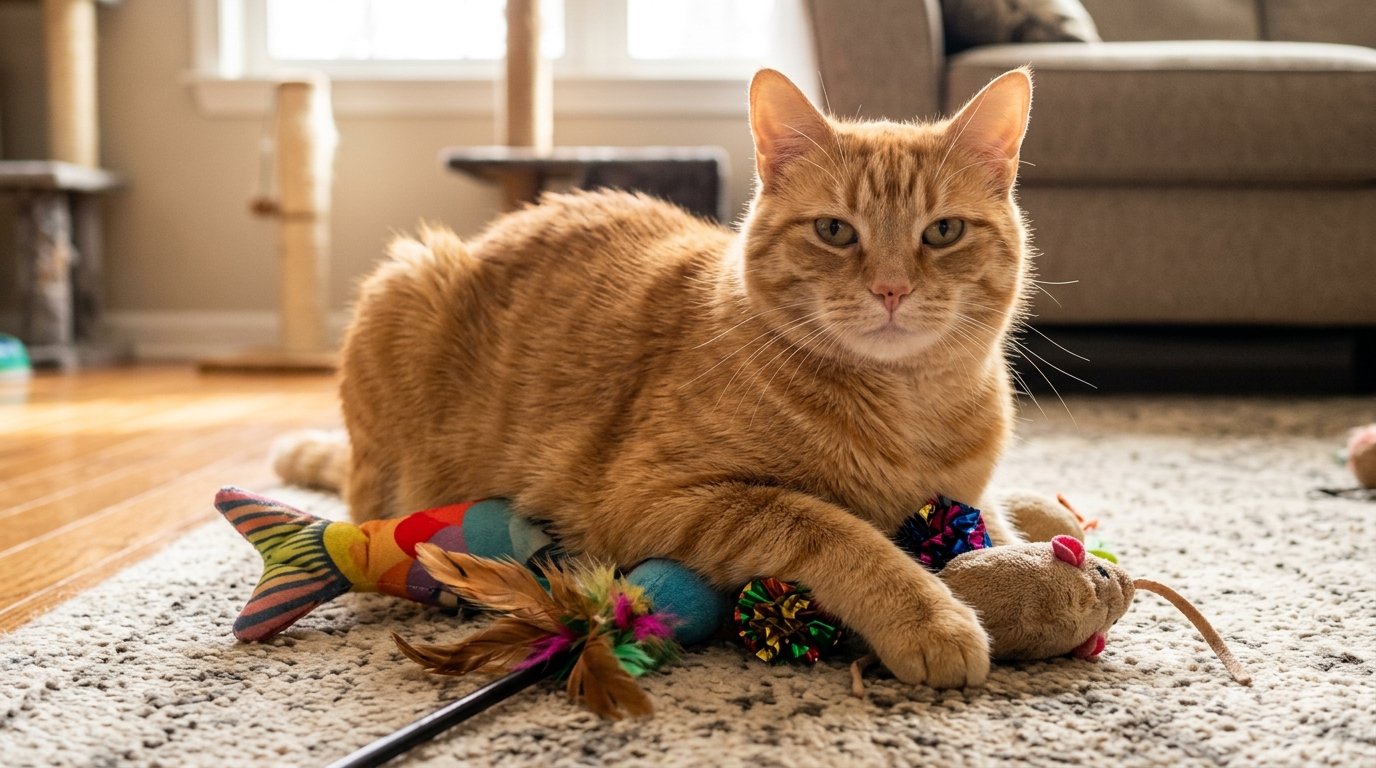
A hidden litter box can help your home look tidier, but your cat’s comfort should always come first. Before choosing an enclosed design, consider your cat’s daily habits and bathroom preferences. If you’re also exploring ways to make your cat’s environment more comfortable, read our guide on why cats sit on their toys to learn more about some of their unusual everyday behaviors.
Where Should You Put a Hidden Cat Litter Box?
Choose a location that is quiet, accessible, and convenient for your cat at all times.
Suitable possibilities include a quiet bathroom corner, a low-traffic utility area, or a discreet living-room location.
Avoid:
- Next to food and water bowls
- Beside noisy washing machines or dryers
- In a cupboard that is frequently shut
- Behind objects that block the entrance
- In a location another pet can guard
- Upstairs or downstairs when your cat struggles with stairs
Cats need to be able to reach their litter box without being startled or blocked. Cornell’s feline-care guidance recommends quiet, accessible locations and notes that some cats prefer uncovered boxes.
Do Hidden Cat Litter Boxes Control Odor?
A litter enclosure can conceal the tray, but it does not automatically eliminate odor.
Odor control depends on litter choice, scooping frequency, ventilation, cleaning, and the number of cats using the box.
To keep the area fresh:
- Scoop waste at least daily, and more often when needed.
- Remove waste before it accumulates.
- Wash the litter tray regularly with mild soap and water.
- Dry the tray before adding fresh litter.
- Keep the enclosure clean and well ventilated.
- Use an unscented litter if your cat prefers it.
- Avoid strong fragrances or harsh chemicals that may bother your cat.
Merck Veterinary Manual recommends daily scooping and regular thorough cleaning, with the frequency adjusted to the number of cats using the tray. Never rely on fragrance to cover a dirty litter box.
How Many Litter Boxes Does Your Cat Need?
A hidden enclosure should not be used as a reason to reduce the number of litter boxes available.
A widely used guideline is to provide one litter box per cat, plus one extra, placing them in separate accessible locations where possible. For example, a two-cat household would generally aim for three boxes.
Individual needs vary, especially in multi-cat homes where one cat may block another from reaching a shared area.
If you have multiple cats, consider whether one enclosed station will create competition. You may need additional boxes in different parts of the home.
How to Introduce Your Cat to a Hidden Litter Box
Don’t immediately remove the familiar litter tray and expect your cat to accept a new enclosure.
Instead:
- Assemble and inspect the enclosure before introducing your cat.
- Keep the entrance open and easy to approach.
- Place the familiar litter tray inside only if it fits comfortably.
- Keep the same litter initially to avoid introducing several changes at once.
- Let your cat investigate voluntarily.
- Monitor whether your cat enters, turns, digs, and exits comfortably.
- Keep another accessible litter box available during the transition.
If your cat refuses the new enclosure, return to the familiar setup and reassess the opening, interior space, location, and ventilation.
Never punish a cat for avoiding a litter box.
If your cat begins urinating outside the box, strains to urinate, cries in the tray, or shows a sudden change in toileting habits, consult a veterinarian. Difficulty passing urine can be an emergency, particularly in male cats.
Frequently Asked Questions About Hidden Cat Litter Box Ideas
What is the best furniture to hide a cat litter box?
A purpose-built litter box cabinet is a practical option because it is designed to accommodate a litter tray while concealing it behind furniture-style panels. The best choice must still provide adequate interior space, ventilation, and convenient cleaning access.
Are hidden litter boxes good for cats?
They can work well for cats that comfortably use enclosed spaces. However, some cats prefer open litter boxes because they provide better airflow and a clearer view of the surroundings. Observe your cat’s preference rather than choosing only for appearance.
Can I put a litter box inside a cabinet?
Yes, provided the cabinet is suitably sized, stable, ventilated, and easy to clean, with a safe entrance and exit. Do not place a litter tray in an airtight cupboard or a space that can accidentally trap the cat.
Do litter box enclosures reduce litter tracking?
Some designs may catch or contain part of the scattered litter, particularly when paired with a litter mat. They cannot guarantee a litter-free floor, and effectiveness depends on the entrance, litter type, and your cat’s habits.
What is the best hidden litter box idea for a small apartment?
A compact, purpose-built enclosure may work if its interior fits your tray and allows comfortable use. Measure the available floor space and the usable interior before purchasing. Do not choose a cramped enclosure just because it has a smaller exterior.
Can I hide a litter box in the bathroom?
Yes, if the location is quiet, remains accessible, and is not affected by loud appliances or frequent door closures. Keep it separate from food and water and ensure your cat can reach it whenever needed.
How can I hide a litter box without buying furniture?
You can use a suitable, safely modified cabinet or arrange a litter tray in a discreet corner with a decorative screen. Any DIY solution must preserve airflow, allow comfortable access, and make daily cleaning straightforward. Avoid sealed boxes and unstable furniture.
How often should I clean a hidden litter box?
Scoop at least once daily, with more frequent scooping when needed. Wash the tray regularly and inspect the enclosure for spilled litter, urine, and trapped debris. Multi-cat households may require more frequent cleaning.
Are plant-style hidden litter boxes safe?
They may be suitable if the enclosure provides sufficient room, safe access, ventilation, and easy cleaning. Check that any decorative components are secure and cannot be chewed or swallowed. Do not use real plants or potting materials in a way that exposes your cat to toxic substances.
Can I use one hidden litter box for two cats?
A single box may be insufficient, particularly if the cats do not comfortably share resources. The general guideline is one box per cat plus one extra, distributed across accessible locations.
Trusted References
- American Animal Hospital Association (AAHA): General Litter Box Considerations
- Merck Veterinary Manual: Providing a Litter Box for a Cat
- Cornell Feline Health Center: Feline Behavior Problems and House-Soiling
- AAFP and ISFM Guidelines for Diagnosing and Solving House-Soiling Behavior in Cats
Final Verdict: Make Your Litter Area Work for Both You and Your Cat
The best hidden cat litter box ideas combine attractive design with everyday practicality. A furniture cabinet, plant-inspired enclosure, natural rattan-style unit, or side-entry design can help the litter area blend into your home.
Among the six options in this guide, the right choice depends on the style you prefer, the available floor space, and—most importantly—the dimensions and accessibility your cat needs.
Before buying, measure your tray, check the enclosure’s interior, confirm that cleaning will be easy, and consider whether your cat is comfortable using an enclosed space.
A hidden litter box should make your home look better without making your cat’s bathroom less comfortable. Prioritize space, ventilation, cleanliness, and easy access, and the result will be a more functional setup for the whole household.
Affiliate Disclosure
This article contains Amazon affiliate links. As an Amazon Associate, the site may earn from qualifying purchases, at no additional cost to the buyer. Product availability, prices, specifications, and listing details can change, so check the current Amazon listing before ordering.
How We Researched This Guide
This guide combines practical home-design considerations with established feline litter-box guidance. The product section is based on the supplied Amazon product listings and their stated names or dimensions, rather than claims of hands-on testing.
Our selection criteria focus on:
- Interior space and litter-tray compatibility
- Entrance accessibility
- Ventilation and cleaning access
- Furniture style and likely room placement
- Practical considerations for kittens, senior cats, and multi-cat households
Product dimensions, current pricing, stock, customer feedback, and construction details should be checked directly on each listing before purchase.