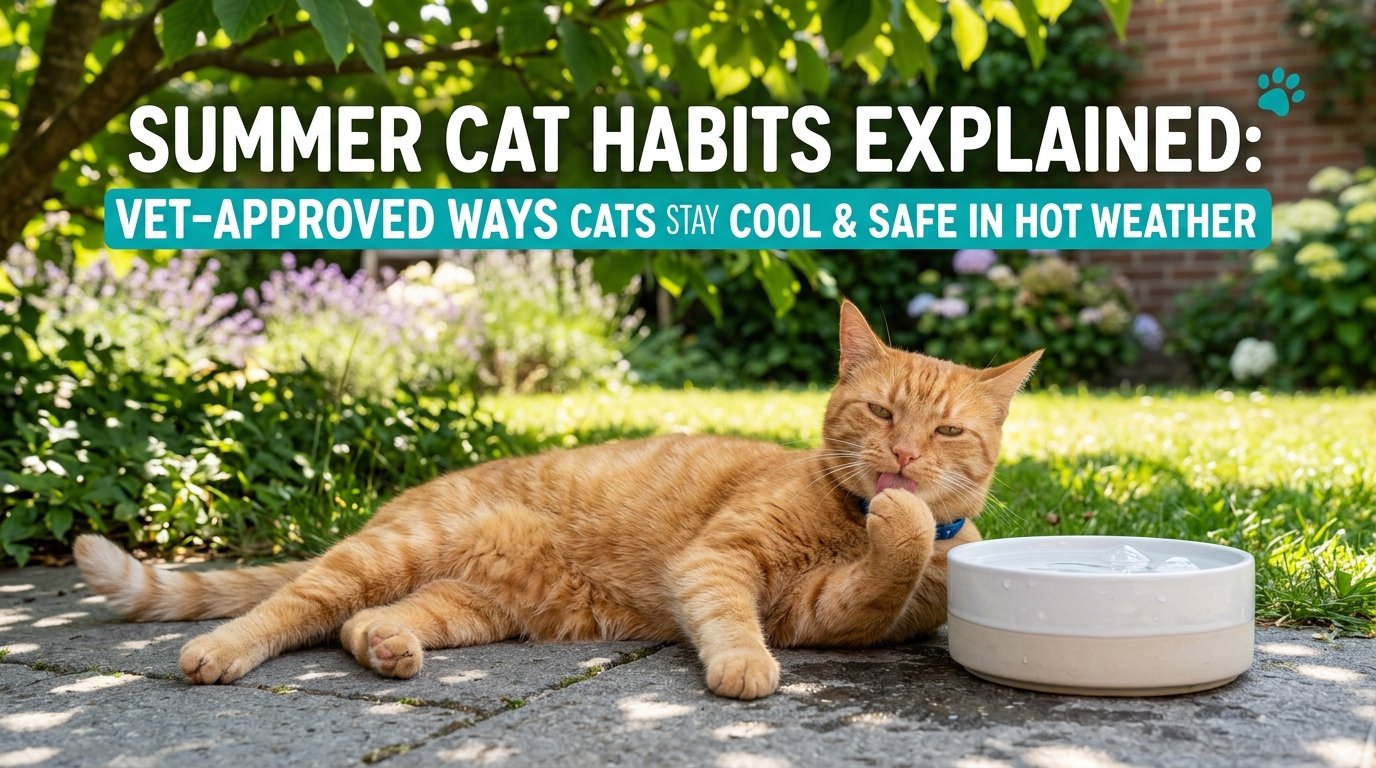
As temperatures rise, many cat owners notice changes in their pet’s behavior. Cats may spend more time sleeping, seek out cool surfaces, groom more frequently, or become active only during the cooler hours of the day. While these changes can seem unusual, they are often normal adaptations that help cats regulate their body temperature during warm weather.
Understanding summer cat habits is important because it allows pet owners to distinguish between healthy seasonal behavior and warning signs of heat-related illness. By recognizing how cats naturally cope with heat, you can provide a safer and more comfortable environment throughout the summer months.
In this comprehensive guide, we’ll explore the most common summer behaviors in cats, explain why they occur, discuss potential health concerns, and provide practical tips to keep your feline companion safe.
Why Summer Weather Affects Cats
Cats are highly adaptable animals, but they cool themselves differently than humans. Humans sweat through millions of sweat glands spread across the body. Cats, however, have relatively few sweat glands, most of which are located in their paw pads.
Because they cannot rely on sweating to regulate body temperature, cats depend heavily on behavioral adaptations. These behaviors help them avoid overheating and conserve energy when temperatures climb.
Although domestic cats descended from desert-dwelling ancestors, modern indoor and outdoor cats can still experience dehydration, heat exhaustion, and heatstroke if proper precautions are not taken.
My Experience Observing Summer Cat Habits
Over the years, I’ve noticed that cats naturally change their routines during hot weather. One cat I cared for spent most of the winter curled up on blankets and sunny windowsills. As summer arrived, however, she began spending more time stretched out on cool tile floors and shaded areas of the house.
She also groomed herself more frequently and became noticeably more active during the early morning and late evening. At first, these changes seemed unusual, but after consulting veterinary resources and observing her closely, it became clear that these were normal cooling behaviors.
Providing fresh water, shaded resting spots, and good airflow made a noticeable difference in her comfort. This experience reinforced how important it is for cat owners to understand seasonal behavior changes rather than assuming every change indicates illness.
1. Sleeping More During Summer
One of the most common summer cat habits is increased sleeping.
Cats normally sleep between 12 and 16 hours per day, and some individuals sleep even longer. During summer, many cats spend additional time resting to conserve energy.
Why Cats Sleep More
Physical activity generates body heat. By sleeping during the hottest part of the day, cats reduce energy expenditure and avoid producing unnecessary heat.
This behavior mirrors that of wild cats, which often rest during peak temperatures and become active when conditions are cooler.
When It Is Normal
A moderate increase in sleeping is usually normal during warm weather.
However, if excessive sleeping is accompanied by weakness, panting, vomiting, or refusal to eat, veterinary attention may be necessary.
2. Seeking Cool Surfaces
Many cats actively search for cool places to lie down during summer.
Common choices include:
- Tile floors
- Bathtubs
- Bathroom sinks
- Basement floors
- Marble surfaces
- Shaded patios
Why Cool Surfaces Help
Cool surfaces absorb body heat through direct contact. This process helps lower a cat’s body temperature naturally.
You may also notice your cat stretching out completely instead of curling up. This posture allows more body heat to escape.
3. Increased Grooming
Cats frequently groom themselves year-round, but grooming often increases during summer.
How Grooming Cools Cats
When cats lick their fur, saliva spreads across the coat. As the saliva evaporates, it produces a cooling effect similar to perspiration in humans.
This natural process helps regulate body temperature and improve comfort.
When Grooming Is Excessive
Although increased grooming is normal, excessive licking that causes hair loss, redness, or skin irritation should be evaluated by a veterinarian.
4. Drinking More Water
Hot weather increases the body’s demand for fluids.
Many cats naturally increase their water consumption during summer to prevent dehydration.
Signs Your Cat Is Drinking More
- Visiting water bowls frequently
- Drinking from faucets
- Showing interest in running water
- Spending more time near water fountains
Encouraging Hydration
To help your cat stay hydrated:
- Place multiple water bowls throughout the home
- Offer fresh water daily
- Use a pet water fountain
- Feed moisture-rich wet food
- Add extra water to canned food if recommended by your veterinarian
Proper hydration supports kidney health, digestion, circulation, and temperature regulation.
5. Eating Less During Hot Weather
Some cats naturally eat slightly less during summer.
Why Appetite Changes
Digesting food generates internal heat. During hot weather, cats may reduce their food intake slightly to minimize heat production.
When It Is Normal
A mild decrease in appetite is often harmless if:
- Your cat remains hydrated
- Weight remains stable
- Energy levels are normal
When To Contact a Veterinarian
Seek veterinary care if your cat:
- Stops eating completely
- Refuses food for more than 24 hours
- Appears lethargic
- Experiences vomiting or diarrhea
6. Becoming Active During Cooler Hours
Cats are naturally crepuscular animals, meaning they are most active around sunrise and sunset.
During summer, this pattern often becomes more noticeable.
Common Behaviors
Many cats:
- Run around the house in the evening
- Play more after sunset
- Wake owners early in the morning
- Experience bursts of energy known as “zoomies”
These behaviors help cats avoid physical exertion during the hottest parts of the day.
7. Seeking Shade
Avoiding direct sunlight is another common summer cat habit.
Cats frequently choose shaded locations such as:
- Under furniture
- Beneath trees
- Behind curtains
- Covered porches
- Under beds
Shade significantly reduces exposure to heat and helps maintain a comfortable body temperature.
8. Stretching Out Instead of Curling Up
During colder weather, cats often sleep curled into a tight ball to conserve warmth.
Summer brings the opposite behavior.
Cats frequently stretch out completely because this:
- Increases airflow
- Exposes more body surface area
- Improves heat dissipation
This is a healthy and natural adaptation.
9. Enjoying Fans and Air Conditioning
Many cats quickly learn where cool air originates.
You may find your cat:
- Resting near air vents
- Sleeping in front of fans
- Following airflow around the house
These behaviors indicate that your cat is actively seeking ways to stay cool.
How to Keep Your Cat Safe During Summer
Provide Unlimited Fresh Water
Fresh, clean water should always be available.
Create Cool Resting Areas
Offer:
- Cooling mats
- Tiled surfaces
- Shaded locations
- Air-conditioned rooms
Brush Long-Haired Cats Regularly
Regular grooming removes loose fur and improves airflow through the coat.
Keep Cats Indoors During Extreme Heat
Indoor environments are usually safer during heatwaves.
Avoid Hot Pavement
Asphalt and concrete can become hot enough to burn paw pads.
Monitor Vulnerable Cats
Special care should be taken with:
- Kittens
- Senior cats
- Overweight cats
- Cats with chronic medical conditions
Don’t Forget About Litter Box Placement
During summer, environmental comfort extends beyond sleeping and feeding areas. It’s important to place your cat’s litter box in a cool, quiet, and well-ventilated location away from direct sunlight. If you’re planning to improve your cat’s overall comfort at home, be sure to read our guide on Where to Put the Litter Box of Your Cat in Your Home? Proper placement can help reduce stress and encourage consistent litter box use.
Signs of Heat Stress in Cats
Heat stress can become dangerous if not recognized quickly.
Common Symptoms
- Panting
- Rapid breathing
- Excessive drooling
- Bright red gums
- Weakness
- Lethargy
- Vomiting
- Diarrhea
- Elevated heart rate
Emergency Symptoms
- Collapse
- Seizures
- Unresponsiveness
These signs require immediate veterinary attention.
What Veterinarians Say About Heat Safety
According to the American Veterinary Medical Association (AVMA), pets are vulnerable to heat-related illness when temperatures rise and ventilation is inadequate. The organization recommends ensuring access to fresh water, shade, and cool indoor environments during periods of extreme heat.
The AVMA also advises pet owners to seek veterinary care immediately if a pet shows signs of heatstroke or severe overheating.
What To Do If Your Cat Overheats
If you suspect overheating:
- Move your cat to a cool location.
- Offer fresh water.
- Use cool, damp towels.
- Improve airflow with a fan.
- Contact your veterinarian immediately.
Avoid using ice water because sudden temperature changes can worsen shock.
Frequently Asked Questions
Do cats sleep more during summer?
Yes. Many cats sleep more during warm weather to conserve energy and reduce heat production.
Why does my cat lie on tile floors?
Tile floors remain cooler than carpets and furniture, helping cats lower their body temperature.
Can cats get heatstroke?
Yes. Cats can develop heatstroke when exposed to excessive temperatures, poor ventilation, or dehydration.
Is it normal for cats to eat less in summer?
A slight decrease in appetite can be normal, but complete refusal to eat requires veterinary attention.
Should I shave my cat during summer?
Most cats do not need shaving. Regular brushing is usually sufficient. Consult your veterinarian before shaving a cat.
How can I tell if my cat is overheating?
Warning signs include panting, drooling, weakness, lethargy, rapid breathing, and vomiting.
Final Thoughts
Summer brings several noticeable changes in feline behavior. Increased sleeping, seeking cool surfaces, extra grooming, drinking more water, and shifting activity to cooler hours are all natural ways cats protect themselves from heat.
Understanding these summer cat habits allows owners to support their pets more effectively and recognize early warning signs of heat-related illness. By providing hydration, shade, airflow, and a comfortable environment, you can help your cat stay healthy, comfortable, and safe throughout the hottest months of the year.