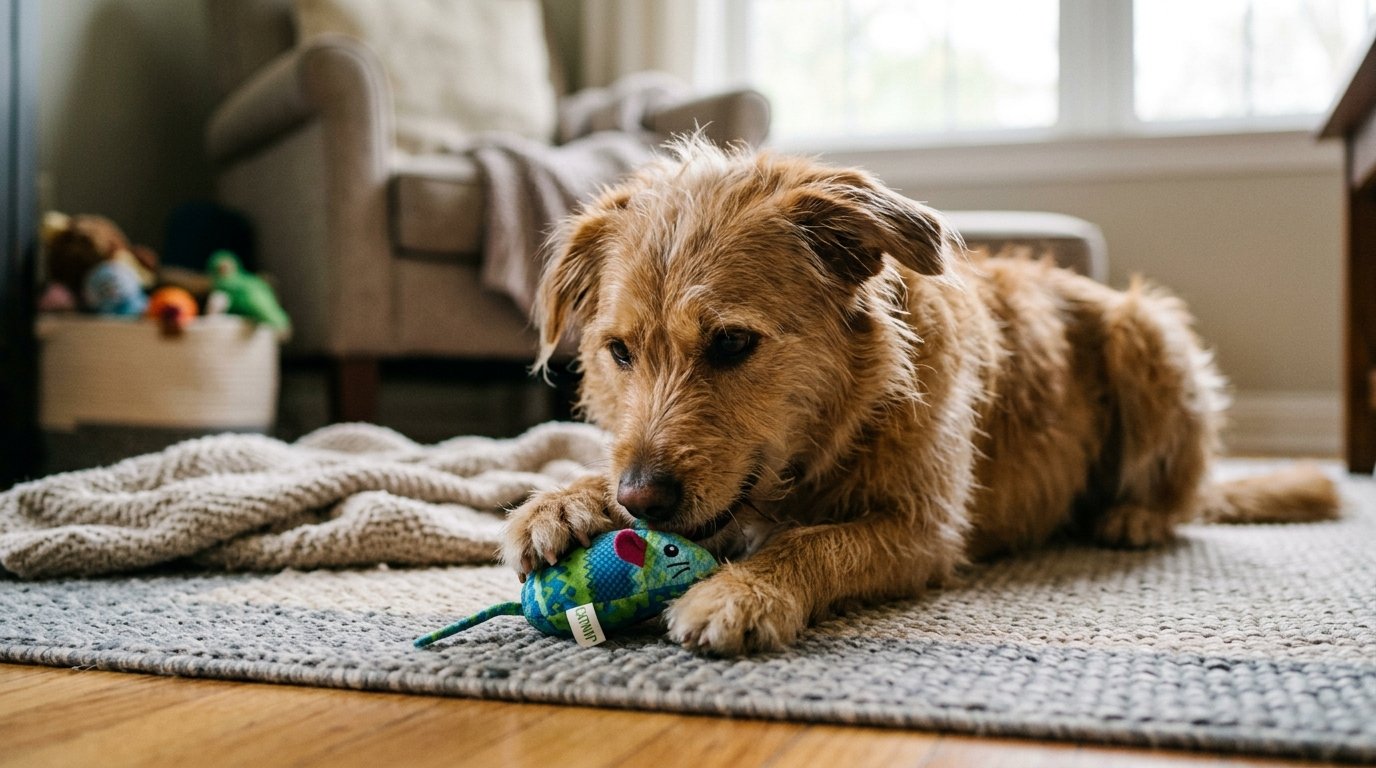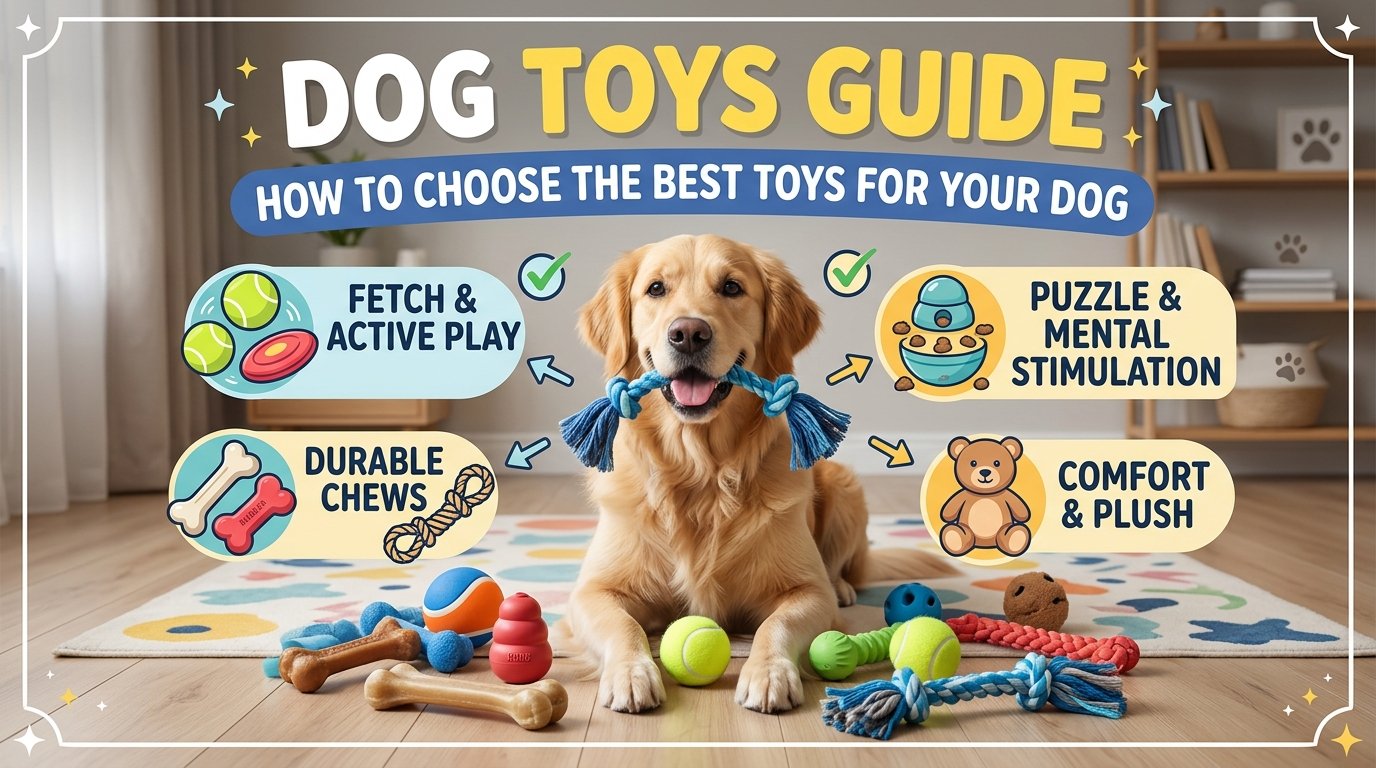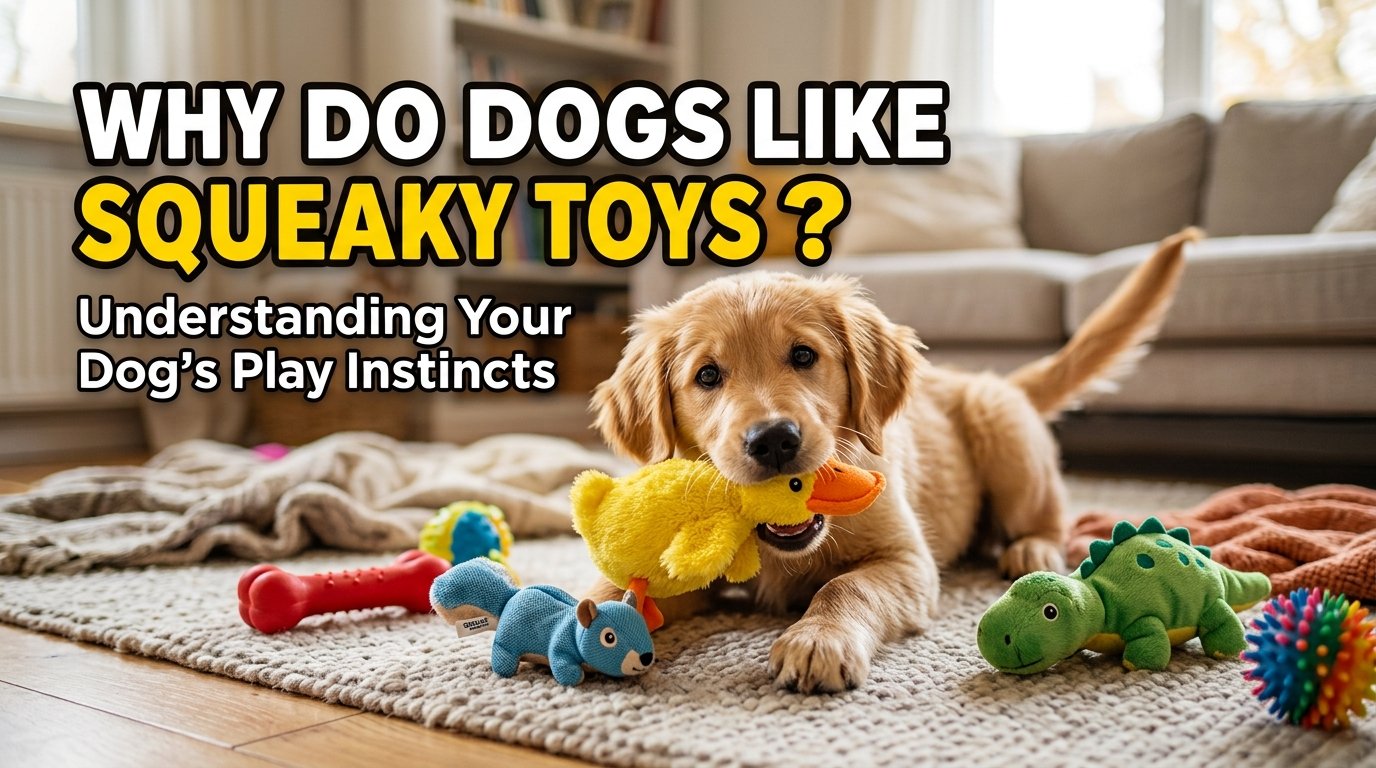
If your dog can hear a squeaky toy from across the room, rush over, grab it, and immediately start chomping away, you’re definitely not alone.
That familiar “squeak, squeak, squeak” is surprisingly powerful for many dogs. But what makes a simple noise so exciting?
The answer has a lot to do with natural instincts, immediate feedback, chewing, and learned associations. A squeaky toy reacts when your dog bites it, which can make play feel much more rewarding than a silent toy. The high-pitched sound may also resemble sounds associated with small prey, encouraging behaviors such as chasing, biting, shaking, and carrying.
However, not every dog is obsessed with squeakers. Your dog’s personality, age, breed tendencies, previous experiences, and play style can all influence which toys they prefer.
Quick Answer: Why Do Dogs Like Squeaky Toys?
Dogs often like squeaky toys because the high-pitched sound can activate prey-related instincts and provides instant feedback when they bite the toy.
For some dogs, that sound makes the toy seem more exciting or alive. Others simply enjoy the cause-and-effect experience: bite the toy → hear a squeak → bite it again.
Squeaky toys can also provide mental stimulation and give dogs an appropriate outlet for natural chewing and play behaviors.
1. The Squeak Can Trigger Natural Prey Drive
One of the biggest reasons dogs are attracted to squeaky toys is their connection to prey-related behavior.
Dogs have inherited many behaviors associated with their predatory ancestry. During play, these behaviors can appear as chasing, stalking, grabbing, biting, shaking, and carrying objects.
A high-pitched squeak can resemble sounds associated with a small animal, which may make the toy particularly interesting to some dogs.
This helps explain something many dog owners notice:
Your dog doesn’t simply bite the squeaky toy—they may shake it, toss it, chase it, and bite it again.
That sequence can make the toy much more exciting than an object that simply sits there.
Dogs with stronger prey-oriented play preferences may be especially enthusiastic about toys that combine movement, texture, and sound, although individual preferences vary considerably.
2. Your Dog Gets an Instant Reward
There’s another simple reason squeaky toys are so satisfying: your dog’s action produces an immediate response.
Think about what happens when your dog bites a squeaky toy.
Bite → squeak → excitement → bite again.
The toy essentially “answers” your dog every time they interact with it.
That immediate feedback can encourage repeated play because the dog quickly learns that interacting with the toy produces an interesting result. Veterinary sources describe this as an important part of the appeal of squeaky toys.
This is also why some dogs can spend several minutes repeatedly pressing the same toy just to make it squeak.
They aren’t necessarily trying to annoy you.
The toy is giving them feedback that they find rewarding.
3. Squeaky Toys Make Chewing More Interesting
Dogs naturally explore and interact with objects using their mouths.
Chewing can be part of normal canine behavior throughout life, although puppies may have particularly strong chewing needs while exploring their environment and going through teething.
A squeaky toy adds another layer to that experience.
Instead of silently chewing a plush toy, your dog receives a sound whenever they apply pressure.
That can turn an ordinary chew session into a much more engaging activity.
For example, a dog may:
- Bite the toy repeatedly
- Hold it between their paws
- Carry it around the house
- Toss it and chase it
- Shake it from side to side
- Search for the source of the squeak
For some dogs, the combination of chewing + sound + movement is exactly what makes squeaky toys so difficult to resist.
4. Some Dogs Learn That Squeaky Toys Get Your Attention
There’s another factor that has nothing to do with hunting.
You.
If your dog grabs a squeaky toy and you immediately look over, laugh, talk to them, chase them, or start a game of fetch, your reaction can become part of the reward.
Dogs are excellent at learning cause and effect.
Your dog may eventually figure out:
“If I make this thing squeak, my human notices me.”
Veterinary guidance notes that human attention can reinforce a dog’s interest in squeaky toys when owners respond to the behavior.
This can explain why some dogs deliberately bring a squeaky toy to their owner’s feet and start making noise.
They may not simply want the toy.
They may want you to join the game.
5. Why Do Some Dogs Destroy Squeaky Toys?
This is where things get interesting.
Some dogs don’t seem satisfied until they’ve found the squeaker.
They bite through the fabric, pull out stuffing, tear the toy apart, and eventually locate the little device responsible for all that noise.
For dogs with strong prey-oriented play behavior, this can resemble the natural sequence of locating, grabbing, biting, and manipulating an object.
But there’s an important difference between enjoying a toy and safely destroying one.
If your dog regularly tears toys apart, a plush squeaky toy may need to be treated as a supervised play item rather than an unsupervised toy.
Once the toy becomes damaged, the squeaker, stuffing, or pieces of fabric can become a swallowing or choking concern.
6. Why Doesn’t Every Dog Like Squeaky Toys?
Despite their popularity, squeaky toys aren’t universally loved.
Some dogs prefer:
- Balls for chasing
- Rope toys for tugging
- Rubber toys for chewing
- Puzzle toys for problem-solving
- Quiet plush toys for carrying
- Food-dispensing toys for enrichment
Even dogs from the same breed can have completely different toy preferences. Personality, age, previous experiences, and individual play style all matter.
So if your dog ignores the squeaky toy you just bought, nothing is necessarily wrong.
They may simply have a different idea of what makes a great toy.
A Few Squeaky Toy Options Worth Considering
If your dog enjoys squeaky toys, you don’t necessarily need to buy a huge collection. The better approach is to choose a toy that matches your dog’s size, chewing habits, and preferred style of play.
For example, 20-Pack Plush Squeaky Dog Toys for Small Dogs can be useful for small dogs who enjoy variety and plush toys. Having multiple designs also allows you to rotate toys instead of leaving everything available at once.
For another plush option, LECHONG 5 Pack Tough Dog Toys offers several animal-style toys that can appeal to dogs who enjoy carrying, biting, and squeaking their toys.
If your dog tends to destroy stuffed toys quickly, SHARLOVY No Stuffing Dog Toy is another style worth considering because it avoids the traditional loose stuffing found inside many plush toys.
Important: Always inspect squeaky toys regularly and remove a toy if it becomes torn, broken, or exposes internal components. Dogs that aggressively destroy toys should be supervised during play.
Affiliate disclosure: This article contain affiliate links. If you purchase through a link, we may earn a commission at no additional cost to you.
5. Squeaky Toys Can Make Play Feel More Rewarding
One reason dogs become so interested in squeaky toys is the instant feedback they receive.
When your dog bites or squeezes the toy, it makes a sound. That sound immediately tells the dog, “I did something, and something happened.” This simple cause-and-effect relationship can make the toy more exciting than a silent toy.
For some dogs, this creates a repeating play pattern:
Bite → squeak → release → chase → bite again
The dog controls the interaction, which can make the game more engaging.
This is particularly useful for dogs that enjoy interactive play but lose interest in toys that remain completely still.
6. The Sound May Trigger a Dog’s Chase-and-Catch Instinct
The squeak itself isn’t necessarily what every dog finds appealing. For some dogs, it may be the combination of sound + movement + biting that makes the toy interesting.
A squeaky toy can resemble the type of quick, high-pitched sound produced by a small animal. Dogs have different levels of prey-drive-related behavior, so their reactions can vary considerably.
You might notice your dog:
- Staring intensely at the toy
- Chasing it across the room
- Shaking it from side to side
- Carrying it around
- Repeatedly squeezing it
- Trying to locate the source of the squeak
These behaviors don’t mean your dog believes the toy is a real animal. Rather, the sound can make the object more stimulating and activate natural play behaviors.
7. Some Dogs Simply Enjoy Making Noise
Not every explanation has to be complicated.
Some dogs seem to enjoy squeaky toys because they like the sound they create.
Think about the difference between giving your dog a completely silent plush toy and one that squeaks every time they squeeze it. The second toy provides additional sensory feedback.
This can be especially entertaining for dogs that enjoy experimenting with objects.
Your dog may discover:
“If I press here, it squeaks.”
Then they do it again.
And again.
And again. 😂
That repetitive interaction can become part of the fun.
8. Squeaky Toys Can Provide Mental Stimulation
A good dog toy doesn’t always have to involve complicated technology.
Even a simple squeaky toy can encourage your dog to:
- Investigate
- Bite
- Carry
- Shake
- Search
- Chase
- Manipulate the toy with their paws
These small actions give your dog something to focus on.
For dogs that spend a lot of time indoors, rotating different toys throughout the week can help prevent their play environment from becoming predictable.
However, a squeaky toy should be considered enrichment—not a substitute for walks, training, social interaction, or other forms of exercise.
9. Why Some Dogs Destroy Squeaky Toys
If your dog doesn’t simply play with a squeaky toy but immediately tries to rip it apart, there’s a reason for that too.
The squeak may become something your dog wants to locate and disable.
A dog might:
- Hear the squeak.
- Bite the toy.
- Notice that the sound comes from inside.
- Start chewing or tearing at the toy.
- Try to reach the squeaker.
This can be particularly common in dogs that enjoy dissecting toys rather than carrying them around.
If your dog regularly destroys plush toys, don’t assume that a product described as “tough” or “durable” will be indestructible. No plush squeaky toy should be considered indestructible.
Dogs Shake Squeaky Toys
Have you ever watched your dog grab a squeaky toy and violently shake it?
It can look dramatic, but toy shaking is a common form of dog play.
The movement may be connected to natural chasing, grabbing, carrying, and shaking behaviors. The squeak can make the entire interaction more exciting because the toy responds every time your dog bites it.
You may see your dog:
Grab → shake → drop → chase → grab again.
For many dogs, this is simply an enjoyable way to interact with an object.
If the behavior becomes excessively rough, however, supervision is important because the toy may eventually break apart.
11. Why Dogs Become Obsessed With Squeaky Toys
Some dogs couldn’t care less about squeakers.
Others seem to think squeaky toys are the greatest invention ever made.
The difference can come down to individual personality and preferences.
Your dog may particularly enjoy squeaky toys if they:
- Love chasing moving objects
- Enjoy chewing
- Like interactive games
- Prefer toys that make noise
- Become excited by new sounds
- Enjoy carrying toys around
- Like repetitive play
But there’s no rule saying every dog should love them.
Some dogs prefer balls, tug toys, food puzzles, chew toys, crinkle toys, or completely silent plush toys.
The best toy is usually the one that matches your dog’s natural play style while remaining appropriate for their size and chewing strength.
12. Are Squeaky Toys Good for Dogs?
Generally, squeaky toys can be a fun form of enrichment when they’re appropriately sized, intact, and used safely.
The bigger issue isn’t usually the squeak itself. It’s what happens when the toy becomes damaged.
Check the toy regularly for:
- Torn fabric
- Loose seams
- Exposed squeakers
- Missing pieces
- Detached eyes or other decorations
- Excessive wear
If your dog manages to remove part of the toy, it’s time to take it away.
This is especially important for dogs that are enthusiastic chewers or toy destroyers.
The Bottom Line
So, why do dogs like squeaky toys?
Because squeaky toys combine several things dogs can find rewarding: sound, movement, physical interaction, immediate feedback, and natural play behaviors.
For one dog, the squeak may encourage chasing. For another, it may make chewing more interesting. And for some dogs, the real goal may simply be figuring out how to make that wonderfully annoying noise over and over again.
The key is to choose the right toy for your individual dog’s size, temperament, and chewing habits rather than assuming one type will work for every dog.
How to Choose the Right Squeaky Toy for Your Dog
Now that we know why dogs can become fascinated by squeaky toys, the next question is more practical:
How do you choose one that your dog can actually enjoy safely?
The answer depends less on how cute the toy looks and more on your dog’s size, chewing style, play intensity, and preferences.
A tiny plush toy may be perfect for a gentle small dog but completely unsuitable for a powerful chewer. Likewise, a large, heavy toy may be uncomfortable for a small dog to carry.
Here are the main things to consider.
1. Consider Your Dog’s Size
Always look at the recommended size before buying a squeaky toy.
A toy that is too small can potentially become a choking hazard if your dog can fit the entire object in their mouth. On the other hand, a toy that is excessively large may be difficult for a small dog to pick up and manipulate.
For small dogs, something like the 20-Pack Plush Squeaky Dog Toys for Small Dogs can provide several different toys to rotate through.
The important point is not simply choosing the smallest toy available. Choose a size that your dog can comfortably carry and interact with without being able to swallow it.
2. Think About Your Dog’s Chewing Style
This may be even more important than breed.
Ask yourself:
Does my dog gently carry toys, or do they destroy everything within five minutes?
A gentle player may enjoy a soft plush squeaky toy.
A determined chewer may need a different type of toy designed with their play style in mind.
However, be careful with the word “tough.” A toy marketed as durable is not automatically suitable for an aggressive chewer.
For dogs that quickly remove stuffing from plush toys, the SHARLOVY No Stuffing Dog Toys offer a different design worth considering.
The no-stuffing construction can eliminate one common source of mess, although it doesn’t make the toy indestructible.
3. Look at What Your Dog Actually Likes
You don’t necessarily need to guess.
Watch your dog during play.
If they enjoy:
- Carrying soft toys → consider plush squeaky toys
- Chasing → look for toys that can be tossed or moved
- Chewing → prioritize an appropriate chew-oriented design
- Crinkling sounds → consider toys with crinkle material
- Variety → consider a multi-pack
- Shaking → choose something they can comfortably grip
This simple observation can save you from buying toys your dog completely ignores.
Squeaky Toys vs. Crinkle Toys
Squeakers aren’t the only way to make a dog toy interesting.
Some toys combine squeaking and crinkling, creating multiple sounds during play.
This can be useful for dogs that become bored with repetitive stimulation.
The SHARLOVY No Stuffing Dog Toys are an example of a toy designed around more than one sensory element, combining crinkle and squeaky features.
That doesn’t mean your dog will automatically prefer it. Dogs have individual preferences, so you may need to experiment.
What If Your Dog Becomes Too Excited by Squeaky Toys?
For some dogs, squeaky toys don’t produce calm enrichment—they produce maximum excitement.
Your dog may become obsessed with:
- Squeaking the toy continuously
- Shaking it aggressively
- Guarding it
- Chasing it around the house
- Trying to destroy it immediately
Excitement isn’t necessarily bad, but you should pay attention to your dog’s overall behavior.
If play becomes too intense, you can introduce short play sessions followed by a calmer activity.
You can also rotate squeaky toys instead of leaving every toy available all day.
This can help keep them interesting while giving your dog opportunities to engage with different types of enrichment.
Should You Let Your Dog Sleep With a Squeaky Toy?
It depends on the individual dog and the condition of the toy.
Some dogs calmly carry their favorite toy to bed and leave it alone. Others immediately start chewing, tearing, and dissecting it.
If your dog is a toy destroyer, leaving a squeaky plush toy unattended may not be a good idea.
Before allowing independent play, inspect the toy carefully.
If the toy is damaged, remove it.
A squeaker, piece of fabric, stuffing, or other component that becomes detached can create a risk if swallowed.
How Long Should a Squeaky Toy Last?
There isn’t a fixed lifespan.
One dog might keep the same plush toy for months. Another might destroy it within an afternoon.
Instead of judging a toy by the number of days you’ve owned it, check its current condition.
Replace it when you notice significant damage such as:
- Open seams
- Torn fabric
- Missing parts
- Exposed internal components
- A damaged squeaker
- Pieces that can be pulled off easily
Regular inspection is much more useful than assuming a toy is safe simply because it was recently purchased.
How to Make Squeaky Toys More Interesting
You don’t always need to buy another toy to make play more engaging.
Try changing how you use the toy.
For example, you can:
Rotate the Toys
Don’t leave every toy scattered around the house permanently.
Keep some stored away and bring them back later. A toy your dog hasn’t seen for several days may feel much more interesting when it returns.
Add Interactive Play
Instead of simply giving your dog the squeaky toy, use it during a short game of fetch or chase.
Your involvement can make the toy more rewarding.
Combine Toys With Training
You can use a favorite toy as a reward during appropriate training sessions.
For example, after your dog successfully responds to a cue, you can offer a short toy-play session.
This turns the squeaky toy into something your dog associates with positive interaction.
When Should You Take a Squeaky Toy Away?
This is one of the most important parts of squeaky-toy ownership.
Take the toy away if it becomes damaged.
You should also supervise dogs that are known to destroy toys quickly.
If your dog pulls out the squeaker, tears through the fabric, or starts swallowing pieces, don’t try to save the toy simply because it’s their favorite.
A replacement toy is much cheaper than dealing with a potentially dangerous swallowed object.
Frequently Asked Questions
Why do dogs like squeaky toys so much?
Dogs may enjoy squeaky toys because the sound provides immediate feedback when they bite or squeeze the toy. The combination of sound, movement, chewing, and natural play behaviors can make squeaky toys particularly engaging.
Do squeaky toys make dogs aggressive?
Not necessarily. A dog enjoying a squeaky toy doesn’t automatically mean the dog is becoming aggressive. However, some dogs become highly aroused during intense play, so it’s important to observe their behavior and provide appropriate breaks.
Why does my dog destroy every squeaky toy?
Some dogs enjoy finding and removing the source of the squeak. Others naturally play by chewing, tearing, and shaking objects. For these dogs, plush squeaky toys may have a much shorter lifespan.
Are squeaky toys good for puppies?
They can provide entertainment and sensory stimulation, but the toy should be appropriate for the puppy’s size and chewing ability. Puppies should also be supervised with toys that can break apart.
Why does my dog cry when the squeaky toy squeaks?
The sound can be exciting or startling to some dogs. A dog may whine, bark, stare at the toy, or carry it around because they’re highly interested in it. Individual reactions vary.
Should I buy several squeaky toys for my dog?
Having several toys can be useful because you can rotate them and see which textures, sounds, and shapes your dog prefers. A multi-pack such as the LECHONG 5 Pack Tough Dog Toys can provide variety rather than relying on a single toy.
Final Thoughts:
The appeal of a squeaky toy isn’t simply that “dogs like noise.”
It’s the entire experience.
The dog bites the toy, hears the squeak, feels the toy move, carries it, shakes it, drops it, and starts again. That combination gives the dog something responsive to interact with.
For some dogs, squeaky toys become a favorite because they satisfy their desire to chase, chew, carry, shake, and investigate.
For others, a squeaky toy may be completely uninteresting.
That’s perfectly normal.
The best approach is to observe your dog’s individual play style, choose an appropriately sized toy, supervise intense chewers, and regularly inspect toys for damage.
And if your dog has already discovered the joy of the squeaker?
You may want to prepare yourself for the sound of squeak… squeak… squeak… coming from the other room all afternoon.