Bringing home a puppy is exciting, but one of the first questions most new owners ask is:
“How often should I feed my puppy?”
I remember asking myself the same question when I brought home my first puppy. Every pet food bag had a different feeding chart, online advice often conflicted, and I worried constantly about overfeeding or underfeeding.
After consulting my veterinarian, reviewing guidance from veterinary nutrition resources, and learning how puppies grow at different stages, I realized that a consistent feeding schedule is just as important as choosing high-quality puppy food.
A puppy’s body develops rapidly during its first year. Their muscles, bones, immune system, brain, and digestive tract all require a steady supply of nutrients throughout the day. Missing meals, feeding too much, or changing schedules frequently can affect healthy growth.
This comprehensive guide explains exactly when, how often, and how much to feed your puppy based on age, breed size, and development stage.
Why Following a Puppy Feeding Schedule Matters
Unlike adult dogs, puppies have smaller stomachs but much higher energy requirements. Their bodies burn calories quickly, making regular meals essential.
A structured feeding routine helps:
- Support steady growth and development
- Maintain healthy blood sugar levels
- Improve digestion
- Reduce overeating
- Make potty training easier
- Create daily routines
- Monitor appetite changes that may indicate illness
Consistent meal times also help puppies feel secure, especially during the first few weeks in a new home.
How Puppies Grow During Their First Year
A puppy’s nutritional needs change dramatically as they mature.
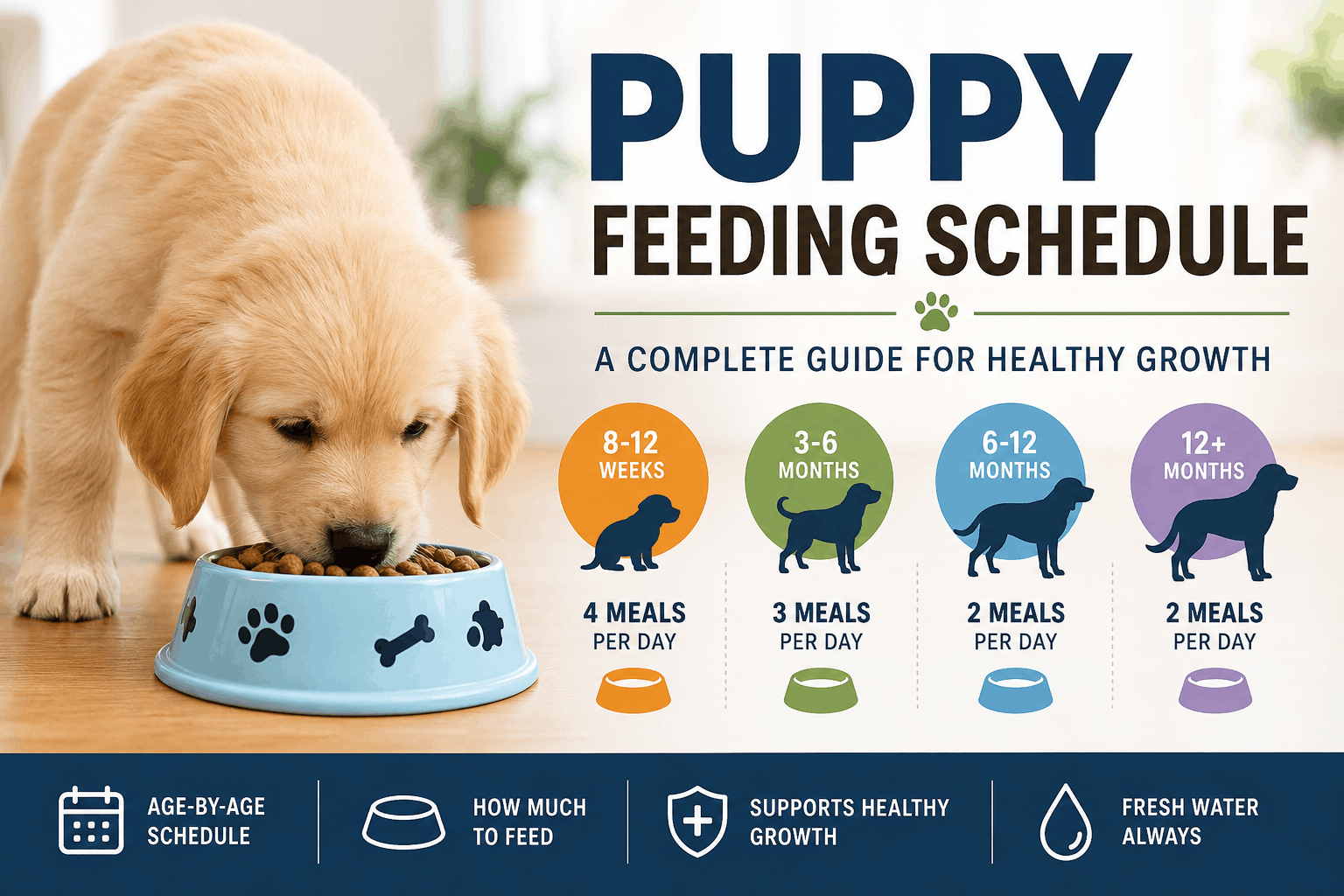
8–12 Weeks
This is one of the fastest growth periods.
Puppies are:
- Developing muscles
- Building bones
- Learning rapidly
- Growing new teeth
- Strengthening their immune system
Because their stomachs are still small, they need multiple meals each day.
3–6 Months
Growth remains rapid, but puppies begin developing stronger digestive systems.
They can:
- Eat larger meals
- Go longer between meals
- Become more active
- Burn more calories through exercise
Meal frequency can usually be reduced from four meals to three.
6–12 Months
Most puppies begin slowing their growth.
At this stage they need:
- Controlled calorie intake
- Balanced nutrition
- Lean muscle support
- Joint development
- Healthy body condition
Most puppies transition to two meals per day.
Large and giant breeds may continue growing until 18–24 months and should remain on an appropriate large-breed puppy formula during this period.
Puppy Feeding Schedule by Age
The following table provides a general guideline for healthy puppies.
| Puppy Age | Meals Per Day | Feeding Frequency |
|---|---|---|
| 6–8 Weeks | 4–5 | Every 4–5 hours |
| 8–12 Weeks | 4 | Morning, Midday, Afternoon, Evening |
| 3–6 Months | 3 | Breakfast, Lunch, Dinner |
| 6–12 Months | 2 | Morning and Evening |
| 12+ Months* | 2 | Adult feeding schedule |
*Small breeds may transition to adult food around 9–12 months, while large and giant breeds often remain on puppy food until 18–24 months. Consult your veterinarian for individualized guidance.
Puppy Feeding Schedule at Different Ages
8–12 Week Puppy Feeding Schedule
This is usually the age when puppies leave their breeder or rescue and join a new family.
A typical schedule might look like this:
| Time | Meal |
|---|---|
| 7:00 AM | Breakfast |
| 11:00 AM | Lunch |
| 3:00 PM | Afternoon Meal |
| 7:00 PM | Dinner |
Feeding at consistent times helps establish routines and supports house training by making bathroom breaks more predictable.
3–6 Month Feeding Schedule
By this stage, many puppies are ready for three meals daily.
Example schedule:
| Time | Meal |
|---|---|
| 7:30 AM | Breakfast |
| 1:00 PM | Lunch |
| 6:30 PM | Dinner |
This routine provides enough energy throughout the day while allowing the digestive system to adjust to fewer meals.
6–12 Month Feeding Schedule
Most healthy puppies can transition to two meals per day.
Example schedule:
| Time | Meal |
|---|---|
| 8:00 AM | Breakfast |
| 6:00 PM | Dinner |
Maintaining consistent meal times continues to support digestion and healthy weight management.
Meal Frequency by Breed Size
Breed size affects growth rate and nutritional needs.
| Breed Size | Examples | Meals Per Day |
|---|---|---|
| Toy | Chihuahua, Pomeranian | 3–4 |
| Small | Shih Tzu, Miniature Schnauzer | 3 |
| Medium | Beagle, Border Collie | 2–3 |
| Large | Labrador Retriever, Golden Retriever | 2–3 |
| Giant | Great Dane, Mastiff | 2 (with controlled portions) |
Large and giant breed puppies require carefully balanced calcium and phosphorus levels to support healthy skeletal development and reduce the risk of orthopedic problems.
Why Consistency Is More Important Than Exact Times
Many owners worry if breakfast is served at 7:00 AM one day and 7:30 AM the next. Minor variations are generally fine, but frequent, unpredictable changes can disrupt your puppy’s routine.
Aim to:
- Feed at roughly the same times each day
- Measure food accurately
- Use the same bowl and feeding area
- Remove uneaten food after about 15–20 minutes (unless your veterinarian recommends otherwise)
- Ensure fresh water is available throughout the day
Consistency helps regulate digestion, supports healthy eating habits, and makes it easier to identify changes in appetite.
Signs Your Feeding Schedule Is Working
A well-planned feeding routine should result in:
- Healthy, steady weight gain
- Consistent energy levels
- Firm, well-formed stools
- A shiny coat
- Bright eyes
- Healthy muscle development
- Enthusiasm at mealtimes without excessive hunger
If your puppy appears lethargic, is losing weight, has persistent digestive upset, or refuses food regularly, consult your veterinarian promptly to rule out underlying health concerns.
How Much Should You Feed Your Puppy?
One of the biggest mistakes new dog owners make is assuming every puppy needs the same amount of food. In reality, the correct portion depends on several factors, including age, breed, expected adult weight, activity level, metabolism, and the calorie density of the food.
The feeding chart on your puppy food bag is a useful starting point, but it shouldn’t be treated as an exact rule. Different brands contain different calorie levels, so one cup of Food A may provide significantly more energy than one cup of Food B.
The best approach is to:
- Follow the manufacturer’s feeding guide initially.
- Monitor your puppy’s body condition weekly.
- Weigh your puppy regularly during growth.
- Adjust portions based on your veterinarian’s recommendations.
Expert Tip: Veterinarians often recommend using your puppy’s Body Condition Score (BCS) instead of relying only on body weight. A healthy puppy should have a visible waist when viewed from above, and you should be able to feel—but not clearly see—the ribs.
Puppy Feeding Chart by Weight
The table below provides general feeding estimates. Individual puppies may require more or less food depending on their breed and activity level.
| Puppy Weight | Approximate Daily Food* | Meals Per Day |
|---|---|---|
| 2–5 lbs (1–2 kg) | ½–1 cup | 4 |
| 5–10 lbs (2–4.5 kg) | 1–1½ cups | 3–4 |
| 10–20 lbs (4.5–9 kg) | 1½–2½ cups | 3 |
| 20–40 lbs (9–18 kg) | 2½–4 cups | 2–3 |
| 40–60 lbs (18–27 kg) | 4–5 cups | 2 |
| 60–90 lbs (27–41 kg) | 5–7 cups | 2 |
*Based on average dry puppy food. Always check the calorie content of your chosen food.
Daily Calorie Needs
Calories matter just as much as portion size.
| Expected Adult Weight | Estimated Daily Calories |
| Up to 10 lbs | 250–500 kcal |
| 10–25 lbs | 500–900 kcal |
| 25–50 lbs | 900–1,500 kcal |
| 50–75 lbs | 1,500–2,200 kcal |
| Over 75 lbs | 2,200+ kcal |
Growing puppies have higher calorie requirements than adult dogs, but excessive calories can lead to unhealthy weight gain, especially in large breeds.
Feeding by Breed Size
Toy and Small Breeds
Small puppies burn energy quickly because of their faster metabolism.
Examples include:
- Chihuahua
- Yorkshire Terrier
- Maltese
- Pomeranian
- Toy Poodle
Recommendations:
- Smaller, more frequent meals
- Small kibble size
- High-energy puppy formula
Medium Breeds
Examples:
- Beagle
- Border Collie
- Cocker Spaniel
Most medium-sized puppies transition from three meals to two meals around six months of age.
Large and Giant Breeds
Examples:
- Labrador Retriever
- Golden Retriever
- German Shepherd
- Great Dane
- Saint Bernard
Large-breed puppies require slower, controlled growth. Rapid growth caused by excess calories or excessive calcium may increase the risk of developmental orthopedic conditions.
Choose a puppy food specifically formulated for large breeds and avoid adding calcium supplements unless recommended by your veterinarian.
Wet Food vs. Dry Food Feeding Schedule
Both wet and dry puppy foods can provide complete and balanced nutrition when formulated for growth.
| Feature | Dry Food | Wet Food |
| Cost | Lower | Higher |
| Moisture | Around 10% | Around 75–80% |
| Dental Benefits | May help reduce plaque accumulation | Minimal |
| Convenience | Easy to store | Requires refrigeration after opening |
| Taste | Good | Often more appealing |
Mixed Feeding
Many owners choose to combine wet and dry food.
Benefits may include:
- Increased water intake
- Greater variety
- Improved palatability
- Easier transition for picky eaters
When mixing foods, adjust total calories to avoid overfeeding.
Fresh Water Is Just as Important
A puppy’s feeding schedule should always include access to clean drinking water.
General recommendations:
| Puppy Weight | Daily Water Intake (Approx.) |
| Small | ½–1 cup |
| Medium | 1–3 cups |
| Large | 3–6 cups |
Water requirements increase with:
- Hot weather
- Exercise
- Dry kibble diets
- Illness
Never restrict access to fresh water except under veterinary guidance.
Should Puppies Have Snacks?
Healthy treats can support training and positive behavior, but they should never replace balanced meals.
Keep treats to less than 10% of your puppy’s daily calorie intake.
Healthy Training Treats
- Commercial puppy training treats
- Small pieces of cooked chicken
- Plain cooked turkey
- Tiny carrot slices
- Blueberries (in moderation)
Avoid giving large treats immediately before scheduled meals, as they may reduce your puppy’s appetite.
Foods Puppies Should Never Eat
Some human foods are dangerous—even in small amounts.
| Avoid | Why It Is Dangerous |
| Chocolate | Toxic to the nervous system and heart |
| Grapes & Raisins | Can cause kidney failure |
| Onions & Garlic | Damage red blood cells |
| Xylitol | Causes severe low blood sugar and liver failure |
| Alcohol | Toxic to dogs |
| Cooked Bones | Splinter and may cause internal injury |
| Macadamia Nuts | Can affect the nervous system |
If your puppy accidentally consumes any toxic food, contact your veterinarian or an emergency animal poison service immediately.
Common Puppy Feeding Mistakes
Many feeding problems result from simple, avoidable mistakes.
| Mistake | Better Approach |
| Free-feeding all day | Feed measured meals at scheduled times |
| Changing foods too often | Transition gradually over 7–10 days |
| Feeding adult dog food | Use puppy-specific formulas until maturity |
| Overfeeding treats | Keep treats under 10% of calories |
| Guessing portion sizes | Use a measuring cup or kitchen scale |
How to Transition to a New Puppy Food
Sudden food changes often lead to digestive upset.
Use a gradual transition over one week.
| Day | Old Food | New Food |
| 1–2 | 75% | 25% |
| 3–4 | 50% | 50% |
| 5–6 | 25% | 75% |
| Day 7 | 0% | 100% |
If your puppy develops vomiting, persistent diarrhea, or refuses food during the transition, slow the process and consult your veterinarian if symptoms continue.
Does Activity Level Affect Feeding?
Absolutely.
An energetic puppy that enjoys daily walks, play sessions, and training may require more calories than a puppy of the same age that is less active.
Monitor your puppy’s:
- Body condition
- Muscle development
- Energy level
- Weight gain
Adjust portions gradually rather than making large changes all at once.
Expert Tips for a Healthy Feeding Routine
- Feed at the same times every day.
- Measure each meal accurately.
- Use a high-quality puppy food that meets growth requirements.
- Avoid frequent food changes without a reason.
- Keep fresh water available.
- Schedule regular veterinary checkups to monitor healthy growth.
- Record your puppy’s weight every two to four weeks during the first year.
Following these habits helps establish a predictable routine and supports healthy physical development.
How to Know If You’re Feeding Your Puppy the Right Amount
Even if you’re following a recommended feeding schedule, it’s important to remember that every puppy is unique. Genetics, metabolism, activity level, and breed all influence nutritional needs.
Instead of focusing only on the number of cups you feed, evaluate your puppy’s overall health and body condition.
Signs Your Puppy Is Getting the Right Amount of Food
A well-fed puppy should:
- Gain weight steadily without becoming overweight
- Have a visible waist when viewed from above
- Have ribs that can be felt easily but are not prominently visible
- Be energetic and playful
- Have bright eyes and a shiny coat
- Produce firm, well-formed stools
- Recover quickly after play or exercise
- Show consistent, healthy growth during veterinary checkups
If these signs are present, your feeding routine is likely supporting healthy development.
Signs of Overfeeding
Many owners mistake rapid weight gain for healthy growth. In reality, overfeeding can increase the risk of obesity and joint problems, particularly in large and giant breed puppies.
Common Signs of Overfeeding
| Sign | What It May Indicate |
|---|---|
| Rapid weight gain | Too many calories |
| No visible waist | Excess body fat |
| Difficulty feeling ribs | Overweight condition |
| Frequent loose stools | Excess food or poor digestion |
| Low activity levels | Excess weight affecting mobility |
| Excessive body fat around the chest and abdomen | Portion sizes may be too large |
Health Risks
Overfeeding may contribute to:
- Obesity
- Joint stress
- Hip and elbow developmental problems
- Reduced mobility
- Increased lifetime risk of chronic diseases
If your puppy is gaining weight too quickly, reduce portions gradually and discuss an appropriate feeding plan with your veterinarian.
Signs of Underfeeding
Underfeeding can also affect healthy development.
Watch for These Signs
| Sign | Possible Cause |
| Visible ribs and spine | Insufficient calories |
| Poor weight gain | Inadequate nutrition |
| Constant hunger | Portions may be too small |
| Low energy | Calorie deficiency |
| Poor coat condition | Nutritional imbalance |
| Delayed growth | Diet may not meet growth requirements |
If your puppy consistently appears underweight despite eating well, consult your veterinarian to rule out parasites, digestive disorders, or other health concerns.
Understanding Body Condition Score (BCS)
Veterinarians commonly use the Body Condition Score (BCS) instead of relying only on body weight.
A healthy puppy should have:
- A noticeable waist behind the ribs
- A slight abdominal tuck when viewed from the side
- Ribs that are easy to feel without pressing firmly
- No excessive fat deposits over the chest or hips
Simplified Body Condition Guide
| Body Condition | Description |
| Too Thin | Ribs, spine, and hip bones easily visible |
| Ideal | Waist visible, ribs easy to feel |
| Overweight | Waist difficult to see, ribs difficult to feel |
| Obese | Heavy fat deposits with little or no waistline |
Checking your puppy’s body condition every few weeks is one of the most reliable ways to adjust feeding before weight problems develop.
Seasonal Feeding Adjustments
A puppy’s calorie needs can change throughout the year.
Winter
Some puppies burn more energy staying warm and may require slightly higher calorie intake if they spend significant time outdoors.
Summer
Hot weather often reduces appetite. Ensure constant access to fresh water and avoid overfeeding if activity levels decrease.
Always adjust food based on body condition rather than season alone.
Should You Feed Before or After Exercise?
For most puppies, it’s best to avoid vigorous exercise immediately before or after meals.
General Guidelines
- Wait about 30–60 minutes after eating before active play or walks.
- After intense activity, allow your puppy to cool down before offering a full meal.
- Giant breeds may benefit from avoiding strenuous exercise around mealtimes to help reduce the risk of gastric issues.
Creating a Healthy Feeding Routine
Consistency builds healthy habits that often last into adulthood.
A simple daily routine may include:
| Time | Activity |
| Morning | Fresh water, breakfast, potty break |
| Midday | Lunch (for younger puppies), playtime |
| Afternoon | Training with healthy treats |
| Evening | Dinner, light walk, potty break |
| Night | Remove uneaten food, provide fresh water |
Keeping meals, walks, and bathroom breaks on a regular schedule can also support successful house training.
Frequently Asked Questions
How often should an 8-week-old puppy eat?
Most 8-week-old puppies should eat four small meals per day to support their rapid growth and high energy needs.
Can I feed my puppy only twice a day?
Young puppies generally need more frequent meals. Most puppies can transition to two meals daily around six months of age, although toy breeds may benefit from three meals for longer.
Should I leave food out all day?
Free-feeding isn’t recommended for most puppies because it makes it difficult to monitor food intake and can contribute to overeating. Scheduled meals are usually a better option.
Is it okay if my puppy skips one meal?
Occasionally missing a meal isn’t always an emergency, especially if your puppy is otherwise active and healthy. However, repeated loss of appetite, vomiting, diarrhea, or lethargy should be evaluated by a veterinarian promptly.
Can puppies eat adult dog food?
Adult dog food does not always provide the nutrient levels growing puppies need. Feed a diet labeled as complete and balanced for growth until your puppy reaches maturity.
When should I switch to adult dog food?
| Breed Size | Typical Transition Age |
| Small Breeds | 9–12 months |
| Medium Breeds | Around 12 months |
| Large Breeds | 12–18 months |
| Giant Breeds | 18–24 months |
Always transition gradually over 7–10 days.
Can I change my puppy’s feeding schedule?
Yes, but make changes gradually. Sudden shifts in meal timing or food type can upset your puppy’s digestive system.
How long should food stay in the bowl?
Offer meals for approximately 15–20 minutes. Remove uneaten food afterward to encourage consistent eating habits and reduce spoilage.
Expert Feeding Tips
Veterinary nutrition experts generally recommend these best practices:
- Choose a puppy food formulated for growth.
- Select a formula appropriate for your puppy’s expected adult size.
- Feed measured portions rather than estimating.
- Avoid unnecessary supplements unless prescribed.
- Keep treats to less than 10% of daily calories.
- Monitor body condition instead of focusing only on weight.
- Schedule routine veterinary examinations during the first year of life.
These habits help support healthy growth while reducing the risk of nutritional imbalances.
Common Puppy Feeding Myths
| Myth | Fact |
| Bigger puppies should eat unlimited food. | Controlled growth is healthier, especially for large breeds. |
| Puppies need milk after weaning. | Fresh water is the preferred source of hydration after weaning. |
| Grain-free food is always healthier. | Most puppies do well on high-quality grain-inclusive diets unless a veterinarian recommends otherwise. |
| More protein causes hyperactivity. | Appropriate protein supports healthy growth and muscle development. |
| Table scraps are harmless. | Many human foods are unhealthy or toxic for puppies. |
Key Takeaways
Choosing the right puppy feeding schedule is one of the most important decisions you’ll make during your dog’s first year.
Remember these essentials:
- Feed according to your puppy’s age and expected adult size.
- Maintain a consistent daily routine.
- Measure meals accurately.
- Provide fresh water at all times.
- Transition foods gradually.
- Monitor body condition regularly.
- Consult your veterinarian whenever you notice changes in appetite, growth, or overall health.
Combined with a high-quality puppy food, a consistent feeding schedule helps support healthy bones, muscles, brain development, and lifelong wellness.
References
This guide is based on established veterinary nutrition principles and publicly available educational resources, including:
- Association of American Feed Control Officials (AAFCO) – Dog and Cat Food Nutrient Profiles
- World Small Animal Veterinary Association (WSAVA) – Global Nutrition Guidelines
- Merck Veterinary Manual – Canine Nutrition
- American Animal Hospital Association (AAHA) – Preventive Care Recommendations
- Tufts University Cummings School of Veterinary Medicine – Pet Nutrition Resources
These organizations provide evidence-based guidance for companion animal nutrition and are widely referenced by veterinarians worldwide.
About This Guide
This article was created after reviewing current veterinary nutrition recommendations, recognized feeding guidelines, and educational resources from leading animal health organizations. The goal is to provide practical, accurate, and easy-to-understand information for puppy owners.
Every puppy is different. Breed, health status, activity level, and growth rate all influence nutritional needs. This guide is intended for educational purposes and should not replace individualized advice from your veterinarian, especially if your puppy has a medical condition or special dietary requirements.