Last Updated: June 2026
Bringing home a puppy is exciting, but it also comes with plenty of questions—especially about nutrition. I remember standing in the pet food aisle before bringing my first puppy home, comparing dozens of bags that all claimed to be the “best.” Some advertised high protein, others promoted grain-free recipes, while a few promised holistic or natural nutrition. Instead of making the decision easier, all those labels left me more confused.
After speaking with my veterinarian and spending time learning about puppy nutrition from trusted veterinary resources, I realized something important: healthy feeding isn’t about choosing the trendiest food. It’s about understanding what a growing puppy actually needs and making informed decisions based on evidence rather than marketing.
That experience inspired me to create this guide.
Whether you’re raising an energetic Labrador, a tiny Chihuahua, or a playful mixed-breed puppy, proper nutrition lays the foundation for healthy bones, strong muscles, brain development, immune function, and lifelong well-being. During the first year of life, puppies grow rapidly, and their nutritional needs are very different from those of adult dogs. Feeding too little, overfeeding, or choosing an unbalanced diet can affect their development.
In this puppy nutrition guide, you’ll learn:
- The essential nutrients every growing puppy needs.
- How often puppies should eat at different ages.
- How to choose a high-quality puppy food.
- The differences between dry, wet, homemade, and fresh diets.
- Foods that are safe—and unsafe—for puppies.
- Common feeding mistakes and how to avoid them.
- Practical feeding tips to help your puppy grow into a healthy adult dog.
My goal isn’t to replace veterinary advice. Instead, this guide combines practical puppy ownership experience with established veterinary nutrition recommendations so you can make confident, informed feeding decisions.
Why Puppy Nutrition Matters
Nutrition influences nearly every aspect of your puppy’s development. Unlike adult dogs, puppies require extra energy, protein, healthy fats, vitamins, and minerals to support rapid growth.
A balanced diet helps your puppy:
- Build strong muscles and bones.
- Develop a healthy brain and nervous system.
- Support a strong immune system.
- Maintain healthy skin and a shiny coat.
- Develop healthy teeth.
- Reach an appropriate adult size without excessive or delayed growth.
Poor nutrition doesn’t always show immediate signs. In some cases, deficiencies or excesses may only become noticeable months later as growth slows, body condition changes, or orthopedic problems develop.
That’s why choosing the right food from the beginning is one of the most important decisions you’ll make as a puppy owner.
Quick Answer: Puppies need food formulated specifically for growth because they require more energy, protein, healthy fats, and carefully balanced minerals than adult dogs.
Essential Nutrients Every Puppy Needs
A complete and balanced puppy food is designed to provide all the nutrients needed for healthy growth. Understanding these nutrients also helps you evaluate commercial foods and homemade diets more confidently.
1. High-Quality Protein
Protein is the building block of your puppy’s body. It supports muscle growth, tissue repair, enzyme production, hormones, and immune function.
Good protein sources include:
- Chicken
- Turkey
- Beef
- Lamb
- Salmon
- Whitefish
- Eggs
Rather than chasing the highest protein percentage, focus on feeding a complete puppy food made with quality ingredients and balanced nutrition.
2. Healthy Fats
Fat is often misunderstood, but it’s an essential part of a puppy’s diet.
Healthy fats provide:
- Concentrated energy for growth.
- Support for brain development.
- Healthy skin and coat.
- Absorption of fat-soluble vitamins.
- Cell growth and function.
Look for foods containing ingredients such as fish oil or salmon oil, which naturally provide omega-3 fatty acids.
3. DHA for Brain Development
One of the most valuable nutrients for puppies is DHA (docosahexaenoic acid), an omega-3 fatty acid commonly sourced from fish oil.
DHA supports:
- Brain development.
- Learning ability.
- Vision development.
- Nervous system function.
Many high-quality puppy foods include DHA because it plays an important role during early growth.
4. Carbohydrates
Carbohydrates provide energy and can also contribute fiber, vitamins, and minerals.
Nutritious carbohydrate sources may include:
- Brown rice
- Oats
- Barley
- Sweet potatoes
- Pumpkin
Contrary to popular belief, healthy grains are not harmful for most puppies. Unless your veterinarian recommends otherwise, grain-inclusive diets are suitable for the majority of growing dogs.
5. Calcium and Phosphorus
Healthy bones require the correct balance of calcium and phosphorus.
These minerals support:
- Bone development.
- Teeth formation.
- Muscle function.
- Nerve function.
Balance is especially important for large- and giant-breed puppies. More calcium isn’t necessarily better—excess supplementation can be harmful. For this reason, avoid adding calcium supplements to a complete commercial puppy food unless specifically recommended by your veterinarian.
6. Vitamins and Trace Minerals
Puppies also require a wide range of vitamins and minerals in appropriate amounts.
Key nutrients include:
| Nutrient | Why It Matters |
|---|---|
| Vitamin A | Vision and immune health |
| Vitamin D | Calcium regulation and bone growth |
| Vitamin E | Antioxidant support |
| B Vitamins | Energy metabolism |
| Zinc | Skin and immune function |
| Iron | Oxygen transport |
| Copper | Red blood cell formation |
| Selenium | Cellular protection |
A complete puppy food is formulated to provide these nutrients in balanced amounts, which is why additional supplements are rarely needed for healthy puppies.
7. Water: The Most Overlooked Nutrient
Fresh water is just as important as food.
Water supports:
- Digestion.
- Temperature regulation.
- Nutrient transport.
- Joint health.
- Kidney function.
Always provide access to clean, fresh water, and wash your puppy’s water bowl daily.
Essential Puppy Nutrients
| Nutrient | Main Role | Common Sources |
|---|---|---|
| Protein | Growth and muscle development | Chicken, turkey, beef, fish, eggs |
| Healthy fats | Energy and brain development | Fish oil, salmon oil, chicken fat |
| DHA | Brain and eye development | Fish oil |
| Calcium & Phosphorus | Bones and teeth | Balanced puppy food |
| Vitamins & Minerals | Immune function and metabolism | Complete puppy diet |
| Water | Hydration and overall health | Fresh drinking water |
Now that you understand the nutrients your puppy needs, the next step is learning how much, how often, and what type of food to feed. Even the highest-quality puppy food won’t support healthy growth if portions are incorrect or meals aren’t appropriate for your puppy’s age and breed size.
One lesson I learned early was that the feeding chart on the back of the bag isn’t a strict rule—it’s a starting point. My puppy’s activity level was much higher than average, so my veterinarian recommended adjusting portions based on body condition rather than following the package exactly. Since then, I regularly monitor my dog’s weight, waistline, and energy level instead of relying on the measuring cup alone.
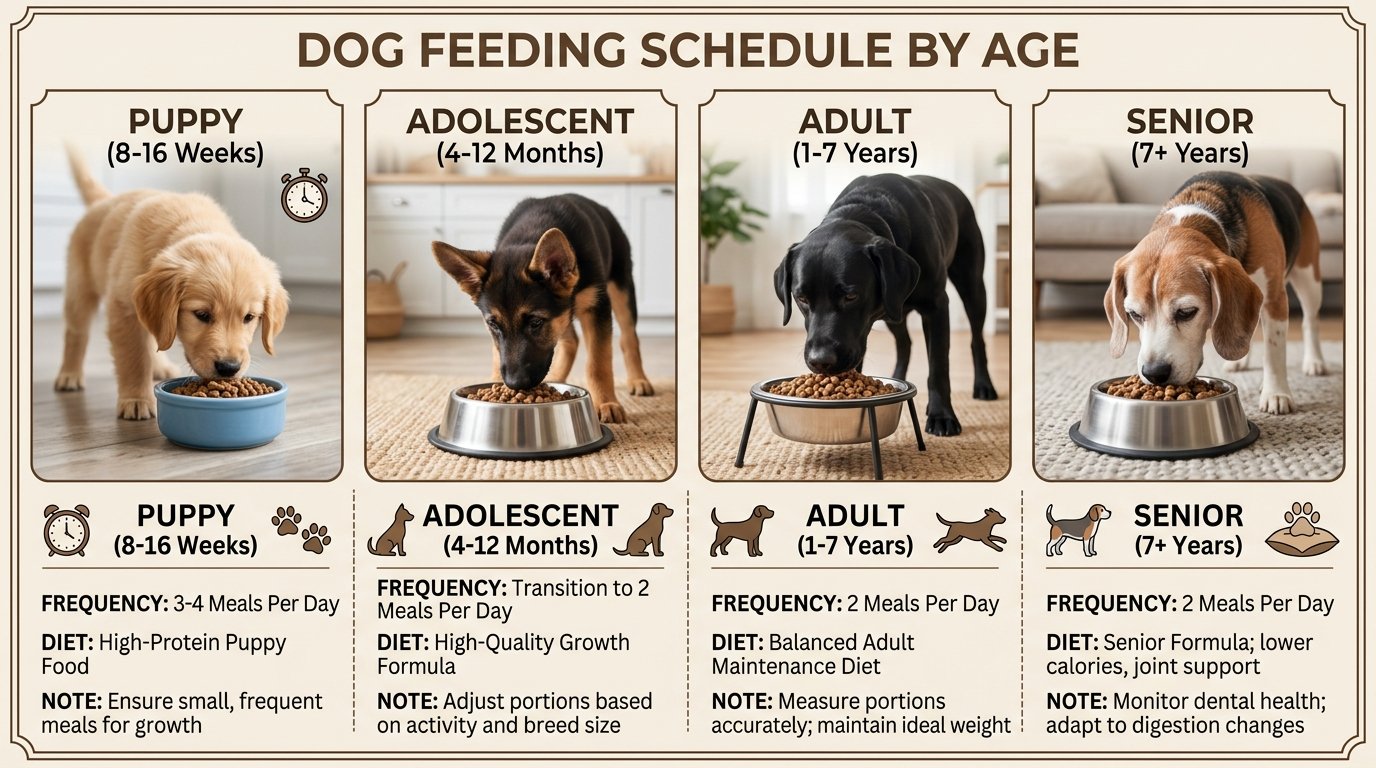
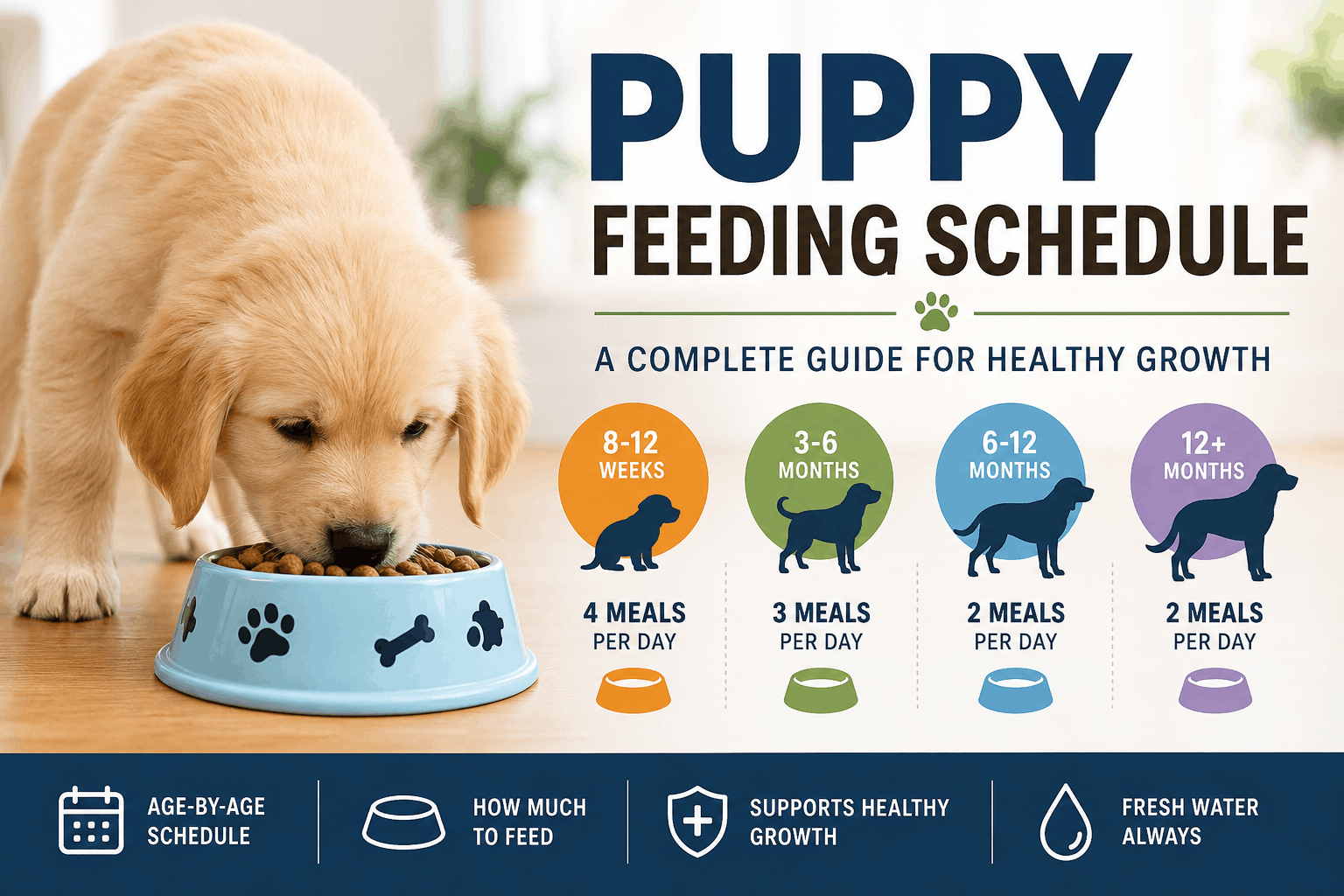
Puppy Feeding Schedule by Age
Puppies have small stomachs but high energy requirements. Frequent, smaller meals help provide steady energy and support healthy digestion.
| Puppy Age | Meals Per Day | Feeding Focus |
|---|---|---|
| 8–12 weeks | 4 meals | Frequent meals for rapid growth |
| 3–6 months | 3 meals | Support muscle and bone development |
| 6–12 months | 2–3 meals | Maintain healthy growth and body condition |
| Adult (breed dependent) | 2 meals | Maintenance nutrition |
Every puppy develops differently. Toy breeds may mature earlier than giant breeds, so the transition to adult food depends on expected adult size rather than age alone.
Read next: Puppy Feeding Schedule by Age
How Much Should You Feed Your Puppy?
There isn’t a universal portion that works for every puppy.
The right amount depends on:
- Age
- Breed
- Expected adult size
- Activity level
- Body condition
- Calorie density of the food
Start with the manufacturer’s feeding guide, but adjust based on your puppy’s growth.
Signs you’re feeding the right amount
✔ Healthy energy levels
✔ Steady growth
✔ Well-formed stools
✔ Visible waist from above
✔ Ribs easy to feel without being prominent
If your puppy is consistently gaining excess weight or appears too thin, consult your veterinarian before making major dietary changes.
When Should Puppies Switch to Adult Food?
The timing depends on breed size because larger dogs mature more slowly.
| Breed Size | Typical Transition Age |
|---|---|
| Toy breeds | 9–12 months |
| Small breeds | Around 12 months |
| Medium breeds | Around 12 months |
| Large breeds | 12–18 months |
| Giant breeds | 18–24 months |
Switching too early may reduce the nutrients available for healthy growth, while delaying the transition unnecessarily can provide excess calories.
Whenever you change foods, do it gradually over 7–10 days to reduce the chance of digestive upset.
Choosing the Best Puppy Food
Walk through any pet store and you’ll see dozens of puppy foods claiming to be “premium,” “natural,” or “holistic.” These marketing terms can be helpful descriptions, but they don’t automatically mean one food is healthier than another.
Instead of choosing based on the front of the bag, evaluate what’s inside.
A high-quality puppy food should:
- Be formulated specifically for puppies.
- Provide complete and balanced nutrition for growth.
- Include quality animal protein.
- Contain healthy fats, including DHA.
- Supply balanced vitamins and minerals.
- Include clear feeding instructions.
- Come from a manufacturer with good quality-control practices.
Remember, the best puppy food is the one that consistently supports healthy growth, digestion, and body condition—not necessarily the most expensive option.
How to Read a Puppy Food Label
Understanding food labels helps you make better decisions.
Ingredient List
Ingredients are listed by weight before cooking.
Look for:
- Named animal proteins (such as chicken or salmon).
- Healthy fat sources.
- Nutritious carbohydrate ingredients.
- Added vitamins and minerals.
Don’t judge a food solely by its first ingredient. Moisture content can influence ingredient order, so the overall nutritional profile matters more.
Guaranteed Analysis
This section lists:
- Minimum protein
- Minimum fat
- Maximum fiber
- Maximum moisture
It allows basic comparisons but doesn’t tell you how digestible or bioavailable those nutrients are.
Feeding Guide
Treat the feeding chart as a helpful starting point—not an exact prescription.
Monitor your puppy regularly and adjust portions if advised by your veterinarian.
Dry vs. Wet Puppy Food
One of the most common questions new owners ask is whether dry or wet food is better.
The answer is simple:
Both can be excellent choices when they provide complete and balanced nutrition.
| Dry Food | Wet Food |
|---|---|
| More affordable | Higher moisture content |
| Easy to store | Often more appealing to picky eaters |
| Convenient to measure | Softer texture for young puppies |
| Longer shelf life after opening | Refrigerate after opening |
Many owners successfully combine wet and dry food to add variety while maintaining convenience.
Grain-Free vs. Grain-Inclusive Diets
Grain-free diets have become popular, but they’re not automatically healthier.
Most puppies digest grains such as:
- Brown rice
- Oats
- Barley
without difficulty.
Grain-free diets replace grains with ingredients like peas, lentils, or sweet potatoes. Unless your veterinarian recommends a grain-free diet for a specific medical reason, most healthy puppies can thrive on grain-inclusive foods.
Homemade vs. Commercial Puppy Food
Many owners enjoy preparing homemade meals because they know exactly what’s going into the bowl.
However, homemade diets require careful planning.
A meal containing only chicken, rice, and vegetables may seem healthy, but it won’t provide every nutrient a growing puppy needs.
Commercial puppy foods are formulated to deliver balanced nutrition, while homemade diets should ideally be developed with guidance from a veterinarian or a board-certified veterinary nutritionist.
Read next: Homemade Puppy Food Guide
Ingredients Worth Looking For
High-quality puppy foods often contain:
Protein Sources
- Chicken
- Turkey
- Salmon
- Lamb
- Beef
- Eggs
Healthy Fats
- Fish oil
- Salmon oil
- Chicken fat
Nutritious Carbohydrates
- Brown rice
- Oats
- Sweet potatoes
- Pumpkin
Functional Ingredients
- DHA
- Prebiotics
- Probiotics
- Antioxidants
Rather than searching for a “superfood,” focus on the overall nutritional balance.
Common Buying Mistakes
Avoid these common errors:
- Choosing food based only on advertising.
- Switching foods too frequently.
- Feeding adult food too early.
- Adding unnecessary supplements.
- Ignoring body condition.
- Buying the cheapest food without reviewing nutritional quality.
Good nutrition is about consistency, not chasing the latest trend.
Quick Checklist Before Buying Puppy Food
Before purchasing a new puppy food, ask yourself:
✅ Is it formulated specifically for puppies?
✅ Does it provide complete and balanced nutrition?
✅ Does it include quality animal protein?
✅ Does it contain DHA and healthy fats?
✅ Is it appropriate for my puppy’s breed size?
✅ Does it come with clear feeding guidelines?
If the answer is “yes” to each question, you’re likely making a strong nutritional choice.
Safe & Unsafe Foods, Homemade Diets, and Common Feeding Mistakes
Once you’ve chosen a balanced puppy food and established a feeding routine, you’ll probably start asking another common question:
“Can my puppy eat this?”
Whether it’s a piece of apple, a spoonful of yogurt, or leftovers from dinner, it’s tempting to share food with your puppy. While many fresh foods are perfectly safe in moderation, others can cause digestive upset—or even become life-threatening.
The goal isn’t to eliminate every treat. It’s to understand which foods complement a balanced puppy diet and which should always stay off the menu.
Safe Foods Puppies Can Eat
Treats and fresh foods should supplement your puppy’s diet—not replace a complete and balanced puppy food.
Think of these as occasional rewards during training or enrichment activities.
Lean Protein Sources
Cooked, unseasoned protein is one of the healthiest treats you can offer.
Good choices include:
- Skinless chicken
- Turkey
- Lean beef
- Salmon (fully cooked and boneless)
- Whitefish
- Cooked eggs
Avoid seasoning, butter, onions, garlic, and rich sauces.
Puppy-Safe Fruits
Many fruits provide vitamins, antioxidants, and hydration.
| Fruit | Safe? | Notes |
|---|---|---|
| Apples | ✔ | Remove seeds and core |
| Blueberries | ✔ | Excellent training treat |
| Bananas | ✔ | Feed in moderation |
| Strawberries | ✔ | Small portions |
| Watermelon | ✔ | Remove seeds and rind |
| Pears | ✔ | Remove seeds |
Fruit contains natural sugar, so it should only be an occasional treat.
Healthy Vegetables
Vegetables add fiber and valuable nutrients.
Safe options include:
- Carrots
- Green beans
- Pumpkin
- Sweet potatoes
- Zucchini
- Cucumbers
- Peas
Lightly steaming harder vegetables often makes them easier to digest.
Foods That Are Dangerous for Puppies
Some human foods are toxic to dogs regardless of age.
Never feed your puppy:
- Chocolate
- Grapes
- Raisins
- Onions
- Garlic
- Foods containing xylitol
- Alcohol
- Caffeine
- Macadamia nuts
- Cooked bones
- Raw bread dough
If you suspect your puppy has eaten one of these foods, contact your veterinarian or an emergency animal hospital immediately.
Read next: Foods Puppies Should Never Eat
Can Puppies Eat Human Food?
Yes—but only certain foods and only in moderation.
Occasional treats like cooked chicken, pumpkin, blueberries, or carrots can fit into a healthy diet.
However, table scraps should never become a regular meal replacement.
Many restaurant foods contain:
- Excess salt
- Butter
- Oils
- Garlic
- Onion powder
- Spices
These ingredients may upset your puppy’s stomach or be unsafe.
A simple rule I follow is this:
If I don’t know every ingredient, I don’t share it with my puppy.
That habit has prevented countless unnecessary stomach upsets.
Homemade Puppy Food: Is It Worth It?
Preparing homemade meals gives you complete control over ingredients, but it also creates complete responsibility for nutritional balance.
Growing puppies need precise amounts of:
- Protein
- Fat
- Calcium
- Phosphorus
- Vitamins
- Trace minerals
- Essential fatty acids
That’s why feeding chicken and rice every day—even though both ingredients are nutritious—doesn’t provide complete nutrition.
If you’re interested in cooking for your puppy long term, work with your veterinarian or a board-certified veterinary nutritionist to develop a balanced recipe.
Read next: Homemade Puppy Food Guide
Homemade vs. Commercial Food
| Homemade Diet | Commercial Puppy Food |
|---|---|
| Full ingredient control | Convenient and consistent |
| Requires careful formulation | Complete and balanced when formulated for growth |
| Time-consuming | Easy to measure |
| Risk of nutritional imbalance if poorly planned | Designed to meet growth requirements |
Neither approach is automatically better. The healthiest choice is the one that provides complete nutrition and fits your lifestyle.
8 Common Puppy Feeding Mistakes
Even experienced dog owners make mistakes from time to time. Fortunately, most are easy to avoid.
1. Overfeeding
Extra calories don’t help puppies grow healthier—they often contribute to excess weight gain.
Use measuring cups or a kitchen scale rather than estimating portions.
2. Feeding Too Many Treats
Treats should make up no more than 10% of your puppy’s daily calories.
Training rewards add up quickly, especially during the first few months.
3. Changing Foods Too Often
Switching diets frequently can upset your puppy’s digestive system.
Whenever possible, transition gradually over 7–10 days.
4. Feeding Adult Dog Food Too Early
Adult maintenance diets aren’t formulated for rapid growth.
Wait until your puppy reaches the appropriate age for their breed before transitioning.
5. Giving Table Scraps Daily
Begging doesn’t always mean hunger.
Feeding from the table often reinforces unwanted behavior and introduces unnecessary calories.
6. Ignoring Body Condition
The number on the scale doesn’t tell the whole story.
Healthy puppies should have:
- A visible waist from above.
- An abdominal tuck from the side.
- Ribs that are easy to feel but not prominently visible.
7. Adding Supplements Without Veterinary Advice
Many owners assume more vitamins or calcium equals better growth.
In reality, unnecessary supplements may disrupt the carefully balanced nutrition already provided by complete puppy foods.
8. Forgetting Fresh Water
Water supports every system in your puppy’s body.
Clean the water bowl daily and refill it with fresh water throughout the day.
Practical Feeding Tips
Over time, I found that simple routines made feeding much easier.
Here are the habits that worked best:
Feed at the Same Times Every Day
Consistency supports digestion, training, and housebreaking.
Measure Every Meal
Avoid guessing.
Even small differences in portion size become significant over several months.
Introduce New Foods Slowly
Whenever changing diets:
- Day 1–2: 75% old food, 25% new
- Day 3–4: 50% old food, 50% new
- Day 5–6: 25% old food, 75% new
- Day 7+: 100% new food (if well tolerated)
Watch Stool Quality
Healthy stools are usually:
✔ Firm
✔ Easy to pick up
✔ Brown
✔ Well formed
Persistent diarrhea, vomiting, or constipation deserves veterinary attention.
Store Food Properly
To maintain freshness:
- Seal dry food after opening.
- Store food in a cool, dry location.
- Refrigerate opened canned food according to the manufacturer’s instructions.
- Always check expiration dates.
Proper storage helps preserve nutritional quality and reduces spoilage.
Daily Puppy Nutrition Checklist
Before the end of each day, ask yourself:
✅ Did my puppy eat the recommended amount?
✅ Did they have access to fresh water?
✅ Were treats limited?
✅ Did I avoid unsafe human foods?
✅ Was my puppy energetic and playful?
✅ Were their stools normal?
These quick checks can help you spot potential problems early.
Frequently Asked Questions
What is the best food for a puppy?
The best puppy food is one that is complete and balanced for growth, matches your puppy’s breed size and age, and supports healthy body condition. A quality diet should provide adequate protein, healthy fats (including DHA), vitamins, and minerals without requiring additional supplements for healthy puppies.
How often should I feed my puppy?
Most puppies follow this schedule:
| Age | Meals Per Day |
|---|---|
| 8–12 weeks | 4 |
| 3–6 months | 3 |
| 6–12 months | 2–3 |
| Adult | 2 |
Your veterinarian may recommend adjustments based on your puppy’s breed, growth rate, and health.
Can puppies eat adult dog food?
Adult dog food is designed for maintenance rather than growth. Puppies have higher nutritional requirements, so they should eat food formulated specifically for puppies until they reach maturity.
When should I switch to adult food?
Typical transition ages are:
- Toy breeds: 9–12 months
- Small breeds: Around 12 months
- Medium breeds: Around 12 months
- Large breeds: 12–18 months
- Giant breeds: 18–24 months
Always transition gradually over 7–10 days.
Is wet food better than dry food?
Neither is universally better.
Dry food is convenient and economical, while wet food provides more moisture and is often more appealing to picky eaters. Many owners successfully feed a combination of both.
Is homemade puppy food healthy?
Homemade food can be healthy only if it’s nutritionally complete and balanced. Recipes found online often lack essential nutrients, so long-term homemade diets should be formulated with professional guidance.
Do puppies need vitamins or supplements?
Healthy puppies eating a complete commercial puppy food generally do not need extra supplements unless your veterinarian recommends them.
Can puppies eat eggs?
Yes. Fully cooked eggs are a nutritious source of protein and can be offered occasionally as part of a balanced diet.
Can puppies eat peanut butter?
Yes, in small amounts, provided it does not contain xylitol, which is highly toxic to dogs.
How do I know if my puppy is overweight?
Instead of focusing only on weight, check body condition.
Your puppy should have:
- A visible waist when viewed from above.
- A slight abdominal tuck from the side.
- Ribs that are easy to feel without excess fat covering them.
If you’re unsure, ask your veterinarian to assess your puppy’s body condition during routine visits.
My Puppy Nutrition Checklist
Use this simple checklist to stay on track.
Every Day
✅ Feed a complete and balanced puppy food.
✅ Measure meals instead of guessing.
✅ Provide fresh, clean water.
✅ Follow a consistent feeding schedule.
✅ Limit treats to about 10% of daily calories.
Every Week
✅ Check your puppy’s body condition.
✅ Monitor energy levels.
✅ Watch stool quality.
✅ Inspect the food bag’s expiration date.
Every Month
✅ Weigh your puppy if possible.
✅ Review feeding portions as your puppy grows.
✅ Replace stored food if it has become stale or contaminated.
Common Puppy Nutrition Myths
Myth: Grain-free food is healthier.
Fact: Most puppies digest grains perfectly well. Grain-free diets are only appropriate when recommended for specific medical reasons.
Myth: Bigger portions help puppies grow stronger.
Fact: Overfeeding increases the risk of unhealthy weight gain and may place additional stress on developing joints.
Myth: Homemade food is automatically healthier.
Fact: Fresh ingredients are beneficial, but homemade meals must be nutritionally balanced to support healthy growth.
Myth: Puppies always know when to stop eating.
Fact: Many puppies happily continue eating even after they’ve had enough, which is why measured portions are important.
Signs Your Puppy Is Thriving
Healthy puppies typically show these signs:
- Bright, alert eyes.
- Consistent energy.
- Healthy skin and coat.
- Firm, regular stools.
- Good appetite.
- Steady growth.
- Lean, healthy body condition.
Remember that every puppy grows at their own pace. Regular veterinary checkups are the best way to monitor healthy development.
When to Contact Your Veterinarian
Seek professional advice if your puppy experiences:
- Persistent vomiting.
- Ongoing diarrhea.
- Refusal to eat for an extended period.
- Sudden weight loss.
- Poor growth.
- Blood in the stool.
- Difficulty swallowing.
- Suspected ingestion of a toxic food.
Early treatment is often the best way to prevent more serious health problems.
Final Thoughts
When I first started learning about puppy nutrition, I thought choosing the “best” food would be the hardest part. Over time, I realized that healthy feeding is much simpler than the marketing makes it seem.
Consistency matters more than perfection.
Providing a balanced puppy food, measuring portions carefully, offering fresh water every day, and adjusting your feeding plan as your puppy grows will have a much bigger impact than chasing the latest feeding trend.
Every puppy is unique. Some are highly active, while others are naturally more relaxed. Some have sensitive stomachs, while others seem able to digest almost anything. Learning to observe your own puppy’s body condition, appetite, and energy level is just as important as reading any feeding guide.
Think of this guide as a starting point rather than a substitute for veterinary advice. As your puppy grows, regular checkups and open conversations with your veterinarian will help ensure their diet continues to meet their changing nutritional needs.
A healthy diet during the first year doesn’t just support growth—it helps build the foundation for many healthy years ahead.
Related Guides
If you’re looking for more detailed information, these guides are excellent next reads:
- Best Puppy Food
- Puppy Feeding Schedule by Age
- Homemade Puppy Food Guide
- Foods Puppies Can Eat
- Foods Puppies Should Never Eat
- Wet vs. Dry Puppy Food
- Large Breed Puppy Nutrition
- Small Breed Puppy Nutrition
How This Guide Was Created
This guide combines practical puppy ownership experience with information based on widely accepted veterinary nutrition principles. It is intended for educational purposes and should not replace personalized advice from your veterinarian, especially if your puppy has a medical condition, unusual growth pattern, or special dietary needs.
References
For continued learning, consult trusted veterinary nutrition resources such as:
- World Small Animal Veterinary Association (WSAVA) Global Nutrition Guidelines
- American Animal Hospital Association (AAHA) nutrition resources
- Merck Veterinary Manual
- National Research Council (NRC): Nutrient Requirements of Dogs and Cats
Thank you for reading this Puppy Nutrition Guide. Whether you’re raising your very first puppy or adding another dog to your family, I hope this guide helps you make confident, informed decisions that support a happy, healthy life.