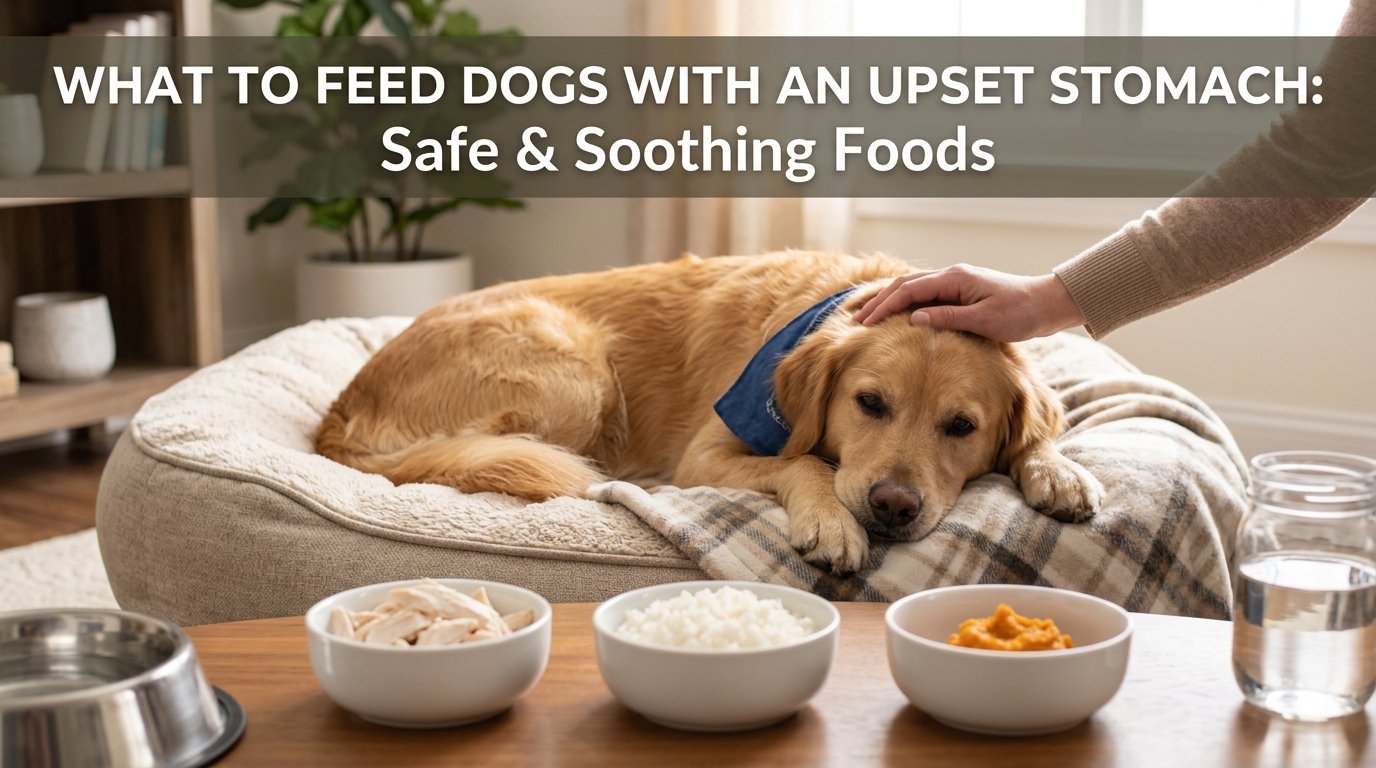
Few things worry dog owners more than seeing their furry friend suffering from an upset stomach. Whether your dog is experiencing vomiting, diarrhea, gas, nausea, or loss of appetite, choosing the right foods can play a major role in recovery.
Many stomach issues resolve within a day or two with proper care, hydration, and a gentle diet. However, feeding the wrong foods can make symptoms worse and prolong recovery.
In this complete guide, you’ll learn:
- What to feed dogs with an upset stomach
- Best bland foods for recovery
- Foods to avoid
- How long recovery takes
- Signs your dog needs a veterinarian
- Prevention tips
- Personal experience
By the end of this guide, you’ll know exactly how to support your dog’s digestive health safely.
What Causes an Upset Stomach in Dogs?
Before choosing foods, it’s important to understand why your dog’s stomach may be upset.
Common causes include:
- Eating table scraps
- Sudden diet changes
- Food intolerance
- Food allergies
- Stress or anxiety
- Eating spoiled food
- Garbage scavenging
- Intestinal parasites
- Viral infections
- Bacterial infections
- Certain medications
Sometimes an upset stomach is mild and temporary. Other times it can indicate a more serious health problem.
Signs Your Dog Has an Upset Stomach
Common symptoms include:
- Vomiting
- Diarrhea
- Nausea
- Lip licking
- Excessive drooling
- Gas
- Gurgling stomach sounds
- Reduced appetite
- Lethargy
- Abdominal discomfort
If symptoms are severe or persistent, veterinary care may be necessary.
What to Feed Dogs With an Upset Stomach
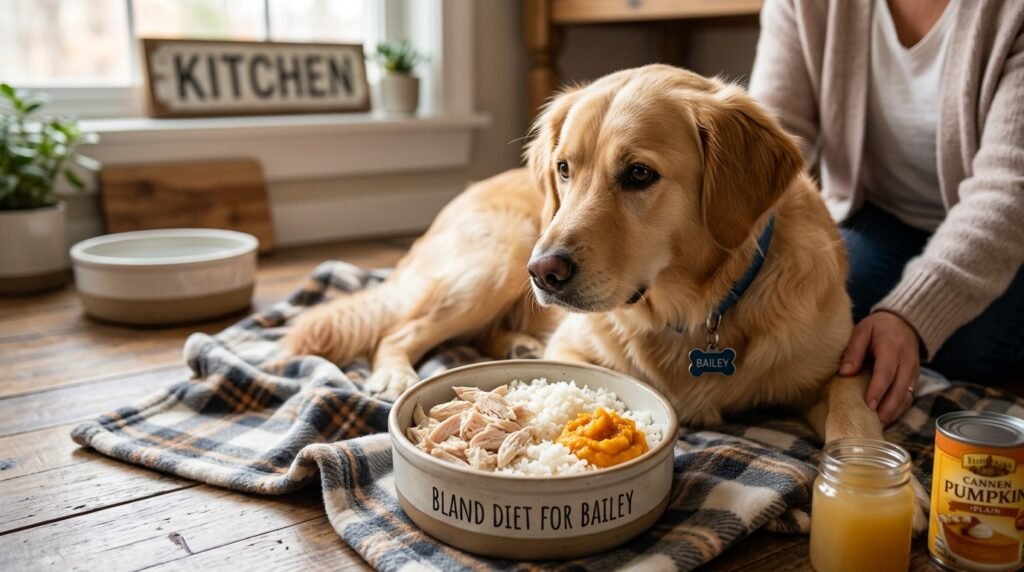
1. Plain Boiled Chicken
Boiled, skinless chicken breast is one of the most recommended foods for dogs recovering from digestive upset.
Benefits:
- Easy to digest
- High-quality protein
- Low fat
- Gentle on the stomach
Avoid:
- Seasonings
- Oils
- Butter
- Garlic
- Onion
Serve shredded and plain.
2. Plain White Rice
White rice is often paired with boiled chicken because it is easy to digest and helps firm loose stools.
Benefits:
- Low fiber
- Easily absorbed carbohydrates
- Gentle on inflamed intestines
The classic recovery meal consists of:
- 2 parts rice
- 1 part boiled chicken
3. Plain Pumpkin
Pure pumpkin (not pie filling) can help regulate digestion.
Benefits:
- Contains soluble fiber
- Helps with diarrhea
- Supports healthy bowel movements
Suggested amounts:
Small dogs:
1–2 teaspoons
Medium dogs:
1–2 tablespoons
Large dogs:
2–4 tablespoons
4. Plain Scrambled Eggs
Cooked eggs can provide easily digestible protein.
Benefits:
- Rich in nutrients
- Gentle protein source
- Appealing to picky eaters
Prepare without:
- Salt
- Butter
- Oil
- Milk
5. Bone Broth
Unsalted bone broth may encourage hydration and appetite.
Benefits:
- Provides fluids
- Easy to digest
- Adds flavor to bland meals
Always ensure it contains no onion or garlic.
6. Boiled Sweet Potatoes
Sweet potatoes are gentle on digestion and contain beneficial nutrients.
Benefits:
- Fiber
- Vitamins
- Easy digestion
Serve plain and cooked thoroughly.
7. Prescription Gastrointestinal Diets
Veterinarians often recommend therapeutic diets specifically designed for digestive recovery.
These diets are formulated to:
- Reduce stomach irritation
- Improve nutrient absorption
- Support gut healing
Foods to Avoid When Your Dog Has an Upset Stomach
Some foods can worsen digestive symptoms.
Avoid:
❌ Fatty meats
❌ Fried foods
❌ Dairy products
❌ Spicy foods
❌ Processed snacks
❌ Chocolate
❌ Grapes
❌ Raisins
❌ Onions
❌ Garlic
❌ Excess treats
❌ Raw foods during recovery
Should You Fast a Dog With an Upset Stomach?
Traditionally, short fasting periods were recommended for healthy adult dogs experiencing mild vomiting.
However, fasting is not appropriate for every dog.
Never fast:
- Puppies
- Senior dogs
- Dogs with diabetes
- Dogs with medical conditions
Always consult your veterinarian if vomiting is persistent.
Hydration Is Just as Important as Food
Dogs with diarrhea or vomiting can become dehydrated quickly.
Signs of dehydration include:
- Dry gums
- Sunken eyes
- Weakness
- Loss of skin elasticity
Encourage:
- Fresh water
- Ice cubes
- Small frequent drinks
- Vet-approved electrolyte solutions
How Much Should You Feed?
Instead of large meals, feed smaller portions.
Recommended:
- 4–6 small meals daily
Once symptoms improve:
Gradually transition back to the normal diet over several days.
Personal Experience
One of my dogs developed a mild stomach upset after getting into food scraps during a family gathering.
He experienced diarrhea and refused his regular food.
Following veterinary guidance, I switched him to a bland diet of boiled chicken and white rice while ensuring he stayed hydrated.
Within 24 hours his appetite began returning, and his stools gradually normalized.
The experience taught me how important it is to introduce foods slowly and avoid sharing rich human foods with dogs.
How Long Does Recovery Take?
Recovery depends on the cause.
Typical recovery timeline:
Mild dietary indiscretion:
24–48 hours
Minor digestive irritation:
2–3 days
Infections:
Several days to weeks
Chronic digestive conditions:
Require veterinary management
When Should You Call a Veterinarian?
Seek veterinary care immediately if your dog has:
- Blood in stool
- Blood in vomit
- Severe vomiting
- Severe diarrhea
- Signs of dehydration
- Persistent symptoms over 24–48 hours
- Abdominal swelling
- Difficulty breathing
- Collapse
- Inability to keep water down
Preventing Future Upset Stomachs
Feed a Consistent Diet
Sudden diet changes can trigger digestive problems.
Avoid Table Scraps
Human foods are a common cause of stomach upset.
Use Slow Feeders
Helpful for dogs that eat too quickly.
Regular Deworming
Parasites can cause digestive issues.
Keep Garbage Secure
Prevent accidental ingestion of spoiled foods.
Routine Veterinary Care
Early detection prevents many health issues.
If your dog experiences unusual appetite changes in addition to digestive problems, read:
This related guide explores excessive hunger, nutritional needs, and possible health concerns.
Frequently Asked Questions
What is the best thing to feed a dog with an upset stomach?
Boiled chicken and white rice are among the most commonly recommended options because they are easy to digest and gentle on the digestive tract.
Is pumpkin good for dogs with an upset stomach?
Yes. Plain pumpkin contains fiber that may help regulate digestion and improve stool consistency.
Can I give my dog eggs for an upset stomach?
Plain cooked eggs can be a gentle source of protein for many dogs.
How long should I feed a bland diet?
Typically 2–3 days or until symptoms improve, followed by a gradual return to the regular diet.
Can dogs drink water when they have an upset stomach?
Yes. Hydration is extremely important. Offer small amounts frequently if vomiting is present.
What foods make a dog’s upset stomach worse?
Fatty foods, dairy products, spicy foods, and heavily processed foods can worsen symptoms.
When should I take my dog to the vet?
If symptoms are severe, persistent, or accompanied by blood, dehydration, or lethargy, veterinary care is recommended.
Can stress cause an upset stomach in dogs?
Yes. Anxiety, travel, changes in routine, and stressful situations can sometimes trigger digestive upset.
Are probiotics helpful for dogs?
Some veterinarian-approved probiotics may support digestive health and recovery.
Can puppies follow the same upset stomach diet?
Puppies are more vulnerable to dehydration and illness. Always consult a veterinarian before treating digestive symptoms at home.
Conclusion
Knowing what to feed dogs with an upset stomach can make a significant difference in their recovery and comfort.
For most mild cases, bland foods such as boiled chicken, white rice, pumpkin, and bone broth can help soothe the digestive system while providing essential nutrition.
At the same time, monitoring hydration and watching for warning signs is crucial. While many stomach upsets resolve quickly, persistent symptoms should never be ignored.
By feeding appropriate foods, maintaining a consistent diet, and seeking veterinary care when needed, you can help your dog recover safely and return to their happy, energetic self.