Feeding your cat the right food is only part of keeping them healthy—feeding the right amount at the right time is just as important. A proper feeding schedule supports healthy growth in kittens, helps adult cats maintain an ideal weight, and provides senior cats with consistent nutrition as their needs change with age.
Whether you’ve just adopted a playful kitten or you’re caring for an older companion, understanding how feeding requirements evolve throughout a cat’s life can prevent overfeeding, obesity, and nutritional deficiencies.
This guide provides a life-stage feeding schedule based on current veterinary nutrition recommendations to help you make informed feeding decisions.
Quick Answer On Cat Feeding Schedule by Age
Cats should be fed according to their age and life stage:
- 0–4 weeks: Mother’s milk or kitten milk replacer every 2–4 hours.
- 4–8 weeks: 4–6 small meals daily.
- 2–6 months: 3–4 meals daily.
- 6–12 months: 2–3 meals daily.
- 1–7 years: 2 measured meals daily.
- 7+ years: 2–3 smaller meals daily, depending on health and veterinary advice.
Always feed a complete and balanced diet formulated for your cat’s life stage and adjust portions according to body condition, activity level, and your veterinarian’s recommendations.
Why a Feeding Schedule Matters
Cats thrive on routine. Consistent meal times help regulate appetite, support digestion, and make it easier to monitor changes in eating habits that could indicate illness.
A structured feeding schedule also helps:
- Maintain a healthy body weight
- Prevent overeating
- Support healthy growth in kittens
- Reduce food waste
- Make medication timing easier
- Monitor appetite changes that may signal health problems
Unlike free-feeding, measured meals allow you to know exactly how much your cat is eating each day.
Cat Feeding Schedule by Age
| Cat’s Age | Meals Per Day | Recommended Food |
|---|---|---|
| 0–4 Weeks | Every 2–4 hours | Mother’s milk or kitten milk replacer |
| 4–8 Weeks | 4–6 meals | Wet kitten food gradually introduced |
| 2–6 Months | 3–4 meals | Complete and balanced kitten food |
| 6–12 Months | 2–3 meals | High-quality kitten food |
| 1–7 Years | 2 meals | Adult maintenance cat food |
| 7+ Years | 2–3 smaller meals | Senior formula if recommended by your veterinarian |
Note: These are general guidelines. Individual feeding needs vary depending on breed, body condition, activity level, and medical conditions.
Feeding Newborn Kittens (0–4 Weeks)
Newborn kittens rely entirely on their mother’s milk, which provides the nutrients and antibodies they need during the first weeks of life.
If the mother is unavailable, use a commercial kitten milk replacer recommended by your veterinarian. Never feed cow’s milk, as it does not meet a kitten’s nutritional needs and may cause digestive upset.
Feeding Frequency
- Every 2–3 hours during the first week
- Every 3–4 hours by the third and fourth weeks
At this stage, kittens cannot regulate their body temperature well, so proper warmth and hydration are just as important as nutrition.
Feeding Kittens (4–8 Weeks)
Around four weeks of age, kittens begin the weaning process.
Start introducing a soft mixture of wet kitten food and warm water or kitten milk replacer. As the kitten becomes more comfortable eating solid food, gradually reduce the amount of liquid.
Feeding Frequency
- 4–6 small meals daily
Offer fresh food at each meal and remove leftovers after about 20–30 minutes to maintain hygiene.
During this rapid growth stage, kittens require more calories, protein, and essential nutrients than adult cats.
Feeding Kittens (2–6 Months)
Between two and six months, kittens experience one of the fastest growth periods of their lives.
They become more active, develop muscle, strengthen bones, and require significant energy to support healthy development.
Feeding Frequency
- 3–4 meals per day
Choose a complete and balanced kitten food that meets recognized nutritional standards for growth.
At this age, avoid feeding adult cat food because it may not provide enough calories or nutrients for proper development.
Feeding Junior Cats (6–12 Months)
As kittens approach adulthood, growth begins to slow, but they still need nutrient-rich kitten food until around 12 months of age (or longer for some large breeds if recommended by a veterinarian).
Feeding Frequency
- 2–3 meals daily
Continue serving measured portions rather than leaving food available all day unless your veterinarian advises otherwise.
Monitor your cat’s body condition regularly. Healthy kittens should grow steadily without becoming overweight.
Should You Leave Food Out All Day?
Many owners practice free-feeding by keeping a bowl of dry food available at all times.
While this may work for some cats, measured meals often provide better control over calorie intake and make it easier to detect changes in appetite.
Scheduled feeding is generally preferred for:
- Indoor cats
- Cats prone to obesity
- Multi-cat households where food intake needs monitoring
- Cats with medical conditions requiring dietary management
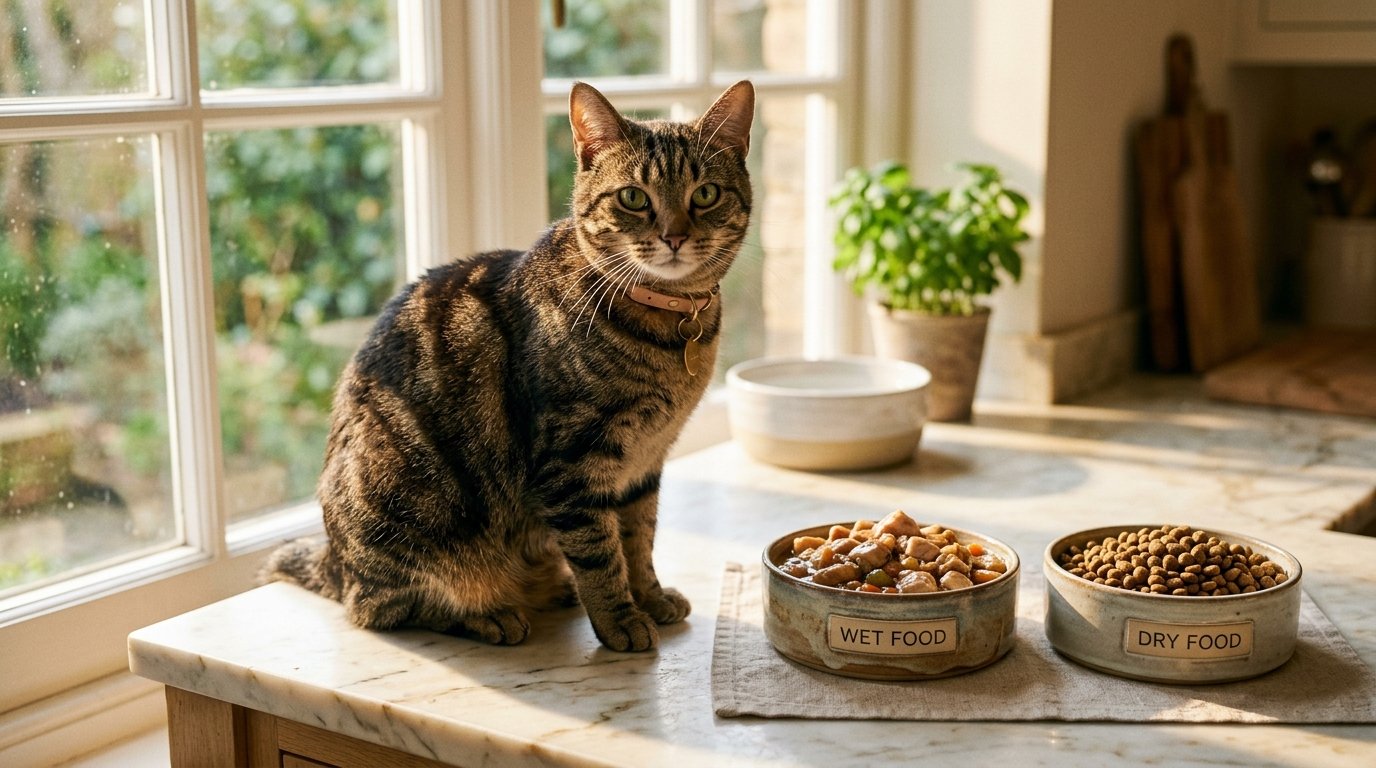
Wet Food or Dry Food?
Both wet and dry foods can be part of a healthy feeding routine when they are complete and balanced.
Wet food provides additional moisture, which may help support hydration, while dry food offers convenience and can be left out for short periods without spoiling.
Many veterinarians recommend a combination of both, depending on your cat’s health, preferences, and lifestyle.
For a detailed comparison of food types, read our Ultimate Cat Food Guide: How to Choose the Best Food for a Healthy, Happy Cat.
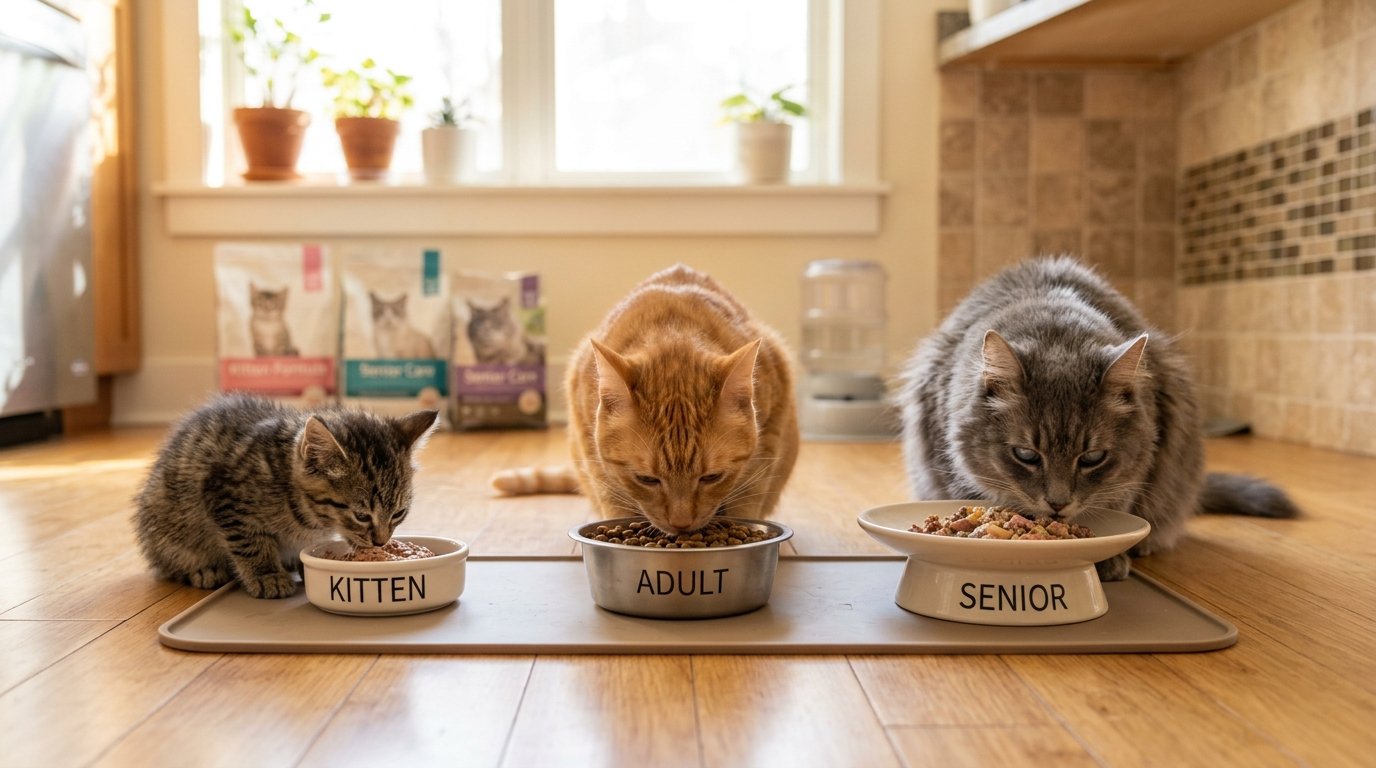
Feeding Adult Cats (1–7 Years)
Once your cat reaches adulthood (around 12 months of age), their nutritional needs become more stable. The focus shifts from supporting rapid growth to maintaining a healthy weight, strong muscles, and overall wellness.
Most healthy adult cats do well with two measured meals per day—one in the morning and one in the evening. Feeding on a consistent schedule can help regulate appetite and make it easier to notice changes that may indicate illness.
Feeding Frequency
- Meals per day: 2
- Diet: Complete and balanced adult cat food
- Water: Fresh, clean water available at all times
Avoid overfeeding, as obesity is one of the most common health concerns in indoor cats. Instead of relying solely on the feeding guide printed on the package, monitor your cat’s Body Condition Score (BCS) and adjust portions based on activity level, age, and veterinary advice.
Feeding Senior Cats (7+ Years)
As cats age, their metabolism, activity level, and health needs may change. Some senior cats become less active and require fewer calories, while others lose weight because of underlying medical conditions.
Many senior cats benefit from 2–3 smaller meals per day, which may be easier to digest and help maintain a consistent energy level.
Feeding Frequency
- Meals per day: 2–3 smaller meals
- Diet: Senior cat food if recommended by your veterinarian
- Water: Encourage hydration by providing multiple water bowls or a cat water fountain.
Because kidney disease, dental disease, hyperthyroidism, and diabetes become more common with age, regular veterinary checkups are essential.
Indoor vs. Outdoor Cat Feeding Schedule
A cat’s lifestyle has a significant impact on its calorie requirements.
Indoor Cats
Indoor cats generally burn fewer calories and are more likely to become overweight.
For most healthy indoor cats:
- Feed measured meals twice daily.
- Monitor treats carefully.
- Encourage daily play and exercise.
- Adjust portions if weight gain occurs.
Outdoor Cats
Outdoor cats are often more active and may require additional calories to support their energy needs.
They usually benefit from:
- High-quality animal protein
- Healthy fats
- Reliable access to fresh water
- Meal portions adjusted to maintain a healthy body condition
Even outdoor cats should receive measured meals rather than relying on hunting alone for nutrition.
Wet Food vs. Dry Food Feeding Schedule
Both wet and dry foods can be part of a healthy feeding routine.
| Feeding Type | Suggested Schedule | Benefits |
|---|---|---|
| Wet Food | 2–3 meals daily | Higher moisture content, supports hydration |
| Dry Food | 2 measured meals daily | Convenient and easy to portion |
| Mixed Feeding | Wet in the morning, dry in the evening (or vice versa) | Combines the benefits of both food types |
The best choice depends on your cat’s age, health, preferences, and your veterinarian’s recommendations.
Free Feeding vs. Scheduled Feeding
Many cat owners wonder whether they should leave food out all day or feed at specific times.
Free Feeding
Advantages
- Convenient for some households
- Suitable for certain healthy cats with good self-control
Disadvantages
- Increased risk of overeating
- Difficult to monitor appetite
- Can contribute to obesity
- Makes it harder to detect illness early
Scheduled Feeding
Advantages
- Better portion control
- Easier weight management
- Helps monitor appetite
- Supports consistent daily routines
For most adult indoor cats, scheduled feeding is generally the preferred approach.
Common Cat Feeding Mistakes
Avoid these common errors to help keep your cat healthy.
Feeding Too Many Treats
Treats should make up less than 10% of your cat’s daily calorie intake.
Overfeeding
Excess calories can contribute to obesity, diabetes, and joint problems.
Switching Foods Too Quickly
Transition to a new food gradually over 7–10 days to reduce the risk of digestive upset.
Using Adult Food for Kittens
Kittens require additional calories, protein, vitamins, and minerals to support growth.
Ignoring Fresh Water
Even cats eating wet food need constant access to clean drinking water.
Frequently Asked Questions
How often should I feed my kitten?
Most kittens between 2 and 6 months of age should eat 3–4 small meals daily. Younger kittens being weaned (4–8 weeks) typically require 4–6 meals per day.
How often should adult cats eat?
Most healthy adult cats do well with two measured meals per day, although individual needs vary.
Is it okay to feed my cat once a day?
While some healthy adult cats may tolerate one meal daily, many veterinarians recommend two meals per day to support digestion, maintain consistent energy levels, and make appetite changes easier to notice.
Should I feed wet food every day?
Wet food can be fed daily as long as it is complete and balanced. Many owners choose to combine wet and dry food to provide variety and additional moisture.
Can I leave dry food out all day?
Free-feeding may be suitable for some cats, but measured meals are generally better for weight management and monitoring overall health.
Final Thought:
A consistent feeding schedule is one of the simplest ways to support your cat’s lifelong health. By adjusting meal frequency as your cat grows—from frequent feedings during kittenhood to measured meals in adulthood and tailored nutrition in the senior years—you can help maintain a healthy weight, support digestion, and encourage good eating habits.
Remember that every cat is unique. Use feeding guidelines as a starting point, monitor your cat’s body condition, and work with your veterinarian to create the best feeding routine for your feline companion.
How We Researched This Guide
This article was developed using current veterinary nutrition recommendations and educational resources from trusted organizations.
Our research focused on:
- Life-stage nutritional requirements
- Feeding frequency recommendations
- Weight management
- Indoor and outdoor calorie needs
- Hydration and meal timing
- Practical guidance for cat owners
We prioritize evidence-based information over trends or unsupported feeding advice.
References
This guide is based on educational resources and nutritional recommendations from:
- Association of American Feed Control Officials (AAFCO) – Nutrient Profiles for Cats
- World Small Animal Veterinary Association (WSAVA) – Global Nutrition Guidelines
- American Animal Hospital Association (AAHA) – Feline Life Stage Recommendations
- American Association of Feline Practitioners (AAFP) – Feline Care Guidelines
- Merck Veterinary Manual – Feline Nutrition
- Cornell University College of Veterinary Medicine
- Tufts University Cummings School of Veterinary Medicine – Clinical Nutrition Service
Related Articles
Continue exploring our cat nutrition guides:
Editorial Disclaimer
This article is intended for educational purposes only and should not replace advice from your veterinarian. Every cat has unique nutritional needs based on age, breed, health status, body condition, and activity level.
If your cat experiences sudden weight loss, loss of appetite, vomiting, diarrhea, or any other concerning symptoms, consult your veterinarian promptly.