Choosing the right food is one of the most important decisions you’ll make as a cat owner. Whether you’re raising a playful kitten, caring for an indoor adult cat, or supporting a senior feline, nutrition has a direct impact on your cat’s energy, weight, digestion, urinary health, and overall quality of life.
One of the biggest questions owners ask is:
Should I feed my cat wet food, dry food, or both?
The answer isn’t as simple as saying one type is always better than the other.
Both wet and dry cat food can provide complete and balanced nutrition when formulated for your cat’s life stage. However, each has unique advantages and disadvantages that may make it more suitable depending on your cat’s age, health, lifestyle, and personal preferences.
When I first adopted an indoor rescue cat, I assumed dry food was the easiest and best option. After discussing nutrition with my veterinarian and learning more about feline hydration, I gradually introduced wet food into the feeding routine. My cat enjoyed the variety, stayed well hydrated, and maintaining a healthy weight became easier because meal portions were carefully measured. That experience reinforced that every cat is different, and the best feeding plan should be based on individual needs rather than marketing claims.
In this guide, we’ll compare wet vs dry cat food in detail, explain their nutritional differences, examine the pros and cons of each, and help you decide which feeding approach is best for your cat.
Quick Answer
Both wet and dry cat food can support excellent health when they are complete and balanced for your cat’s life stage.
- Wet food provides significantly more moisture, making it helpful for hydration and often more appealing to picky eaters.
- Dry food is convenient, cost-effective, easy to store, and simple to measure.
For many healthy cats, a combination of wet and dry food provides the benefits of both while supporting balanced nutrition.
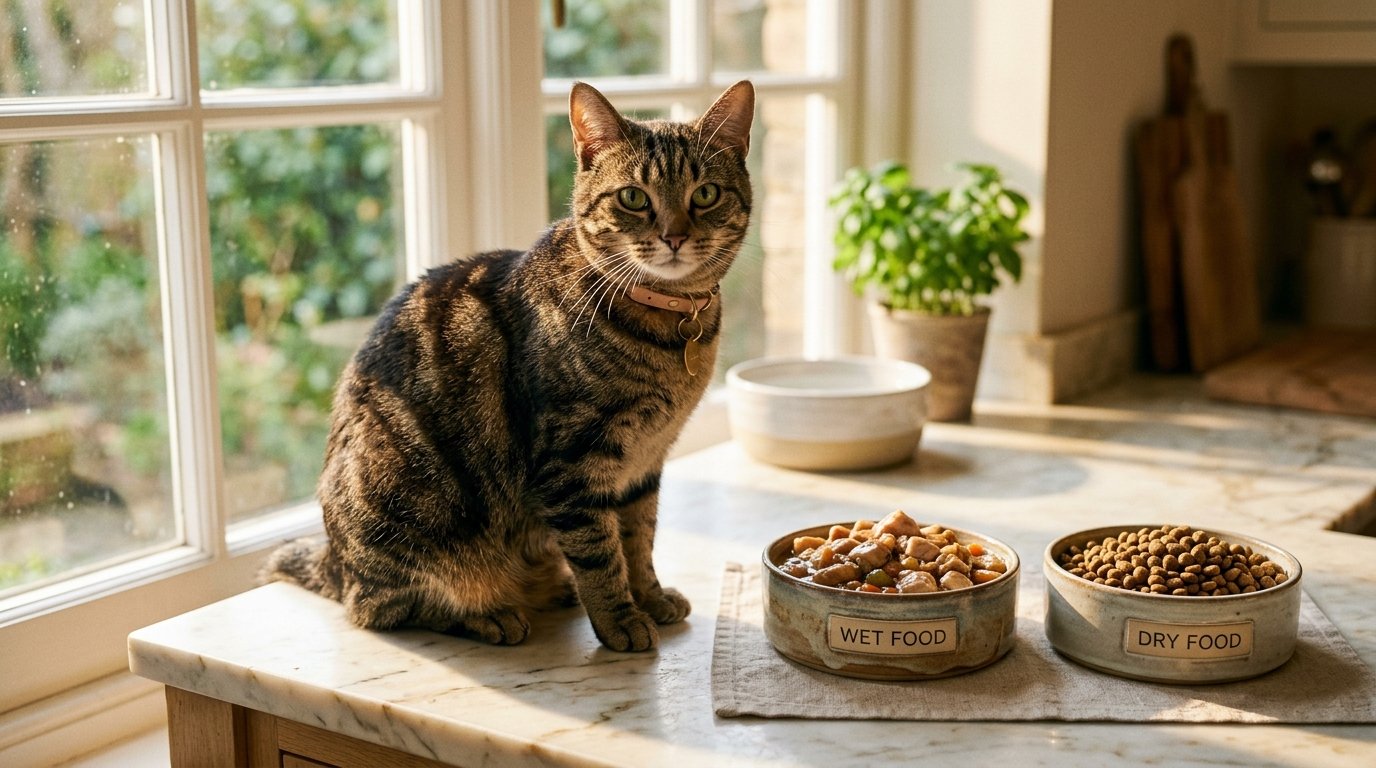
Wet vs Dry Cat Food at a Glance
| Feature | Wet Cat Food | Dry Cat Food |
|---|---|---|
| Moisture | 70–85% | 8–12% |
| Texture | Soft | Crunchy |
| Hydration | Excellent | Lower |
| Cost | Higher | Lower |
| Shelf Life After Opening | Refrigerate and use within 2–3 days | Long when stored properly |
| Convenience | Moderate | Excellent |
| Portion Control | Easy | Easy |
| Palatability | Very High | Moderate to High |
Expert Tip: Focus on choosing a food that is complete and balanced for your cat’s life stage. The quality of the formulation is more important than whether the food is wet or dry.
What Is Wet Cat Food?
Wet cat food is available in cans, trays, or pouches and contains a high percentage of water, usually between 70% and 85%.
It typically includes:
- Animal protein
- Healthy fats
- Vitamins and minerals
- Water or broth
Wet food is often highly palatable because of its aroma and soft texture.
Common Types
- Pâté
- Chunks in gravy
- Flaked recipes
- Minced formulas
- Shredded meat
- Stews
A complete and balanced wet food can be fed as your cat’s primary diet.
Benefits of Wet Cat Food
Supports Hydration
Cats naturally have a low thirst drive because their wild ancestors obtained much of their water from prey.
Wet food provides additional moisture, helping increase total daily water intake.
This can be especially beneficial for:
- Cats that rarely drink water
- Senior cats
- Cats living in hot climates
- Cats that need encouragement to consume more fluids
Highly Appealing
Many cats strongly prefer wet food because of its smell and texture.
Wet food is often useful for:
- Picky eaters
- Cats recovering from illness
- Cats with decreased appetite
- Cats adjusting to new foods
Easier to Chew
Soft food may be easier for:
- Senior cats
- Cats with missing teeth
- Cats with dental discomfort
- Cats recovering from oral surgery
May Help with Portion Satisfaction
Because wet food contains more water, meals often appear larger while providing fewer calories than the same weight of dry food.
For some cats, this can improve satiety without increasing calorie intake.
What Is Dry Cat Food?
Dry cat food, commonly called kibble, contains much less moisture than canned food.
It is manufactured by combining ingredients into a cooked dough and shaping it into small, dry pieces.
Modern kibble is available for nearly every life stage and lifestyle.
Examples include:
- Kitten food
- Adult maintenance food
- Senior formulas
- Indoor cat diets
- Hairball-control formulas
- Weight-management diets
- Sensitive stomach recipes
Benefits of Dry Cat Food
Convenient Storage
Dry food is easy to store and generally has a long shelf life when kept in its original packaging or an airtight container.
Affordable
Dry food usually costs less per serving than wet food, making it an economical option for households with multiple cats.
Easy Portion Control
Kibble can be measured accurately using a measuring cup or kitchen scale.
This helps owners manage calorie intake and monitor weight more effectively.
Works Well with Puzzle Feeders
Many enrichment toys and automatic feeders are designed specifically for dry kibble.
These can encourage natural hunting behaviors while slowing down fast eaters.
Nutritional Differences Between Wet and Dry Cat Food
Many owners assume canned food automatically contains better nutrition.
In reality, nutritional quality depends on the product—not the format.
Both wet and dry foods can provide complete and balanced nutrition when they meet recognized nutritional standards.
However, there are some important differences.
Moisture Content
This is the largest nutritional difference.
Wet food contains approximately 70–85% moisture, while dry food generally contains 8–12% moisture.
Additional moisture may support cats that naturally drink very little water.
Regardless of diet, always provide unlimited access to fresh drinking water.
Calories
Dry kibble is more calorie-dense because it contains far less water.
Wet food often provides fewer calories per gram, meaning portion sizes are usually larger for the same calorie intake.
Always compare foods by their calorie content rather than by cup size or can size alone.
Protein and Fat
Cats are obligate carnivores and require high-quality animal protein regardless of whether the food is wet or dry.
When comparing products, review the guaranteed analysis and, if possible, compare nutrients on a dry matter basis rather than relying only on the ingredient list.
Digestibility
Both wet and dry cat foods can be highly digestible when manufactured by reputable companies using quality ingredients.
Cats with sensitive stomachs often benefit more from a highly digestible formula than from choosing one food type over another.
Pros and Cons of Wet Cat Food
Wet cat food is often recommended for cats that need additional moisture or have difficulty chewing. However, like any feeding option, it has both advantages and disadvantages.
Advantages of Wet Cat Food
1. Helps Increase Water Intake
Cats naturally have a lower thirst drive than many other animals because their wild ancestors obtained much of their water from prey.
Since wet food contains approximately 70–85% moisture, it can help support healthy hydration and contribute to your cat’s daily fluid intake.
This may be especially beneficial for:
- Indoor cats that drink little water
- Senior cats
- Cats during hot weather
- Cats that prefer soft food
2. Highly Palatable
The aroma and texture of wet food often make it more appealing than kibble.
Many veterinarians recommend wet food for:
- Picky eaters
- Cats recovering from illness
- Cats with reduced appetite
- Cats adjusting to a new home
3. Easier to Chew
Cats with dental disease, missing teeth, oral injuries, or recovering from dental procedures often find wet food more comfortable to eat.
4. Supports Portion Satisfaction
Because wet food contains a large amount of water, meals usually have greater volume while providing fewer calories than the same weight of dry food.
For some cats, this can increase the feeling of fullness.
Disadvantages of Wet Cat Food
Although wet food has many benefits, owners should also consider its limitations.
- More expensive per serving
- Requires refrigeration after opening
- Should not be left out for extended periods
- Creates more packaging waste
- Less convenient for travel
Pros and Cons of Dry Cat Food
Dry food remains one of the most popular feeding options because of its convenience and affordability.
Advantages of Dry Cat Food
1. Budget-Friendly
Dry food generally costs less per meal than canned food, making it a practical choice for households with multiple cats.
2. Easy Storage
Dry kibble has a long shelf life when stored correctly in its original packaging or an airtight container.
3. Convenient Feeding
Dry food works well with:
- Automatic feeders
- Puzzle feeders
- Timed feeding schedules
This makes it particularly convenient for busy households.
4. Wide Variety of Diets
Manufacturers produce dry food for nearly every life stage and lifestyle, including:
- Kittens
- Adults
- Seniors
- Indoor cats
- Hairball control
- Weight management
- Sensitive stomachs
Disadvantages of Dry Cat Food
Dry food also has some drawbacks.
- Much lower moisture content
- Some cats find it less appealing
- Calorie-dense, making portion control important
- Not ideal for cats that have difficulty chewing
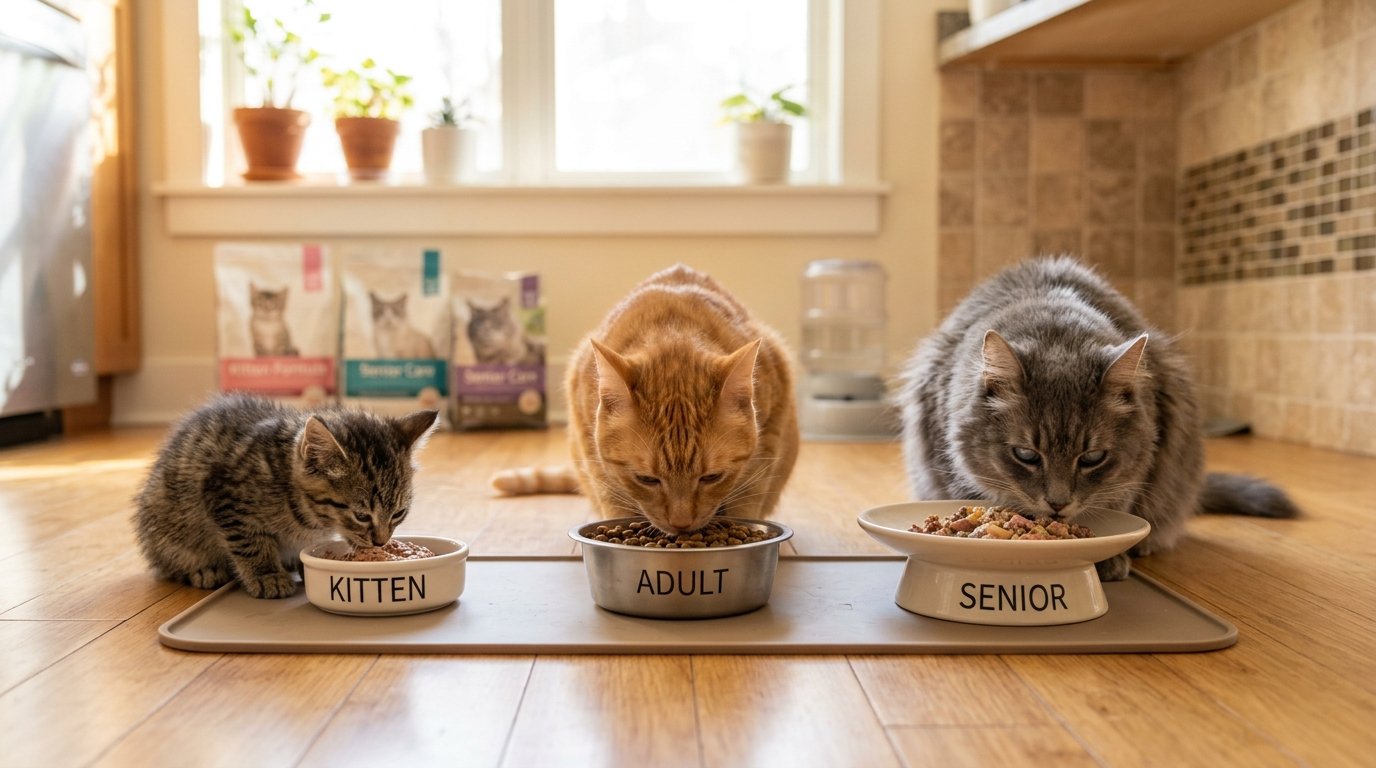
Which Is Better for Kittens?
Growing kittens require complete and balanced diets formulated specifically for growth.
Wet Food Benefits
- Soft texture for developing teeth
- Easy during the weaning process
- Highly palatable
- Additional moisture
Dry Food Benefits
- Convenient
- Economical
- Available in kitten-specific formulas
- Works well in puzzle feeders
Many owners successfully feed a combination of wet and dry kitten food.
Read our Cat Feeding Schedule by Age for age-specific feeding recommendations during kittenhood.
Which Is Better for Senior Cats?
As cats age, they may experience changes in appetite, dental health, and activity levels.
Wet food may be particularly helpful for senior cats with:
- Missing teeth
- Dental disease
- Reduced appetite
- Difficulty chewing
However, many healthy senior cats continue to do well on high-quality dry food or a mixed feeding routine.
Regular veterinary checkups become increasingly important as cats age because changes in eating habits can sometimes indicate underlying health conditions.
Which Is Better for Indoor Cats?
Indoor cats generally have lower energy requirements than outdoor cats and are at greater risk of becoming overweight.
Whether feeding wet or dry food, the most important factors are:
- Appropriate calorie intake
- Portion control
- Daily activity
- Balanced nutrition
Many owners choose a combination of wet and dry food to provide variety while carefully controlling calories.
Related Reading: See our Ultimate Cat Food Guide for choosing the right diet based on your cat’s lifestyle.
Which Is Better for Weight Management?
Weight management depends on total daily calorie intake, not simply whether the food is wet or dry.
Wet Food
Because it contains more water, wet food generally has fewer calories per gram, allowing some cats to eat larger portions while consuming fewer calories.
Dry Food
Dry food is more calorie-dense, so accurate portion measurement is essential.
For overweight cats, your veterinarian may recommend a calorie-controlled diet along with regular weight monitoring.
Dental Health: Myth vs. Reality
Many people believe that dry food cleans cats’ teeth.
While some veterinary dental diets are specially formulated to help reduce plaque and tartar, ordinary kibble should not be relied upon as a replacement for dental care.
The most effective ways to support dental health include:
- Brushing your cat’s teeth regularly
- Routine veterinary dental examinations
- Professional dental cleanings when recommended
- Veterinary Oral Health Council (VOHC)-accepted dental products
Wet food itself does not cause dental disease.
Can You Feed Both Wet and Dry Cat Food?
Yes.
Many veterinarians recommend mixed feeding because it combines the advantages of both food types.
Potential benefits include:
- Additional dietary moisture
- Increased meal variety
- Improved palatability
- Flexible feeding routines
For example:
- Wet food in the morning
- Dry food in the evening
Or offer measured amounts of both during each meal.
Remember to adjust portions so your cat receives the correct number of calories each day.
How to Transition Your Cat to a New Food
Cats often prefer familiar foods, so sudden diet changes can lead to digestive upset or food refusal.
Transition gradually over 7–10 days.
| Day | Current Food | New Food |
|---|---|---|
| 1–2 | 75% | 25% |
| 3–4 | 50% | 50% |
| 5–6 | 25% | 75% |
| 7–10 | 0% | 100% |
If your cat develops vomiting, diarrhea, or refuses food for more than 24 hours, consult your veterinarian before continuing the transition.
How to Choose the Best Food for Your Cat
The healthiest diet isn’t determined by whether the food is wet or dry. Instead, it depends on choosing a complete and balanced diet that matches your cat’s age, lifestyle, body condition, and overall health.
Here are the most important factors to consider before choosing a cat food.
1. Your Cat’s Life Stage
Cats have different nutritional requirements throughout their lives.
Kittens (Up to 12 Months)
Growing kittens require diets formulated for growth with higher levels of:
- Animal protein
- Healthy fats
- DHA for brain development
- Essential vitamins and minerals
Feed a kitten-specific formula until approximately 12 months of age unless your veterinarian recommends otherwise.
Adult Cats (1–7 Years)
Healthy adult cats require balanced maintenance diets that provide enough calories to maintain lean muscle mass and an ideal body weight.
Senior Cats (7+ Years)
Senior cats may benefit from diets that support healthy aging, depending on their health status and veterinary recommendations.
2. Indoor or Outdoor Lifestyle
Lifestyle affects calorie requirements.
Indoor Cats
Indoor cats generally burn fewer calories and have a higher risk of obesity.
Look for foods that support:
- Healthy weight
- Lean muscle maintenance
- Digestive health
- Hairball management, if needed
Outdoor Cats
Outdoor cats are often more active and usually require additional calories.
Choose diets that provide:
- High-quality animal protein
- Healthy fats
- Complete nutrition
- Adequate hydration
Always adjust feeding based on your cat’s body condition, not simply whether they spend time indoors or outdoors.
3. Health Conditions
Cats with medical conditions may require specialized diets.
Examples include:
- Kidney disease
- Diabetes mellitus
- Food allergies
- Gastrointestinal disorders
- Obesity
- Urinary tract conditions
Prescription diets should only be used under veterinary supervision.
4. Ingredient Quality
When comparing cat foods, focus on nutritional quality rather than marketing claims.
Choose foods that:
- Are labeled complete and balanced
- Meet recognized nutritional standards
- Contain clearly identified animal protein sources
- Are manufactured by reputable companies with quality-control programs
Marketing terms such as “premium,” “natural,” or “holistic” do not necessarily indicate superior nutrition.
What Do Veterinarians Recommend?
Veterinary nutrition experts generally agree that both wet and dry cat food can support excellent health when they provide complete and balanced nutrition appropriate for the cat’s life stage.
Many veterinarians recommend:
- Feeding measured portions rather than free-feeding.
- Monitoring body condition regularly.
- Providing unlimited access to fresh drinking water.
- Choosing food based on the individual cat’s needs rather than trends.
For many healthy cats, a mixed feeding approach offers the advantages of both wet and dry food.
Common Feeding Mistakes
Even high-quality food cannot compensate for poor feeding practices.
Avoid these common mistakes.
Overfeeding
Excess calorie intake is one of the leading causes of obesity in domestic cats.
Measure meals accurately instead of estimating portions.
Free-Feeding Indoor Cats
Leaving food available all day can make it difficult to monitor calorie intake and detect appetite changes.
Scheduled meals are often a better option for indoor cats.
Switching Foods Too Quickly
Gradually transition to a new food over 7–10 days to reduce the risk of digestive upset.
Feeding Too Many Treats
Treats should contribute less than 10% of your cat’s daily calorie intake.
Ignoring Water Intake
Even cats eating wet food require constant access to clean drinking water.
Fresh water should always be available.
Choosing Food Based Only on Packaging
Attractive packaging and marketing claims should never replace careful evaluation of nutritional quality.
Frequently Asked Questions
Is wet cat food healthier than dry food?
Not necessarily. Both wet and dry cat foods can provide complete and balanced nutrition. Wet food offers more moisture, while dry food provides convenience and is often more economical.
Can cats eat wet and dry food together?
Yes. Many veterinarians support mixed feeding because it combines the hydration benefits of wet food with the convenience of dry food.
Should indoor cats eat wet food every day?
Many indoor cats benefit from eating wet food because it increases dietary moisture. However, both wet and dry foods can be appropriate when fed in balanced portions.
Is dry food bad for cats?
No. High-quality dry food can be a healthy option when it provides complete and balanced nutrition and your cat has access to fresh drinking water.
Does wet food prevent urinary problems?
Adequate hydration is important for urinary tract health, and wet food contributes additional moisture. However, no single food can prevent all urinary conditions, and cats with urinary disease should be evaluated by a veterinarian.
How many times should I feed my cat each day?
Most healthy adult cats do well with two measured meals daily.
Kittens generally require more frequent meals, while some senior cats may benefit from smaller meals offered more often.
How We Researched This Guide
This guide was developed using evidence-based veterinary nutrition resources and current recommendations from internationally recognized organizations.
Our review focused on:
- Feline nutritional requirements
- Moisture intake and hydration
- Weight management
- Life-stage feeding recommendations
- Digestibility
- Current veterinary nutrition guidance
Our goal is to provide practical, balanced advice that helps cat owners make informed feeding decisions based on science rather than myths.
Trusted References
This article is informed by educational guidance from respected veterinary organizations, including:
- Association of American Feed Control Officials (AAFCO) – Cat Food Nutrient Profiles
- World Small Animal Veterinary Association (WSAVA) – Global Nutrition Guidelines
- American Association of Feline Practitioners (AAFP) – Feline Life Stage Guidelines
- American Animal Hospital Association (AAHA) – Nutrition and Preventive Care Resources
- Merck Veterinary Manual – Feline Nutrition
- Cornell University College of Veterinary Medicine
- Tufts University Cummings School of Veterinary Medicine – Clinical Nutrition Service
- Veterinary Oral Health Council (VOHC) – Accepted Dental Products
Related Articles
Continue learning with these evidence-based nutrition guides:
- Best Cat Food
- Cat Feeding Schedule by Age
- Feeding Indoor vs. Outdoor Cats
- Why Does My Cat Follow Me Everywhere?
- How Much Should I Feed My Cat?
- Best Cat Water Fountains
Editorial Disclaimer
This article is intended for educational purposes only and should not replace advice from a licensed veterinarian. Every cat has unique nutritional requirements based on age, body condition, activity level, health status, and lifestyle.
If your cat has persistent vomiting, diarrhea, unexplained weight loss, reduced appetite, excessive thirst, or other concerning symptoms, consult your veterinarian promptly before making significant dietary changes.
Final Verdict: Wet or Dry Cat Food?
So, which is better—wet or dry cat food?
The answer is neither is universally better. Both can provide complete and balanced nutrition when formulated for your cat’s life stage and fed in appropriate portions.
- Choose wet food if your cat benefits from additional moisture, prefers soft textures, or has difficulty chewing.
- Choose dry food if you value convenience, affordability, and easy portion control.
- Consider mixed feeding if you want to combine the hydration benefits of wet food with the practicality of kibble.
The most important factors are not whether the food is wet or dry, but whether it:
- Meets recognized nutritional standards.
- Is appropriate for your cat’s life stage.
- Maintains a healthy body condition.
- Supports long-term health.
- Fits your cat’s individual needs and your veterinarian’s recommendations.
By choosing a nutritionally complete diet, monitoring portion sizes, providing fresh water every day, and scheduling regular veterinary checkups, you can help your cat live a healthier, happier life regardless of the feeding method you choose.